Wednesday, July 4, 2007

No. 41 - 114 Deodar Trees

144 Deodar Trees


114 Deodar Trees

1932
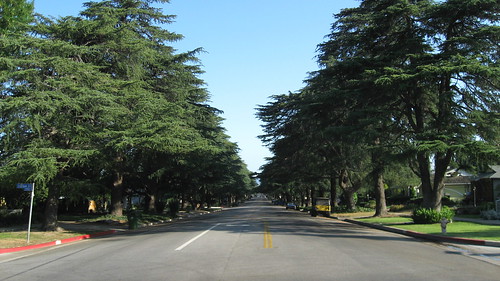
White Oak Avenue, between San Fernando Mission Boulevard and San Jose Street, Granada Hills - map
Declared: 8/3/66

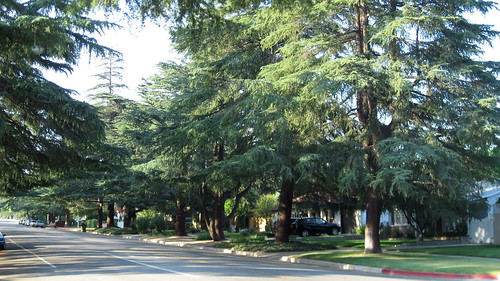
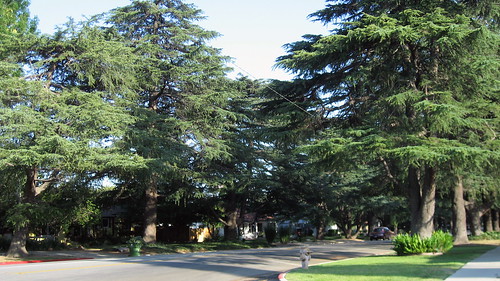
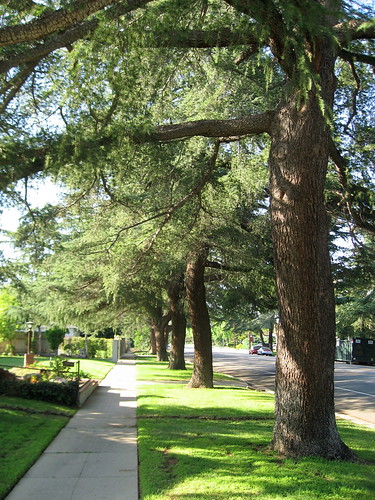
My guess is not all 114 deodar trees on both sides of this eight-block stretch of White Oak Avenue collectively designated as a Los Angeles landmark remain after forty years, but I wasn't about to count the existing ones to make sure. My time is dear.
114 Deodar Trees

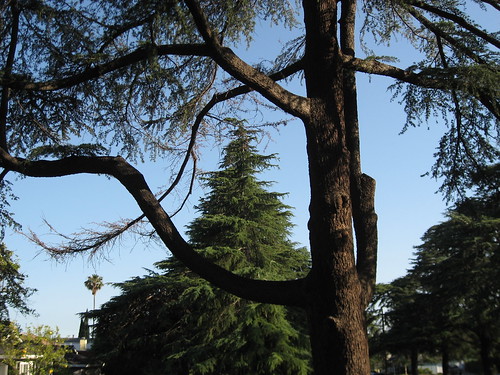
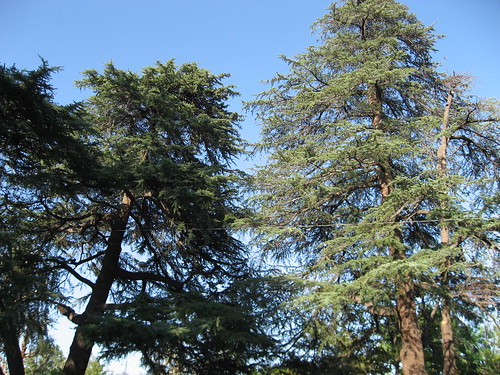
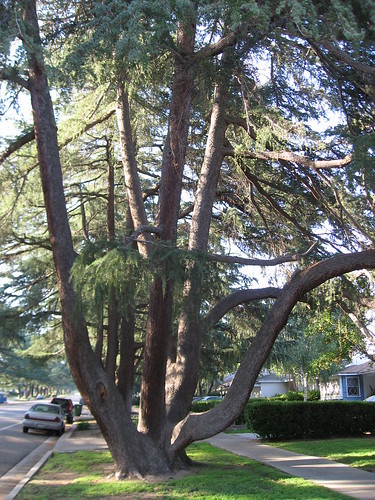
When John Orcutt, superintendent of the dairy farm and citrus orchard known as "Sunshine Ranch", was overseeing the planting of these Himalayan trees in 1932, Granada Hills was celebrating just five years of existence as 'Granada'. (According to this Department of City Planning site, 'Sunshine Ranch' was renamed 'Granada" eighty years ago today, July 4, 1927, and then changed to 'Granada Hills' in 1942. It also says Orcutt planted the trees in 1933, not 1932.) It's now a community of more than 60,000 people and home to this group of more than a 100 of these distinguishing Cedrus deodara trees.

144 Deodar Trees

114 Deodar Trees

144 Deodar Trees

These cedars, together with the variety of distinctive trees on the side streets throughout the area, give the neighborhood a decidedly non-Southern California feel.
144 Deodar Trees

114 Deodar Trees

Up next: San Antonio Winery


continue reading...

Sunday, July 1, 2007

No. 40 - Hale House

Hale House

Hale House
c. 1887
Heritage Square, 3800 Homer Street – map
Declared: 6/15/66

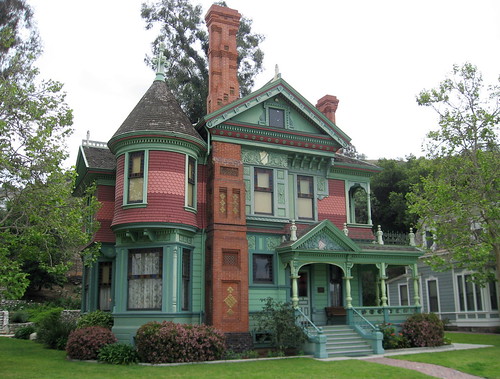
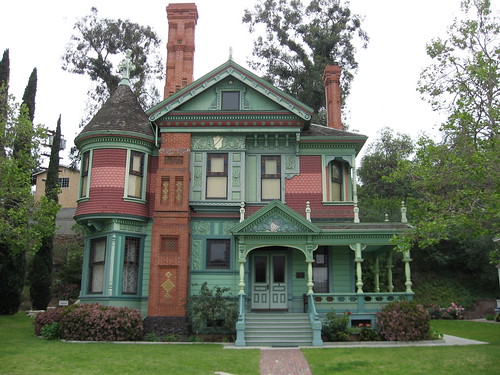
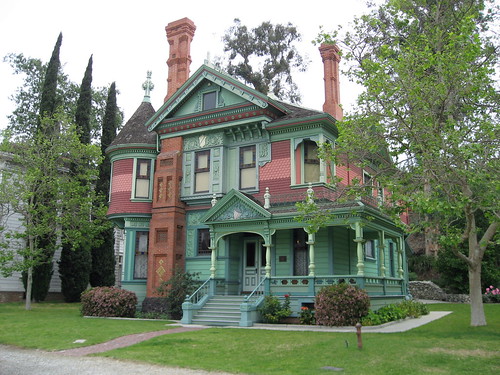
Well, I reckon if your goal is to live in a home that would attract tons and tons of attention, you could do much worse than setting up camp in this Queen Anne/Eastlake house.

Hale House

What mysterious origins! Depending on whom you believe, either W.R. Norton or Joseph Cather Newsom designed this home for George W. or Charles Morgan, who may or may have not been a real estate man, in or around 1887. The original location was at 4501 North Figueroa Street (then named North Pasadena Avenue).

Hale House

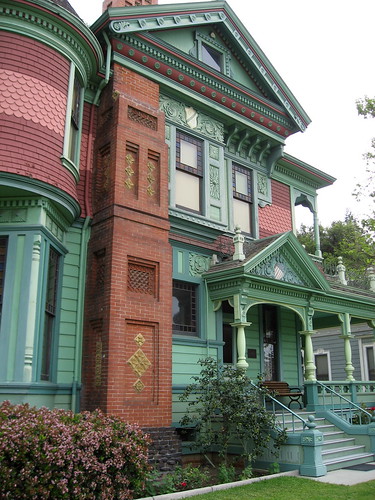
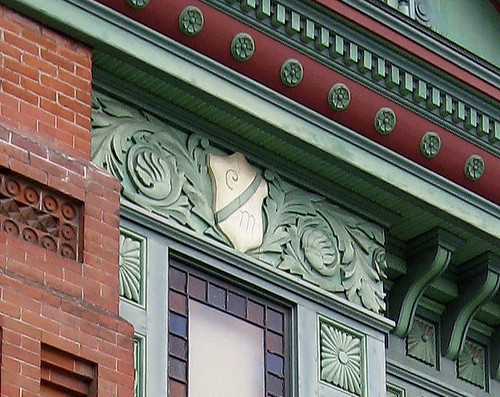
The fact it looks like a ‘CW’ and not a ‘GW’ in this shield above one of the front windows would make one think it was Charles and not George who was the original owner. Could it be a ‘G’? Or a 'P', even?

Hale House

In 1901 or 1906, James and Bessie Hale (Jack Smith wrote the couple met while Bessie was waiting tables at the Pico House downtown) moved into the home, but that was sometime after the building had moved down the street to 4425 North Figueroa Street. Bessie lived until nearly ninety years old, and she ran the building as a rooming house until the late 1950s. A Hale niece owned the home until the city bought it for a dollar in 1970 (a pair college students were living there as official caretakers at the time). It was moved to Heritage Square Museum at a cost of about $25,000 that July.

Click here to see a shot of the Hale House either right before or right after the big move.

Hale House

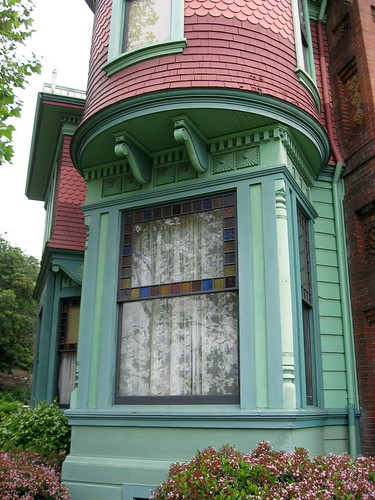
The redwood-framed building has been meticulously restored to its original colors (I couldn’t think of any other reason for this palette). The inside, too, with its five fireplaces, has been restored and stocked with period pieces from the turn of the last century. I would’ve taken pictures of the interior, but indoor photography is forbidden at Heritage Square because… well, I don’t know why.

Hale House

The Hale House is also on the National Register of Historic Places.

Source:

Jack Smith. “‘May Day’ for an Old House” Los Angeles Times; February 2, 1970, pg. A1


Up next: 114 Deodar Trees

continue reading...
Thursday, June 28, 2007

No. 39 - Lewis House

Lewis House

Lewis House
c. 1890 – Joseph Cather Newsom
1425 Miramar Street – map
Declared: 6/15/66

You know, out of the several dozen Los Angeles landmarks I’ve visited so far, this is one of my very favorites.

Lewis House

First of all, it’s lasted in Los Angeles for about 120 years, no small feat (from the house, the view of downtown is good; it must've been awesome a century ago). Second, it’s still in pretty good and un-altered shape on its original site (though Gebhard and Winter, in Los
Angeles: An Architectural Guide, bemoan the fact the second-story porch above the entrance has been enclosed). Third, by all appearances, it’s still being used as a single-family home (it hasn’t been turned into a museum or converted into an apartment building.) Fourth, situated in an area of down-trodden apartment buildings, the Lewis House stands out like [something really nice] in the thick of [something a lot less nice]. (I’m no good at similes.)

Lewis House

Samuel J. Lewis’s California Style/Queen Anne home was designed by Joseph Cather Newsom (1858–1930), who, along with his brother Samuel (1854–1908), moved from Montreal to the Bay area to open up an architectural firm. Later on, Joseph set up a branch of the company in Los Angeles, in which the firm is credited with more then 650 executed commissions. In Paul Gleye’s 1981 book, The Architecture of Los Angeles, he wrote the brothers “were probably the masters of Queen Anne architecture” and that “they built homes one could not avoid looking at”. Joseph gets design credit for a handful of other L.A. landmarks, including a couple on Carroll Avenue. The brothers’ most famous building, though, is the Carson Mansion in Eureka, CA, put up in the mid-1880s.

Lewis House

Joseph authored a lot of pattern-books, too, including Artistic Buildings and Homes of Los Angeles (1888), California Low Priced Cottages (1888), and Picturesque and Artistic Homes and Buildings of California (1890).

Lewis House

Up next: Hale House

continue reading...
Monday, June 25, 2007

No. 38 - Founders' Oak

Founders' Oak

Founders’ Oak
Original Location: Haverford Avenue between Sunset Boulevard and Antioch Street – map
Declared: 3/25/66

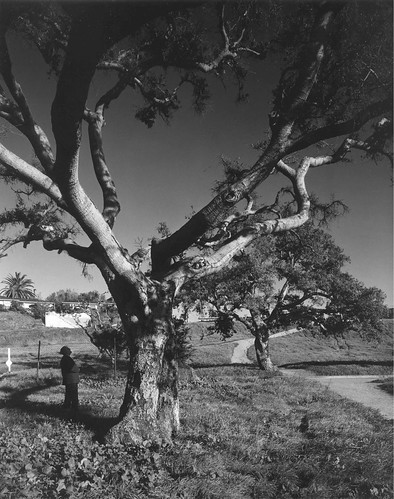
This 300-year-old Coast Live Oak was cut down on August 15, 1975, a victim of, well, death. On removal day, the community of Pacific Palisades did what any arboristically-inclined Southern California community would – it held a wake, complete with wine, cheese, and live music.

Los Angeles designated the Quercus agrifolia a Historic-Cultural Monument because it was under/around this tree that folks gathered on January 14, 1922, to select Palisades lots for sale.

The photograph is from the city's Department of Planning website.

Up next: Lewis House

continue reading...
Friday, June 22, 2007

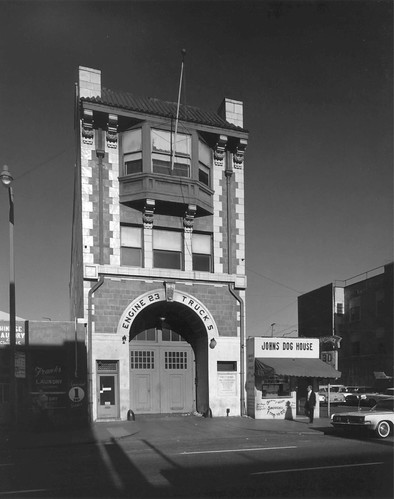
No. 37 - Fire Station No. 23

Fire Station No. 23

Fire Station No. 23
1910 – Hudson and Munsell
225 East 5th Street – map
Declared: 2/18/66

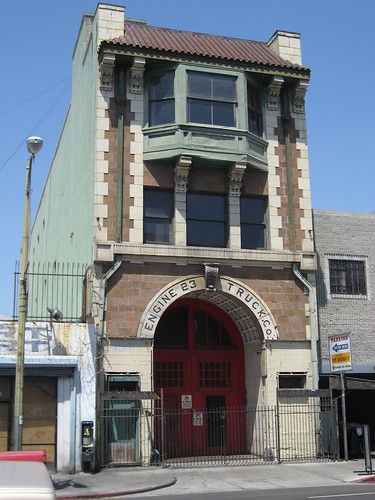
So, my gut’s telling me this old fire station isn’t going to be around much longer. (My gut’s also telling me to ease up on the Fritos, but I ain’t listening!)

Fire Station No. 23

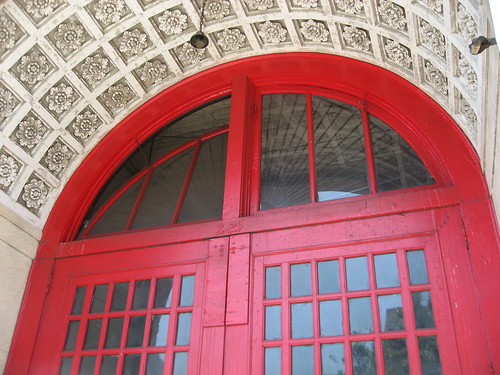
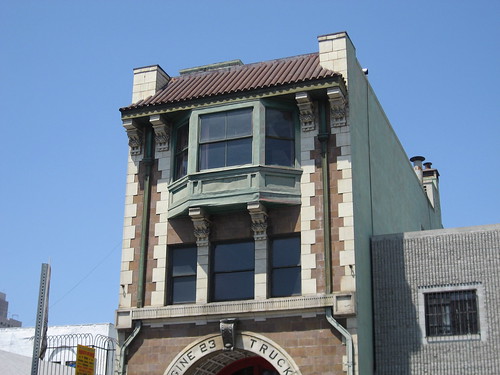
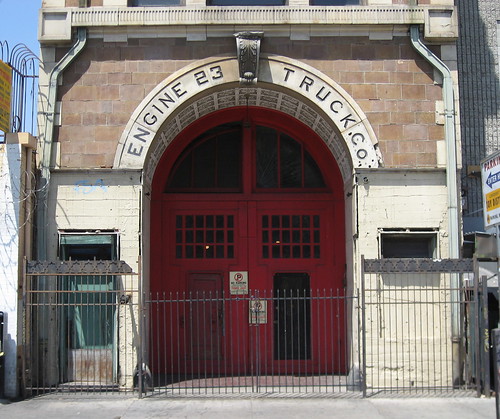
This Renaissance Revival firehouse was heralded when it was built in 1910 for its combination of living and working spaces. It was retired from active service in 1960, when it became training headquarters for the LAFD.

Fire Station 23

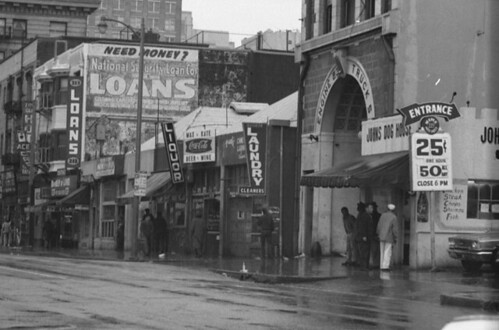
The above picture was originally in the Los Angeles Times just more than forty years ago, on 1/30/67. It's now available on the UCLA Library Digital Collections website. The photo was first accompanied by the caption:
TARGET AREA--The 200 block of E. 5th St., east of Los Angeles St., is one of prime targets in $100 million attack on Skid Row. At right is deactivated city fire station, its entryway used as meeting place for the slum's many habitues. Here beer and wine flow as do tales of misery.
I guess it didn't remain a training center too long, what with all that flowing going on.

Fire Station No. 23

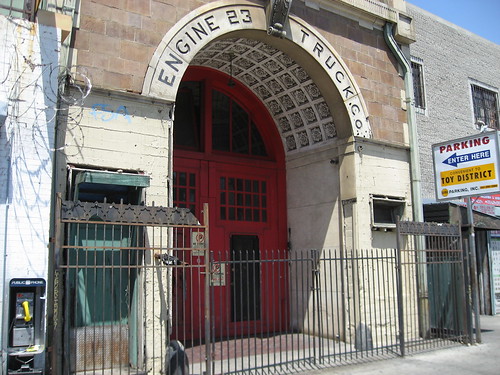
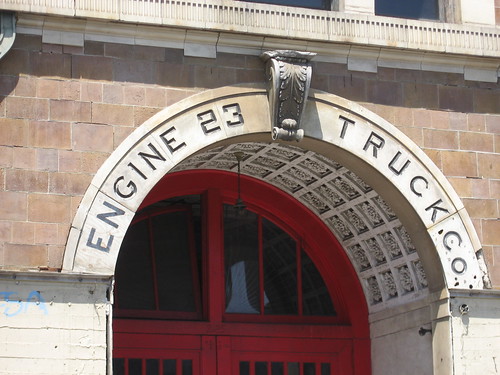
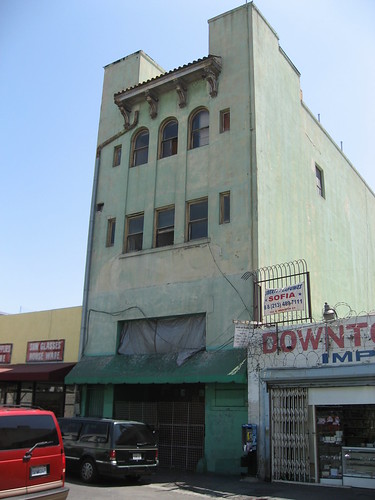
If you look closely at the shot below, you’ll notice two chunks of the arched sign aren’t original. The right side has “CO”, where the original, seen in the black and white pictures here, had a “5”, as in Truck 5. The start of the text, “EN”, looks like paint on a curved piece of plywood. But, whoever did it did a pretty good job. I didn’t notice that plywood until I got back to Big Orange Landmarks Headquarters.

Fire Station No. 23

I took the picture below a split second after some guy was standing behind that upper window, giving his arm a scratch and looking at the goings-on down on the street. The man must’ve been a squatter, because the building was sealed up pretty tight when I was there.

Fire Station No. 23

Fire Station No. 23

The old shot above is from the city's Planning Department website. Sorry, but Johns Dog House is long gone. There's a parking structure there now. (Had John only used an apostrophe, things today would be so, so different.)

Fire Station No. 23 - rear

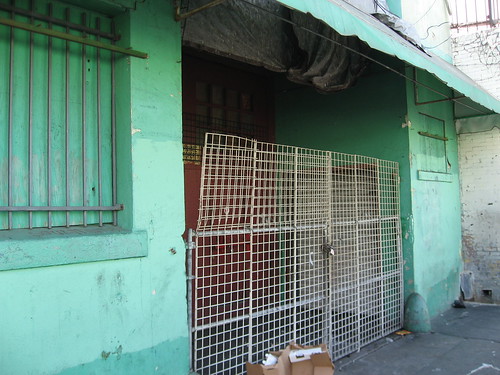
The fire station, close to a century old, is in poor condition. I can only imagine what the inside looks like. I hope it’s rehabilitated soon, or else I think it’s unlikely the building will see its centennial. This green portion is the landmark's back, on Winston Street.

Fire Station No. 23 - rear


Fire Station No. 23

Up next: Founders' Oak

continue reading...
Tuesday, June 19, 2007

No. 36 - Watts Station

Watts Station

Watts Station
1904
1686 East 103rd Street – map
Declared: 12/3/65

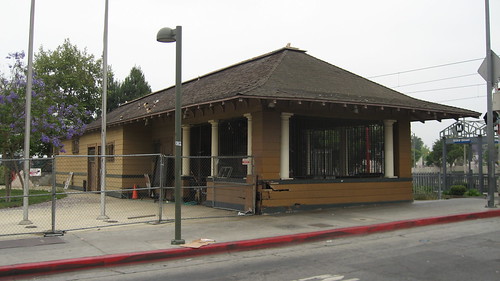
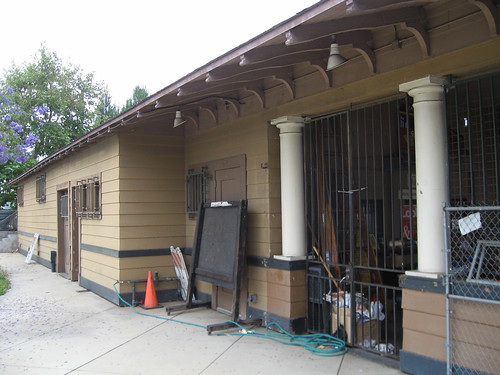
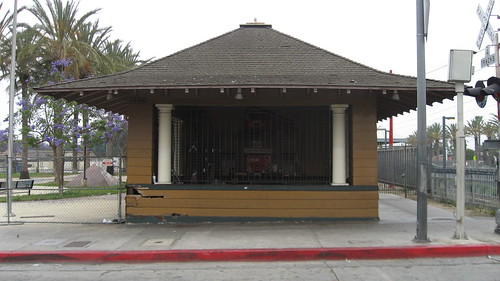
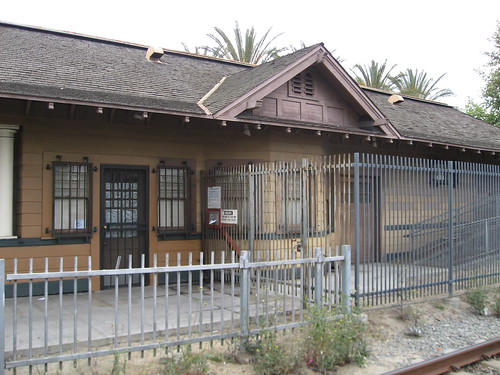
This single-story, clapboard structure, now more than a century old, has seen better days, that’s for sure.

Watts Station

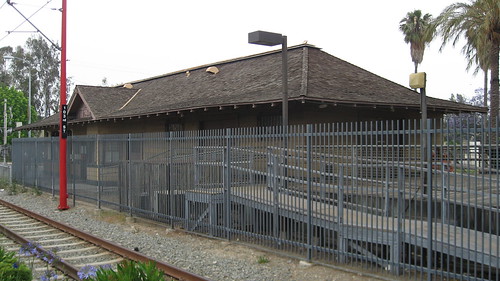
Built in 1904, Watts Station later became a main stop on the Red Car line. When the Red Cars stopped running in 1961, the station boarded the train to Deteriorationville. Oddly enough, according to a 1989 Los Angeles Times article, “the train station was the only structure that remained intact when stores along 103rd Street burned during the Watts riots.” That was in 1965.

Watts Station
Man, you gotta smack a building pretty hard to get the kind of damage you see on the corner above.

Watts Station

Well, if a major civil disturbance that resulted in $35 million in damages and 34 deaths couldn’t do in Watts Station, the 1970s were sure going to try. However, thanks in part to a two-decades long campaign led by Watts resident Freita Shaw Johnson, March, 1989, saw the re-opening of the station as what was to be a city Department of Water and Power customer service office and a Watts history mini-museum. The restoration to the building's original exterior design was paid for by a $700,000 grant from the Community Redevelopment Agency.

Watts Station

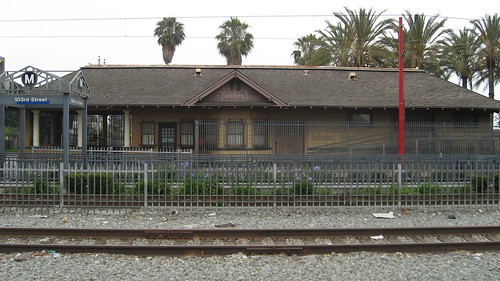
Today the building's part of the Metro Blue Line and is, once again, a train station. Now, it’s easy to complain and shake your head about the shape it’s in, but, on the other hand, I think it's more satisfying that not only is the building being used, but it’s actually in service per the original design of more than a century ago.

Watts Station was listed on the National Register of Historic Places on March 15, 1974.

Watts Station

Source:

Paul Feldman. “Watts New? Reopening of Historic Red Car Station as Museum and DWP Office Seen as Symbol of Hope, Renewal” Los Angeles Times; March 17, 1989, Metro; 2

Up next: Fire Station No. 23

continue reading...
Saturday, June 16, 2007

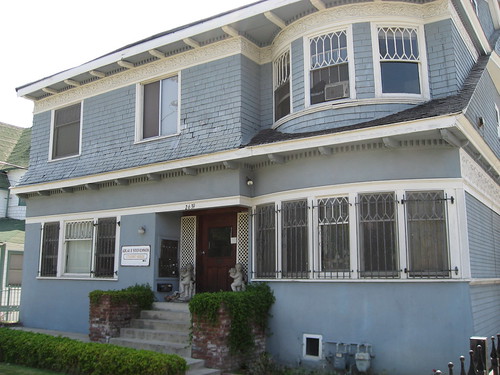
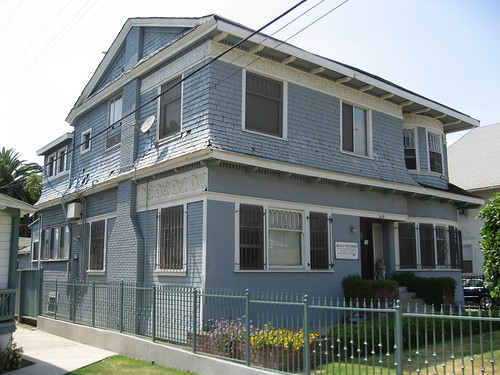
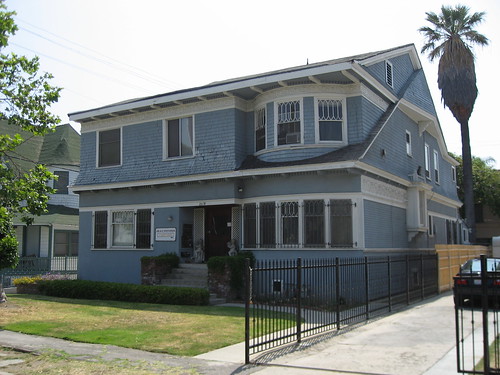
No. 35 - Birthplace of Adlai E. Stevenson III

Birthplace of Adlai E. Stevenson

Birthplace of Adlai E. Stevenson III
2639 Monmouth Avenue – map
Declared: 8/20/65

Adlai Stevenson was born in this house on February 5, 1900. The following are eleven things to know about Adlai for your Jeopardy appearance:


Birthplace of Adlai E. Stevenson
1. Stevenson's great-grandfather, Jesse Fell, was the principal founder of the Unitarian Church in Bloomington, Illinois in 1859.
2. His granddad, Adlai Stevenson, was Grover Cleveland’s Vice President.
3. served as special counsel to the Agricultural Adjustment Administration (1933–34)
4. was assistant general counsel to the Federal Alcohol Bureau (1934)
5. became an assistant to the U.S. Secretary of the Navy (1941–44)
6. In 1948, he was elected Governor of Illinois by the largest plurality in the state's history.
Birthplace of Adlai E. Stevenson
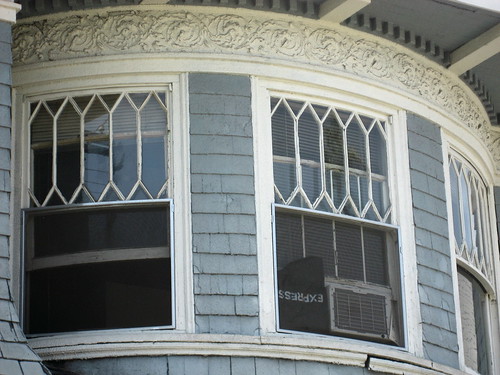
I took this picture not only for the molding and the hexagonal panes, but also for Adlai's ingenuity in the field of air-conditioning installation.
7. Richard Nixon said he had a “PhD from Dean Acheson's cowardly college of Communist containment.”
8. He ran as the Democratic choice for president twice, in 1952 and 1956, losing to Ike both times.
9. In 1961, President Kennedy appointed him Ambassador to the United Nations.
10. His books include Call to Greatness (1954), What I Think (1956), Friends and Enemies (1958), Putting First Things First (1960), and Looking Outward (1963).
11. He died on July 14, 1965, on the steps of London’s U.S. Embassy.
Birthplace of Adlai E. Stevenson

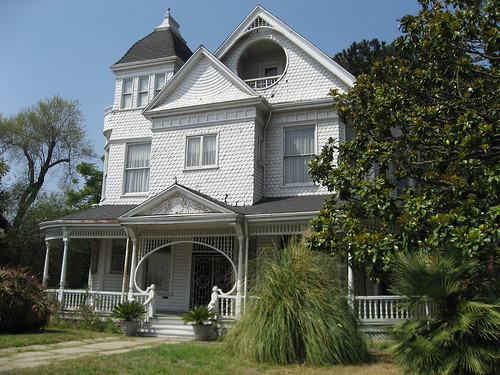
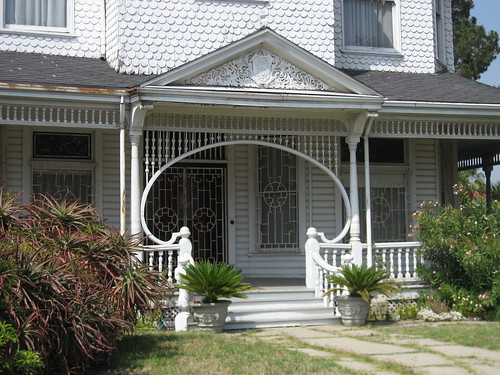
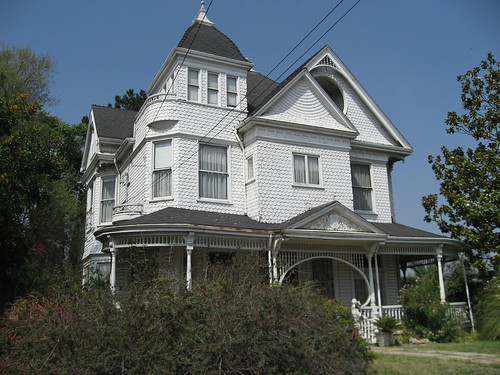
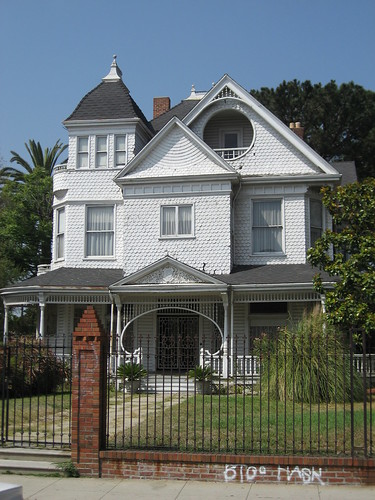
Not to take anything away from the Queen Anne house, which is nice and all, but you have to consider the designation was more a result of sentiment (the declaration came a month after Stevenson died) than for the building's architectural significance.

Adlai Stevenson's birthsite is now student housing for nearby USC.

Up next: Watts Station

continue reading...