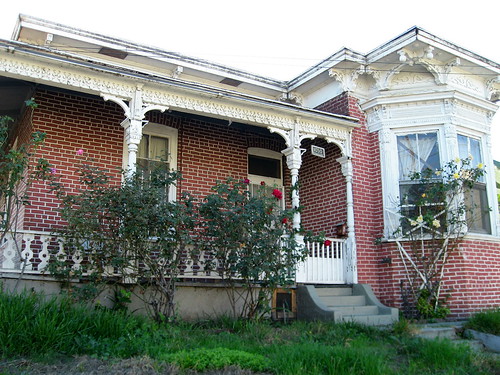
1030 Cesar E. Chavez Avenue Residence
c. 1880
1030 Cesar E. Chavez Avenue – map
Declared: 10/4/72
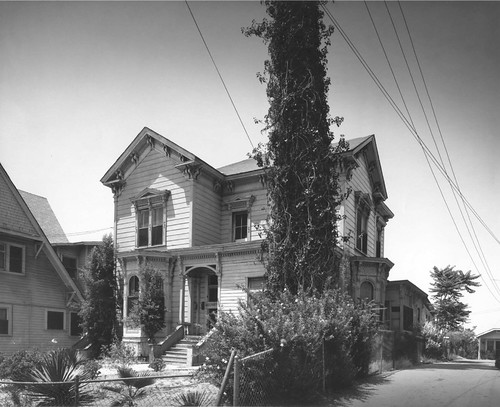
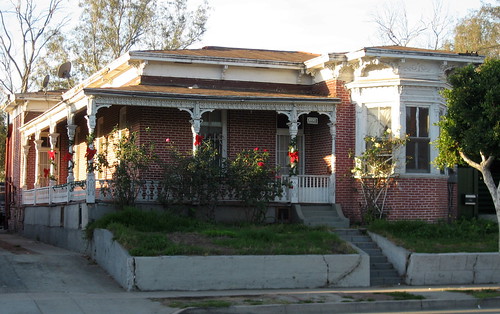
Is there another Victorian/Queen Anne home made of brick remaining in Los Angeles? (That’s not rhetorical; I really don’t know.)
Now, if you’ve driven by this house on Chavez and given it a first thought, much less a second one, I’d be surprised. While I don’t spend much time in the area, I can say I’ve never noticed it.
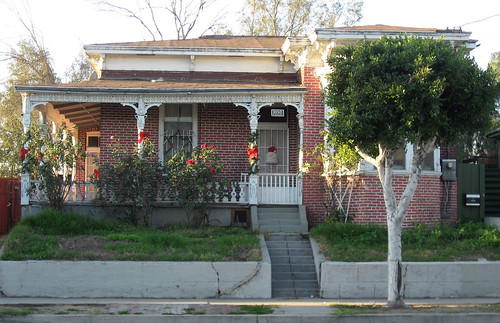
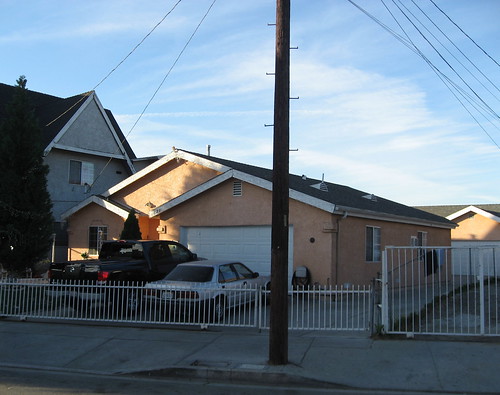
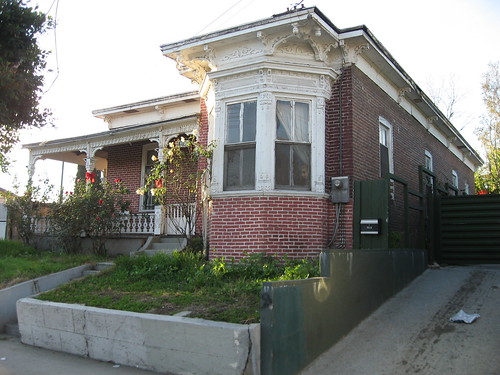
Three of the four books I’ve seen mentioning this landmark refer to this one-story structure’s broad floor plan as an indication that, at some point, the builder had intended to add a second story and then, at some other point, abandoned the idea. If you see the home in person, I bet you’ll agree this was the case.
Oh. One other thing. I briefly suffered a bit of confusion tracking down this monument because, up until late 1993, this portion of Cesar E. Chavez Avenue was called Macy Street. While you know (or should know) who Cesar Chavez was, Macy Street was named for Dr Obed Macy and his son, Oscar. Harris Newmark, in Sixty Years in California, wrote that when he set foot in Los Angeles in 1853, he...
… arrived at the only real hotel in town, the Bella Union, where stages stopped and every city function took place. This hotel was a one-story, adobe house enlarged in 1858 to two stories, and located on Main Street above Commercial; and Dr. Obed Macy, who had bought it the previous spring from Winston & Hodges, was the proprietor.The elder Macy arrived in Southern California around 1850, settling in El Monte. He moved downtown a year later, bought the Bella Union, and opened the Alameda Baths. He died on July 19th, 1857. Oscar Macy was a newspaper editor and businessman, also serving as city treasurer during the 1880s.
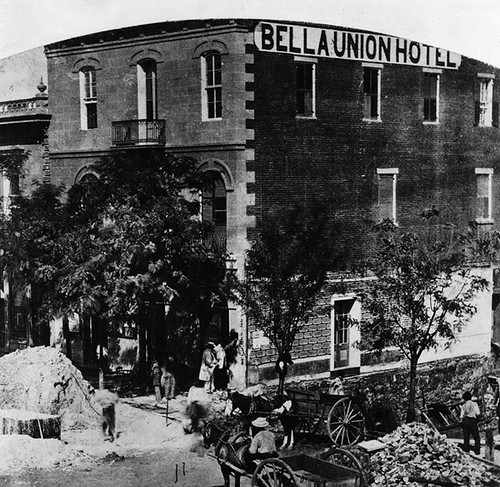
The Bella Union was the home of the Los Angeles Star newspaper, had served as the County Courthouse, housed Pio Pico, and was later the site of a celebration when the telegraph connected San Francisco and L.A. (1860) among many other notes. The hotel became the Clarenden in 1873 and the St Charles in 1875. The Bella Union building was razed in 1940 (and the Pico Building (1868), shown in the picture next to the hotel, was torn down in 1957).
But I digress; enough of the Macys and the Bella Union Hotel. Historic-Cultural Monument No. 102 is this brick home, standing here for about 130 years, an unassuming piece of L.A. history.
Up next: Forthmann House and Carriage House
continue reading...