Showing posts with label Wilshire. Show all posts

Sunday, January 25, 2009

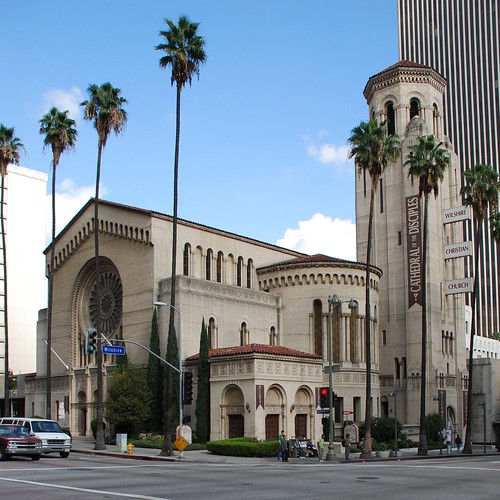
No. 209 - Wilshire Christian Church Building

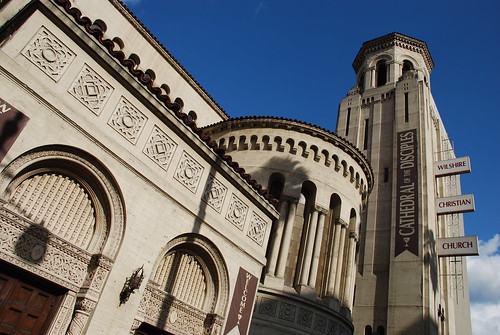
Wilshire Christian Church Building

Wilshire Christian Church Building
1927 – Robert H. Orr
634 South Normandie – map
Declared: 1/17/79

Los Angeles Historic-Cultural Monument No. 209, the Wilshire Christian Church Building, originates from the late 1920s, but the roots of the church itself stretch back 135 years.
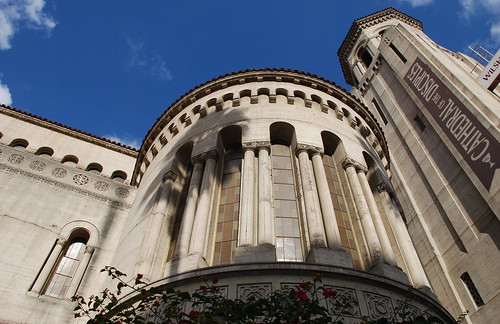
Wilshire Christian Church Building

Christian Church (Disciples of Christ) held its first service on August 9, 1874, in the city’s Court House. The church was chartered a few months later, at the end of February 1875. In December 1881, the organization set up its first chapel on Temple Street property donated by dry goodsman Rev. B.F. Coulter between North Fort (Broadway) and Buena Vista. The Temple Street Christian Church became the First Christian Church of Los Angeles when it relocated to 11th and Hope Streets in July 1894 (this church building was razed in 1961). The congregation consisted of 1,200 members at this time, the largest church in the west.
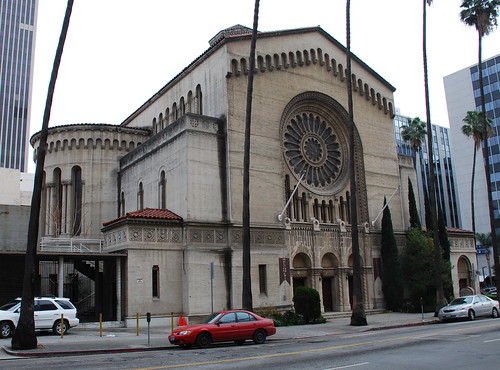
Wilshire Christian Church Building

Jump forward a decade to 1904, when Magnolia Avenue Christian Church was founded as a mission church at 25th and Magnolia.
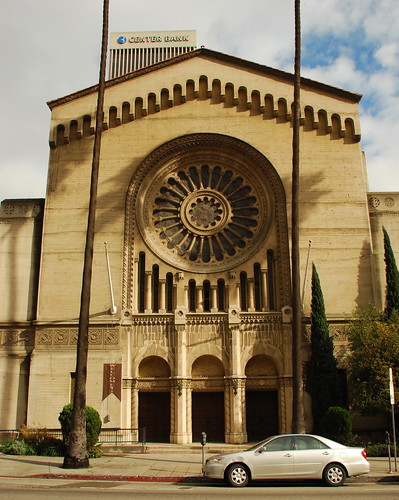
Wilshire Christian Church Building

Six years later, on February 13, 1910, thirteen members of Magnolia Avenue Church established the Wilshire Boulevard Christian Church. Their first meeting took place in a private home (rumored to be haunted and “carefully avoided by superstitious persons”) at 351 – later renumbered 255 – Normandie. They then held services in a large tent at Normandie Avenue and 4th Street. On the northeast corner of Wilshire and Normandie, on land donated by the Chapman Brothers Company – S.J., Charles C., and Col. Frank M. Chapman, the Wilshire Congregation opened a $30,000 bungalow church on June 4, 1911. It was the first church on Wilshire Boulevard. (The congregation also purchased an additional 125 feet on Normandie.)
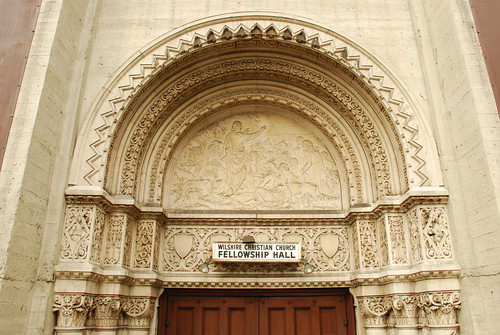
Wilshire Christian Church Building

Now, the landmark…

Architect Robert H. Orr had already designed a few Los Angeles-area churches – including the First Baptist Church in Sawtelle, the Hollywood Christian Church, and the Japanese Christian Church – by the time of the September 6, 1925, groundbreaking of Wilshire Boulevard Christian’s new Romanesque Revival home. When first announced, it was figured the building would run $400,000. This was at the start of spring 1924 when plans called for an “English Gothic” building comprising two units – the auditorium, with 1,500 seats, and Sunday school. Also to be included were and social hall and banquet room, a stage, gymnasium, lecture room, classrooms, and general offices.
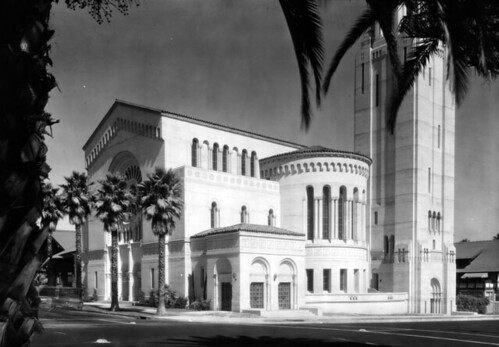
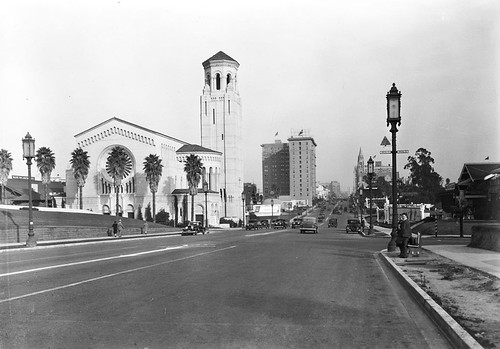
Wilshire Christian Church Building

By February 1925, the cost was now estimated at half a million. The Wurster Construction Company received the building contract later that August.

Dr M. Howard Fagan, pastor since 1919 when the congregation was made of less than 300 members, along with Dr J.H. Garrison, turned the first shovelful of earth at the 9/25 groundbreaking.
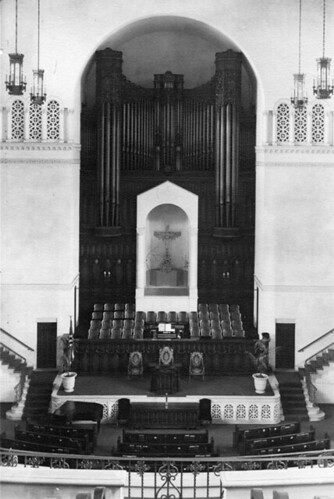
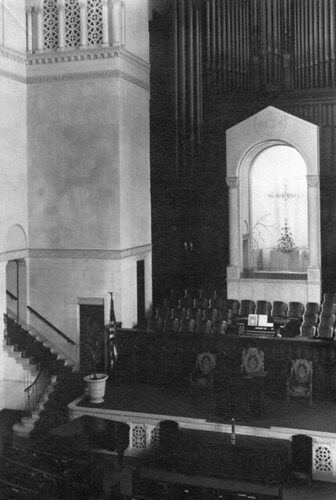
Wilshire Christian Church Building, Interior

S.J. Chapman laid the cornerstone on May 23, 1926, with more than 600 people in attendance. Joe Crail, chairman of the official board, was the chief speaker. By this time, the church boasted more than 1,100 members. (This, trivially and for a bit of historic perspective, was a day before groundbreaking of the Roosevelt Hotel on Hollywood Boulevard.)

By the building’s dedication on April 3, 1927, its cost was pegged at $407,000. Dr Charles S. Medbury, pastor of the University Christian Church and “the most useful citizen of Des Moines” according to a newspaper contest, gave the dedicatory sermon. Also part of the ceremony, Miss Julie Keller led an ensemble of seven harps and a violin. Mr and Mrs Lewis E. Grigsby presented a set of twenty-one chimes, installed at a cost of $14,000. Dedicatory meetings were held every evening for the following two weeks.

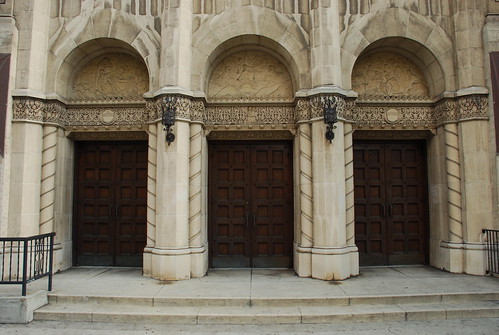
Wilshire Christian Church Building

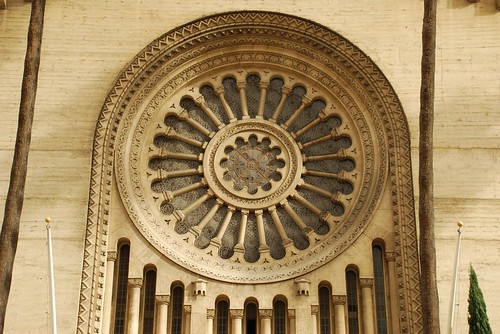
Here’s a shot of the monument’s Rose Stained-Glass Window, the recipient of the afternoon sun, by our friends at Judson Studios. Why didn’t they orient the building so this would face Wilshire, I wonder?
Wilshire Christian Church Building

Orr’s three-story, reinforced concrete church building featured a seventy-five foot tall ceiling (still does, I guess), oak woodwork, and a floor covered with a “heavily padded Wilton carpet”. The organ case surrounding the bapistry had been ornamented with hand-carved panels. Today, the Sanctuary seats 950, and the smaller Mosely Chapel holds 110. The building’s Fellowship Hall contains a stage, dance floor, and gourmet kitchen. This last hall seats 350.

In 1935, the Wilshire Boulevard Christian Church merged with the Magnolia Avenue Christian Church. On May 19, 1940, the First Christian Church of Los Angeles then combined with Wilshire Boulevard Christian Church becoming, on May 23, 1945, the Wilshire Christian Church we know it today, still serving members of the Disciples of Christ congregation.
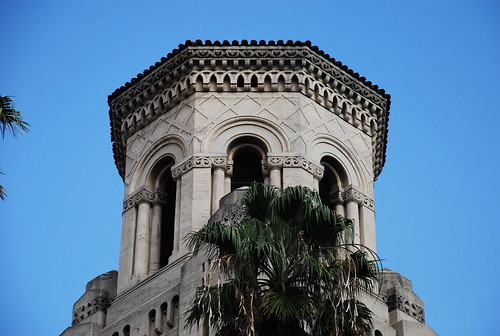
Wilshire Christian Church Building

So, to re-cap: First Christian Church of Los Angeles (formerly Temple Street Christian Church and, before that, Christian Church) + Magnolia Avenue Christian Church + Wilshire Boulevard Christian Church = Wilshire Christian Church.

The Wilshire Christian Church Education Building replaced the 1911 bungalow in January 1959. The Wilshire Christian Manor retirement home next door was built in 1969.

(The black and white pictures are from the L.A. Public Library's online photo archive.)
Wilshire Christian Church Building

Sources:

“Launch Local Improvements” The Los Angeles Times; Mar 23, 1924, p. D1

“Anniversary for Church” The Los Angeles Times; Feb 7, 1925, p. A2

“Contract is Awarded on New Church” The Los Angeles Times; Aug 30, 1925, p. G5

“Start New Church Sunday” The Los Angeles Times; Sep 5, 1925, p. A2

“Church Will Celebrate” The Los Angeles Times; Feb 6, 1926, p. A2

“New Church Dedication on Sunday” The Los Angeles Times; May 21, 1926, p. A14

“Church Corner-stone Laid” The Los Angeles Times; May 24, 1926, p. A11

“Church Dedicated April 3” The Los Angeles Times; Mar 18, 1927, p. A8

“Church to be Dedicated” The Los Angeles Times; Apr 2, 1927, p. A2

“New Church Gets Aid at Dedication” The Los Angeles Times; Apr 4, 1927, p. A2

“Harp Ensemble Marked Success at New Church” The Los Angeles Times; Apr 6, 1927, p. A5

Up next: Terrace Park and Powers Place

continue reading...

Monday, September 22, 2008

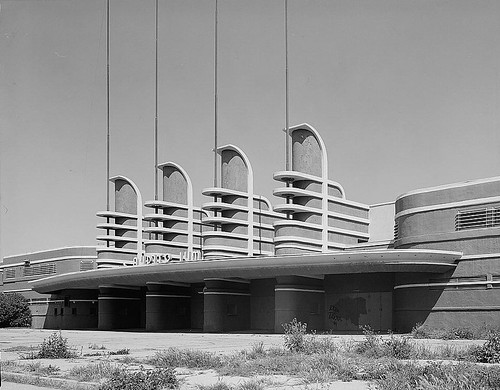
No. 183 - (Site of) West Facade of the Pan Pacific Auditorium

West Facade of the Pan-Pacific Auditorium

(Site of) West Façade of Pan-Pacific Auditorium
1935 – Plummer, Wurdeman & Becket
7600 Beverly Boulevard – map
Declared: 3/1/78

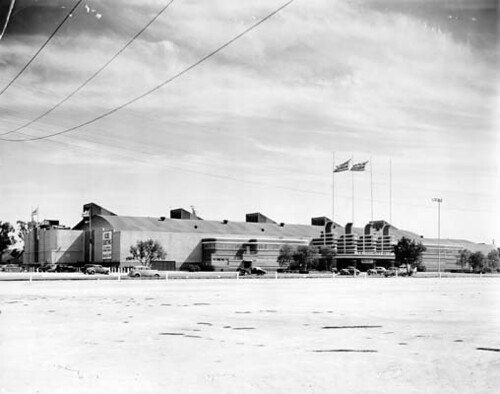
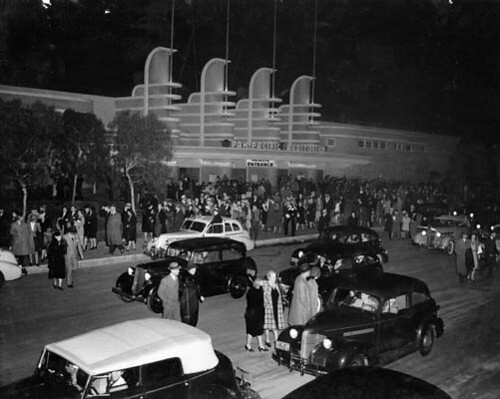
The architectural firm of Plummer, Wurdeman & Becket created the Pan-Pacific Auditorium as a temporary structure, initially serving the National Housing Exposition’s run for a few weeks during the summer of 1935. The big barn, however, went on to host all sorts of tradeshows, concerts, sporting events, circuses, horse shows, roller derbies, and political rallies, before being shuttered in 1972.

Pan-Pacific Auditorium

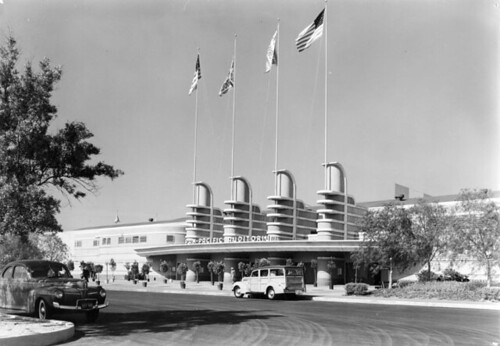
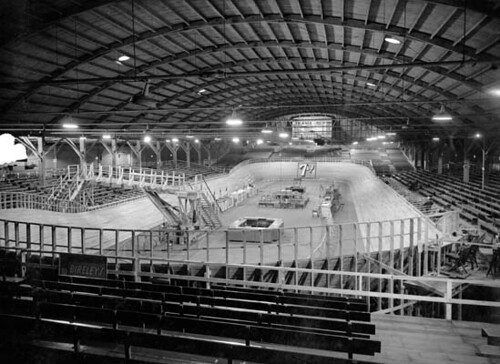
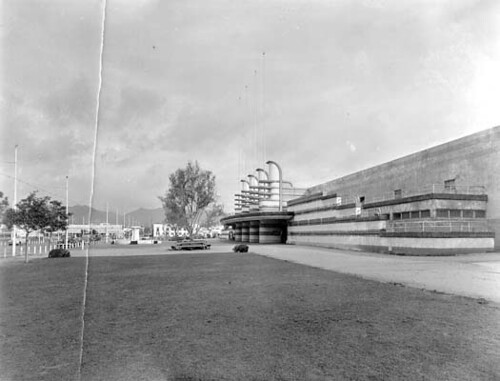
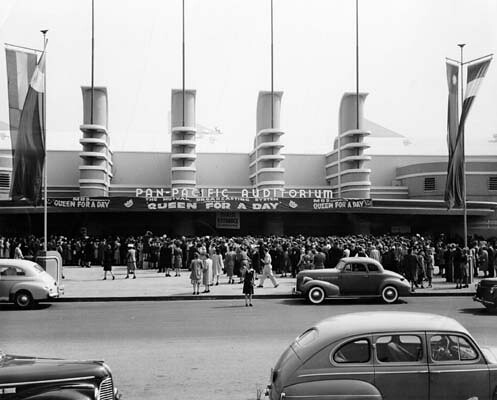
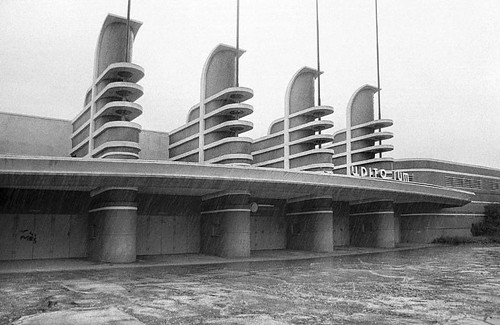
A massive (400' x 250' with eighteen 130-foot arch-rib trusses and 110,000 feet of floor space) wood-frame, stucco-covered building, the auditorium was the centerpiece of the twelve-and-a-half-acre exposition grounds off Beverly and Fairfax, just east of Gilmore Stadium. The outstanding feature of the Pan, of course, was the Streamline Moderne façade, with its four green and white pylons and soaring flagpoles. With Wurdeman in charge, the architects created one of Los Angeles’s most iconic landmarks in the Depression years. (Charles F. Plummer would die four years later. Walter C. Wurdeman and Welton D. Becket then teamed up to design buildings all over the southland. After Wurdeman's death, Becket worked on the Capitol Records Building and the Music Center downtown.)

Pan-Pacific Auditorium

Built in just fifty-six days, the Pan-Pacific Auditorium opened May 18, 1935, as “the largest of its sort in the West and one of the three largest in the nation.” The 500-member Tenth Olympiad Chorus sang at the dedication ceremonies that Saturday night.

In the 1940s, the Pan-Pacific became a permanent full-service auditorium. The concrete slab floor was claimed to be the “world's largest indoor ice rink.”

Pan-Pacific Auditorium Interior

If you were a kid in Los Angeles in the 1960s, there’s a good chance you saw the Harlem Globetrotters, the Ice Capades, or a circus or two here. The Pan was also the site of Elvis Presley’s first west-coast concert. Q: How awesome would it have been to see Elvis with Scotty Moore, Bill Black, and D.J. Fontana and the Jordanaires perform here? A: Very awesome, indeed. And for $3.75 (cheap!), too. Click here for thorough coverage of his October 1957 visit.

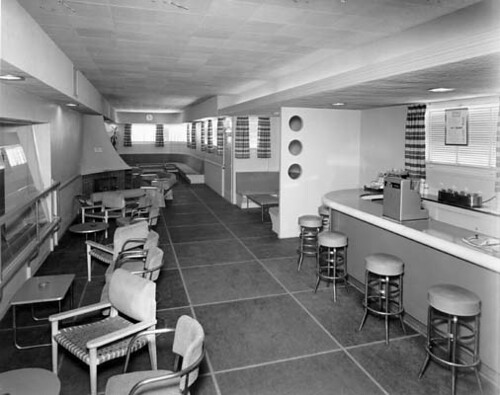
Pan-Pacific Auditorium Cafe
A cafe in the auditorium.

Along with the Grand Olympic and Shrine auditoriums, the Pan-Pacific became one of Southern California’s major indoor sports facilities. Besides supporting college and two pro hockey teams, the Pan saw its share of home UCLA basketball games. It was also the home court of the USC men’s basketball team from 1949 through 1959.

The Southern California Chapter of the American Institute of Architects gave the Pan-Pacific an Honor Award in January 1947.

Pan-Pacific Auditorium

In 1959, the air-conditioned L.A. Memorial Sports Arena opened and the slow death knell began for the Pan. It continued on for another thirteen years, closing in 1972. The county purchased the property in 1979, a year after it was both declared a city landmark and listed on the National Register of Historic Places, and a year before it made an appearance with Olivia Newton-John in Xanadu.

Pan-Pacific Auditorium

In April 1988, the county of L.A. unveiled plans to incorporate the auditorium into a 116,700-square-foot retail and entertainment complex. Costing more than $14.5 million, the center would include a movie theater, food court, a couple of restaurants, an ice rink, gym facility, and office and retail space. However, a year later, on May 24, 1989, a little after 7:00 p.m., the dilapidated Pan-Pacific Auditorium burnt to the ground, the work of an arsonist. More than 200 firefighters battled the blaze, but the wooden structure went up fast, with the last of the four fin-shaped towers falling a little after 10:00 p.m. (see page 228 in McGrew and Julian’s Landmark of Los Angeles for a picture of the crumbled pylons.) Officials arrested a 42-year-old transient who, despite confessing to starting the fire, was released by the end of the month due to lack of evidence.

Pan-Pacific Auditorium

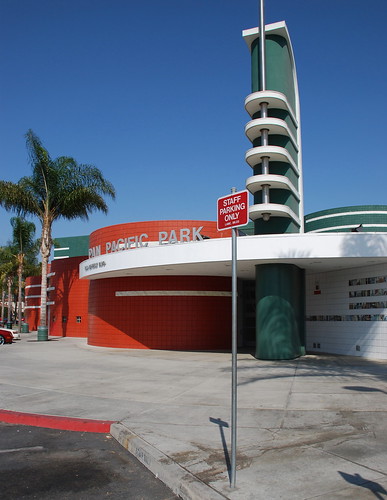
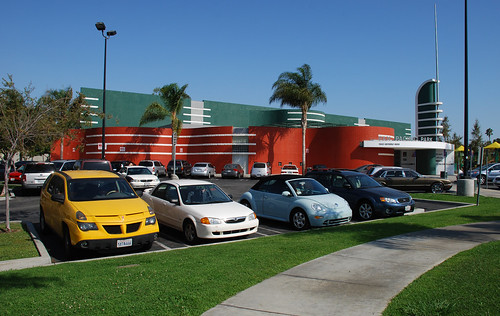
The remains of the façade stood until May 1992 when they were cleared away for the new elements to Pan Pacific Park, the Pan Pacific Recreation Center (with its single-towered homage to the old landmark) and, later, Renee’s Place, a universal-access playground dedicated this past spring to Renee Weitzer, Chief of Staff and Planning Deputy in Council District 4. The park falls under the jurisdiction of the city’s Recreation and Parks Department.

Pan Pacific Park
Pan Pacific Park
Today's Pan Pacific Recreation Center.

The black and white shots here, except for the top one, are from the Los Angeles Public Library. That first one is from the Library of Congress. For a trio of color shots of the Pan in 1980, click here to see Larry Gassan’s Flickr photographs.

Wes Facade of the Pan-Pacific Auditorium

Sources:

“Huge Auditorium Construction” The Los Angeles Times; Apr 21, 1935, p. 15

“Great Exhibit Nearly Ready” The Los Angeles Times; May 12, 1935, p. D3

“Crews Rush Homes Show” The Los Angeles Times; May 12, 1935, p. 27

“House Show on Tonight” The Los Angeles Times; May 18, 1935, p. 4

Gollner, Philipp “Plan for Historic Pan Pacific Features Rink, Movie Theaters” The Los Angeles Times; Apr 30, 1988, p. Metro, 2

Stein, George and Nieson Himmel “fire Destorys Pan Pacific Auditorum” The Los Angeles Times; May 25, 1989, p. 1

Schrader, Esther and Patt Morrison “Like Debut in 1935, the Pan’s Finale Was a Spectacle” The Los Angeles Times; May 25, 1989, p. Metrco1

Gustkey, Earl “The Pan-Pacific Fire Post-Moderne Building Was Scene of Exciting Times for L.A. Sports Fans” The Los Angeles Times; May 26, 1989, p. Metro 1


Up next: Tower of Wooden Pallets

continue reading...

Sunday, August 3, 2008

No. 169 - Residence of William Grant Still

Residence of William Grant Still

Residence of William Grant Still
1262 South Victoria Avenue – map
Declared: 12/1/76

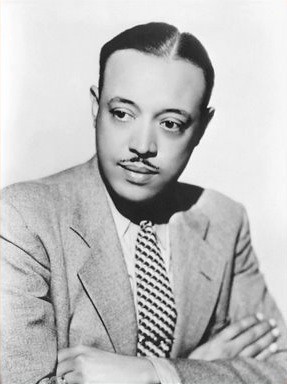
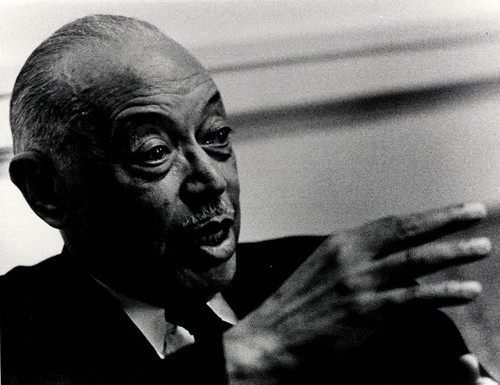
Alright. I’ll ‘fess up. Up until a few weeks ago, I had never heard of William Grant Still. It turns out the “Dean of Afro-American Composers” wrote more 150 musical works, including nine operas, five symphonies, four ballets, chamber works, and so on. He was also an arranger, conductor, and an accomplished oboe player. So I guess I'm the rube.

Actually, it’s pretty tough to summarize Still’s achievements in just this one post. For a much more detailed list of the man’s accomplishments, visit AfriClassical.com (where you can also listen to some brief audio clips) or the official home of William Grant Still Music.

Still was born in Mississippi in 1895, but moved to Little Rock with his mom a few months later after the death of his father.

William Grant Still

Personally, I like knowing the guy worked with W.C. Handy, Sophie Tucker, Artie Shaw, and Paul Whiteman. A WWI U.S. navy veteran, he arranged for and/or played in New York City shows including Sissle and Blake’s Shuffle Along and Dixie to Broadway. Still studied with George Whitefield Chadwick and Edgar Varèse in the twenties and received both Guggenheim and Rosenwald Fellowships. He was a member of the Harlem Renaissance and played oboe with the Harlem Orchestra.

The first performance of a William Grant Still classical work was of From the Land of Dreams on February 8, 1925. On October 28, 1931, the Rochester Philharmonic premiered Still’s first symphony, the Afro-American Symphony.

He settled in Los Angeles in 1934. Two years later, on July 23, 1936, Still conducted the L.A. Philharmonic playing one of his works at the Hollywood Bowl. This was the first time an African-American conductor led a major symphony orchestra in concert in the U.S.

William Grant Still

Still co-wrote the 1936 ballet Lenox Avenue with pianist Verna Arvey, whom he would go on to marry in 1939 (Verna was Still’s second marriage; he had four children with his first wife, Grace Bundy, whom he divorced). He then worked with Langston Hughes on the opera Troubled Island and with Zora Neale Hurston on Caribbean Melodies. In 1940, the New York Philharmonic performed And They Lynched Him to a Tree, a choral ballad he wrote with Katherine Garrison Chapin.

William Grant Still succumbed to the Hollywood bug, (not always with a good experience), contributing to the movies The King of Jazz (1929), Lost Horizon (1935), Pennies From Heaven (1936), and Stormy Weather (1943). He even worked for television, writing music for Gunsmoke and Perry Mason.

Residence of William Grant Still
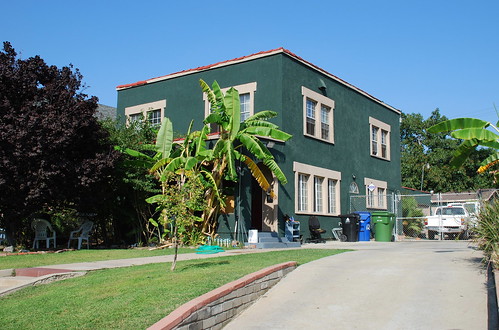
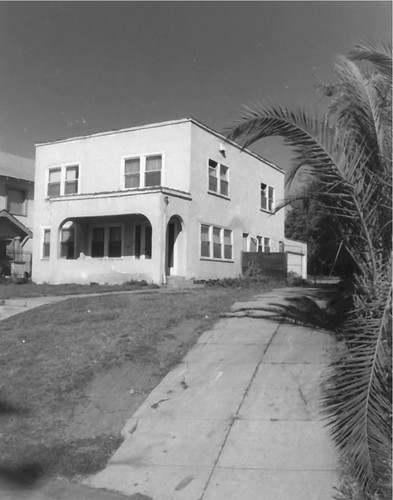
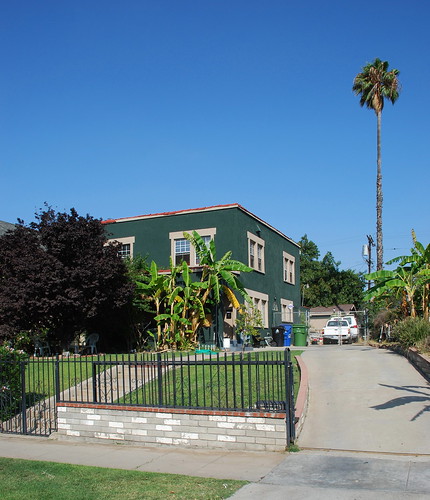
(Compare the big, green box of today to whenever this shot from L.A.’s Department of City Planning website was taken.)

While Still slowed down in the 1950s, he continued to compose operas, Bayou Legend, A Southern Interlude, and Costaso among them. He also stayed busy accepting sacks full of honorary degrees and awards.

After spending several years in a nursing home, William Grant Still died of a heart attack on December 3, 1978 at the age of 83.

As far as the house is concerned, I don’t think anyone would argue it’s got any architectural significance. Still lived here with Arvey, their son, Duncan Allan, and daughter, Judith Anne. Three years before he died, the Cultural Heritage Board declared his home a city monument because of the contribution made by Still to the culture of Los Angeles and the world.

Residence of William Grant Still

Sources:

Cariaga, Daniel “Composer William Grant Still Dies” The Los Angeles Times; Dec 6, 1978, p. H29

Arvey, Verna In One Lifetime The University of Arkansas Press 1984 Fayetteville

Smith, Catherine Parsons William Grant Still: A Study in Contradictions University of California Press 2000 Berkeley, Los Angeles, London

Up next: Paul R. Williams Residence

continue reading...
Wednesday, March 12, 2008

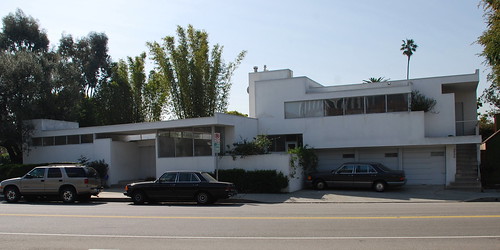
No. 122 - Buck House

Buck House

Buck House
1934 – Rudolf M. Schindler
805 South Genesee – map
Declared: 3/20/74

Something was in the air as the seasons were changing in early 1974 as the city and its Cultural Heritage Commission waded into a new architectural pool and, within a two-week span, designated three Modern/International Style homes – a Schindler, a Neutra, and an Ain – official Los Angeles monuments. I’d like to think it had something to do with the sounds of Terry Jacks and John Denver.

Buck House

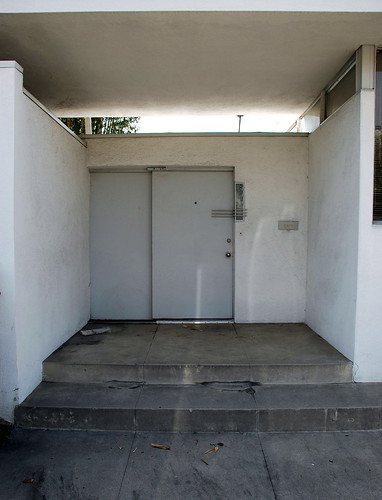
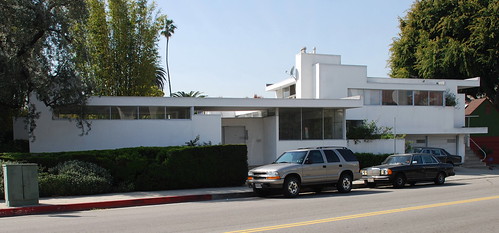
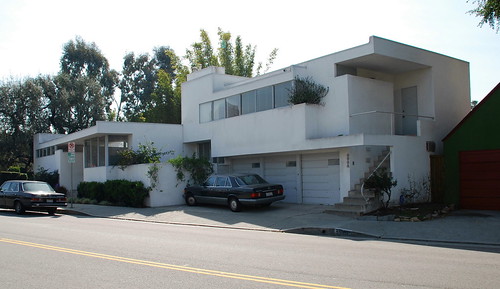
Rudolf Michael Schindler had been living and working in Los Angeles for more than a dozen years when he built this wood frame and stucco home for John J. Buck, who designed the interiors of women’s clothing stores.

Born in Vienna in 1887, Schindler left a six-year stint in the Windy City (i.e. Chicago) to come to L.A. in 1920 to supervise the construction of Frank Lloyd Wright’s Hollyhock House. By the time he received the Buck commission he had made a name for himself in Southern California with projects like Silverlake’s The James Eads How Residence (1925-26) (a recently-designated monument, No. 895), the Phillip Lovell Beach House (1922-26), and his own digs on Kings Road (1921-22) in West Hollywood.

Buck House

MOCA’s The Architecture of R.M. Schindler says that while the Buck House featured a
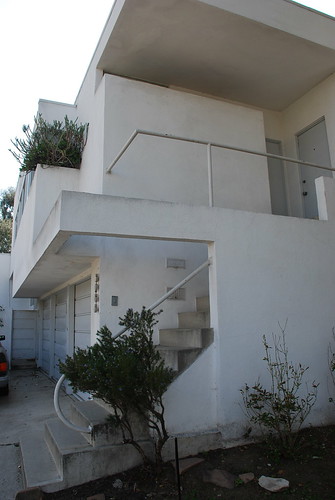
“… simple façade to the street of planar walls and ribbon or clerestory* windows, the rear of the house opened to a garden by means of sliding glass walls – a device used infrequently by Schindler elsewhere in his work. The design was further distinguished by Schindler’s incorporation of a second-story apartment with its own entrance alongside the main house.”
*My OED tells me a clerestory is "The upper part of the nave, choir, and transepts of a cathedral or other large church, lying above the triforium ... and containing a series of windows, clear of the roofs of the aisles, admitting light to the central parts of the building."

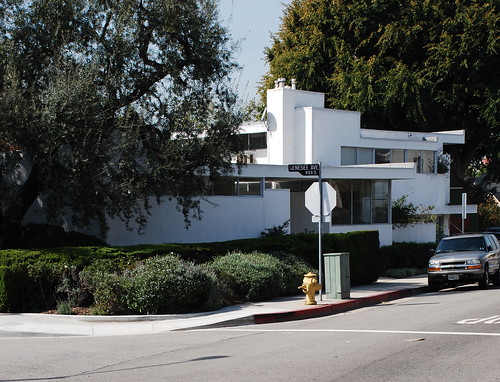
Built with three bedrooms and three garages, the Buck House’s garden on that southern side (the 8th Street façade is the one in these pictures) is completely obscured from the pavement. However, if you go to arcspace.com, you can see not only shots of that garden area, but also a few photos of the interior.

Buck House

MAKCenter.org writes there have been a couple of alterations to the Buck House since 1934: “… a modern kitchen was installed, a bedroom has been opened up to its adjacent breakfast room, two columns have been added under the overhang of the main house, and a shading device was designed to shade the porch.”

Buck House
The apartment.

Nonetheless, the building looks to be in great shape and, while I don’t usually notice this sort of thing, it seems extra-appropriately situated on that corner space, if that makes any sense.

The next Schindler-designed landmark on the list is No. 228, the Laurelwood Apartments in North Hollywood.

Buck House

Source:

Elizabeth A.T. Smith and Michael Darling. The Architecture of R.M. Schindler The Museum of Contemporary at Los Angeles, in association with Harry N. Abrams, Inc. 2001 New York, NY


Up next: Lovell Health House

continue reading...
Friday, February 29, 2008

No. 118 - Pellissier Building

Pellissier Building

Pellissier Building
1931 – Stiles O. Clements
3789 Wilshire Boulevard – map
Declared: 5/16/73

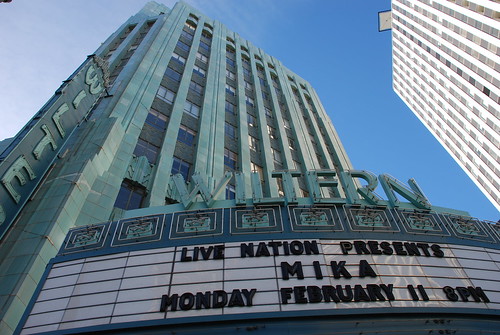
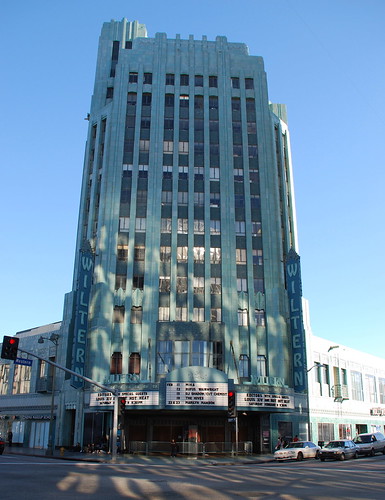
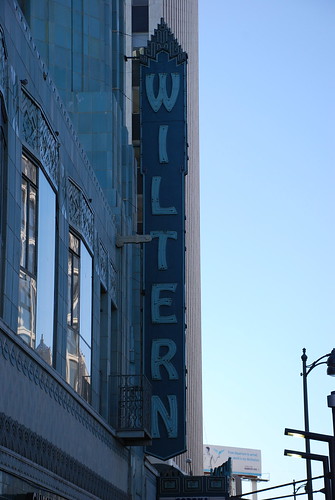
The first time I was in the Wiltern Theater was on June 18, 1992 to yuk at Jerry Seinfeld and George Wallace in a benefit performance following that spring’s rioting. I’ve been to shows there many times since, never knowing the Wiltern was part of what’s called the Pellissier Building. Now that I know, it’ll probably take me another fifteen years to learn how to pronounce Pellissier.

Pellissier Building

Germain Pellissier was a Frenchman who made it to Los Angeles via San Francisco where he arrived in 1867. In 1882, he paid $3,200 to the Southern Pacific Railroad for 140 acres of land, today roughly bounded by San Marino Street on the south, Normandie Avenue toward the east, Western Avenue on the west, and Wilshire to the north. At the time, Wilshire Boulevard hadn’t even existed.

Pellissier started a sheep ranch, but gave it up shortly thereafter, building a house on the land. He died in 1908.

Pellissier Building

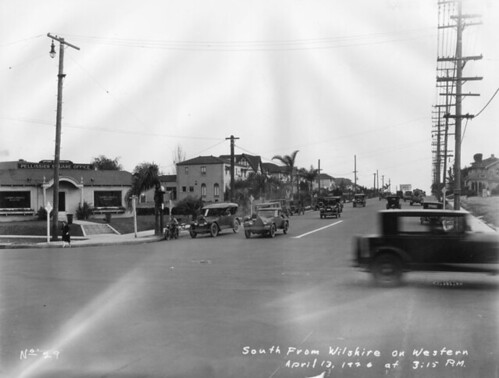
Twenty years later, after the homestead’s partial subdividing in 1913 and 1926, Pellissier’s grandson, Henry de Roulet, got the hankering to build the area’s premiere complex for retail space, offices, and a theater on the site which by now sported “The Pellissier Square Real Estate Office of Henry de Roulet for Uptown Los Angeles.”

From the Los Angeles Public Library photo archive, below’s a picture of Roulet’s real estate office, right where the Wiltern is today. The make of the cars dates the shot from mid-April, 1926, while the lighting places the time between 3:00 and 3:30 in the afternoon. It doesn’t look it here, but in 1928, the L.A. Times called Wilshire and Western “the busiest intersection in the world.”

Site of Wiltern Theater, Los Angeles

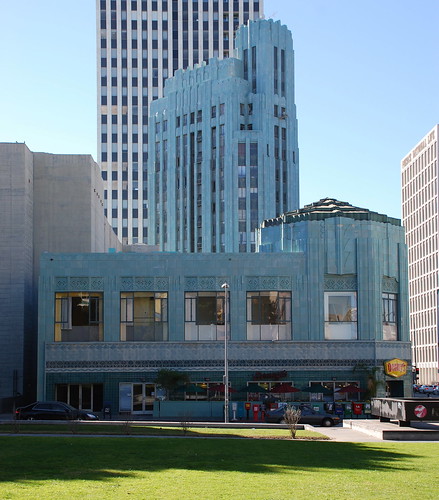
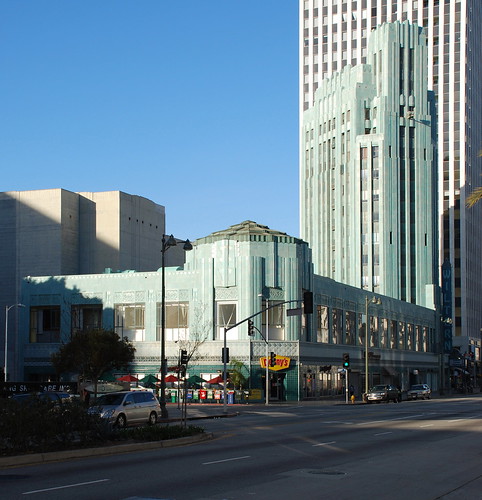
De Roulet hired the city’s oldest architectural firm, Morgan, Walls & Clements, to design the Art Deco Zigzag Moderne building. It’s mainly the work of Stiles O. Clements, who was, in the late 1920s, in the midst of building the Richfield Building downtown.

Pellissier Building

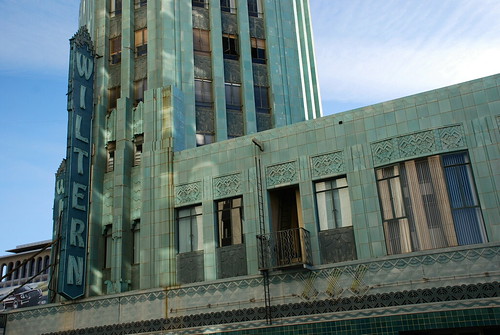
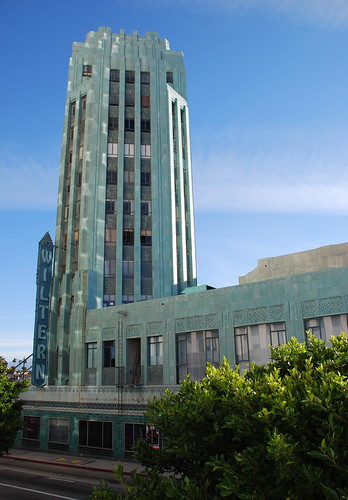
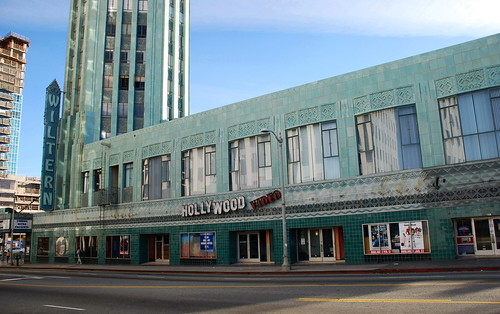
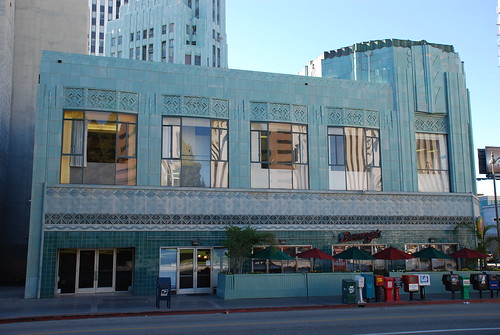
The diagonally-situated building is twelve stories constructed of reinforced steel. The Gladding McBean Company created the custom-glazed terra cotta tiles of aqua-green, which then became known as “Pellessier green”. The exterior design contains scallops, zigzags, and chevrons (or ‘V’s to us layfolk). The second floor featured retail display windows for attracting the attention of the passengers on the then-popular double-decker buses.

Pellissier Building

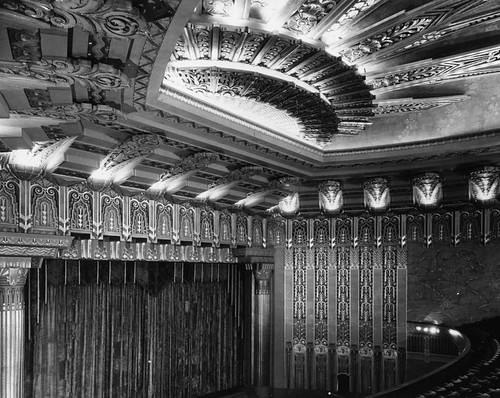
De Roulet also brought in G. Albert Lansburgh to design the theater’s interior with Dutchman Anthony B. Heinsbergen (whom we met at the Biltmore) creating the murals. The original color scheme was orangey. Warner Bros leased the theatre, which became known as the Warner Bros Western Theater.

The 2,344-seat theater opened on October 7, 1931. For the night, Roulet had built a temporary red carpetish footbridge spanning Wilshire, allowing the muckamuck audience to escape mingling with the hoi polloi.

The Wiltern, Los Angeles

That night, William Powell emceed a night of speakers, a cartoon (Looney Tunes, of course), a newsreel, a comedy, a short comedy, an organ solo by Albert Hay Malotte on the theater’s giant Kimball, the largest organ in the western U.S., and the film Alexander Hamilton, starring George Arliss.

The Depression was a drag, of course, and the theater closed within a year. It re-opened in the mid-thirties with 20th Century Fox and some independent exhibitors running it. It was then the theater was rechristened the Wil-Tern, cleverly mashing up the intersection’s Wilshire and Western.

Pellissier Building
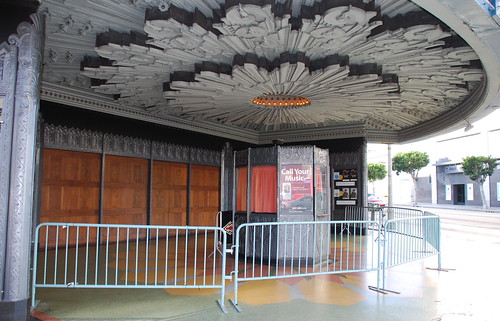
Mahogany doors, terrazzo floor, sunburst ceiling.

In 1956, the de Roulets sold the Pellissier Building to the Franklin Life Insurance Company, who put the building up for sale in 1970. There were no takers.

In early 1979, the Wiltern, which was being operated by Pacific Theaters, closed, and Franklin Life applied for a demolition permit. With the combined efforts of the recently-formed L.A. Conservancy, the Cultural Heritage Board, the Citizens Committee to Save the Wiltern (founded by Rick Newburger), and city council president John Ferraro, the landmark was given a series of reprieves until early 1981 when Wayne Ratkovich led developers Ratkovich, Bowers & Perez, Inc. and Bronco, Ltd to buy the Pellissier Building for $6.3 million.

Pellissier Building

Santa Monica’s Rossetti Associates went on to renovate the office tower for about $5 million, gutting the floors to create larger offices (although Henry de Roulet’s original second-story office was saved).

Brenda Levin & Associates, with help from Shepardson/Winner Theater Consultants of St Louis, worked on the retail space and the Wiltern. Anthony B. Heinsbergen’s son, another Anthony, oversaw the restoration of his dad’s interior murals. Bill Graham Presents took over the theater, the restoration of which ran to $4.8 million. The retail corner on Wilshire was redesigned as a restaurant (today, a Denny’s).

Pellissier Building

The Wiltern re-opened May 1, 1985 with a benefit for the Conservancy and the National Trust of Historic Preservation. A subsequent $1.5 million facelift led to another re-opening on October 15, 2002. A year later, as part of a partnership with LG Electronics, the Wiltern was officially renamed the Wiltern LG.

Pellissier Building

The Pellissier Building is on the National Register of Historic Places.

Pellissier Building

Sources:

Edwin Schallert “Western Theater Opened” Los Angeles Times; Oct 9, 1931, p. A9

Kevin Roderick and J. Eric Lynxwiler. Wilshire Boulevard: Grand Concourse of Los Angeles

The Wiltern: from pastureland to performing arts center: a monograph commemorating the re-dedication of a Los Angeles landmark, May 1, 1985 The Los Angeles Conservancy 1985 Los Angeles, CA

Suzanne Tarbell Cooper, Amy Ronnebeck, and Marc Wannamaker. Theatres in Los Angeles Angel City Press 2005 Santa Monica, CA Arcadia Publishing 2008 Charleston, SC, Chicago, IL, Portsmouth, NH, San Francisco, CA

Up next: Cohn-Goldwater Building

continue reading...