Showing posts with label San Pedro. Show all posts

Tuesday, October 7, 2008

No. 188 - U.S.S. Los Angeles Naval Monument

U.S.S. Los Angeles Naval Monument

U.S.S. Los Angeles Naval Monument
1977 – Terryle Smeed
John S. Gibson, Jr Park, Harbor Boulevard a 6th Street, San Pedro – map
Declared: 5/3/78

I wonder if the Los Angeles Cultural Heritage Commission noted the incongruity of the same-day designations of Historic-Cultural Monuments No. 187, the Korean Bell and Belfry of Friendship, and No. 188, the monument of the heavy cruiser U.S.S. Los Angeles (CA-135), which, just twenty-five years earlier, was under enemy fire in its second tour of duty in the Korean War.
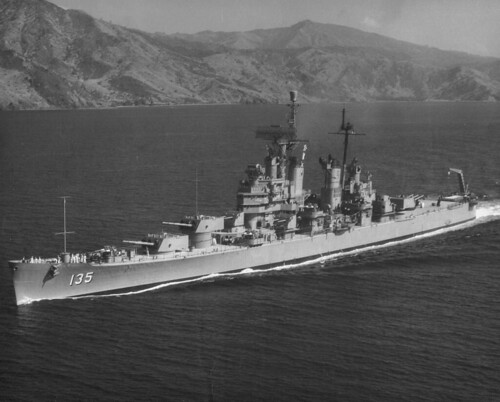
U.S.S Los Angeles

The bits and pieces which make up Monument No. 188 are from the third of four U.S. Navy ships named the Los Angeles. The first Los Angeles was a 435-foot boat built in San Francisco and commissioned in August 1917. The second was an airship, 2R-3, christened in 1924 and scrapped eight years later. The fourth and current Los Angeles – U.S.S. Los Angeles SSN-688 – is a nuclear-powered submarine.
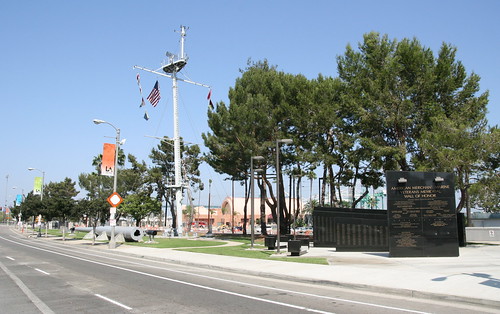
U.S.S. Los Angeles Naval Monument

The U.S.S. Los Angeles (CA-135) memorialized at San Pedro’s L.A. Maritime Museum and Gibson Park was built with war bonds raised by the city and county of Los Angeles (we bought nearly $80.4 million worth of bonds in that drive, enough to pay for this ship plus four destroyers). Built in the Philadelphia Naval Yard, the 675-foot heavy cruiser was launched on August 20, 1944 with Irene Bowron, the wife of L.A. Mayor Fletcher Bowron, acting as the ship’s sponsor. The Los Angeles was commissioned on July 22, 1945, with Captain John A. Snackenberg in command.

U.S.S. Los Angeles Naval Monument
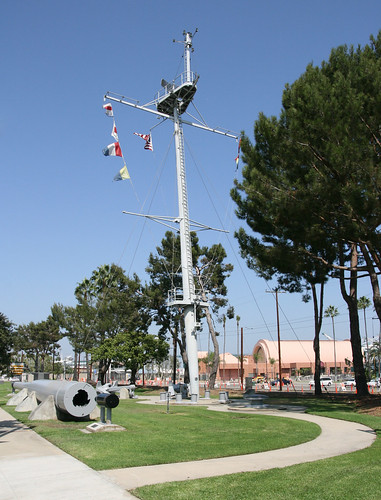
The Los Angeles’s mainmast, anchors, mooring bits, and capstan cover.

After its commissioning, the ship had a brief training period near Cuba, returning to San Pedro from Guantanamo Bay in mid-October. It left California on December 8, 1945, and, after a stop at Pearl Harbor, arrived in Shanghai at the beginning of 1945. The Los Angeles, with a few changes of captain, was assigned to the 7th Fleet in the Shanghai and Hong Kong area. It was decommissioned April 9, 1948.
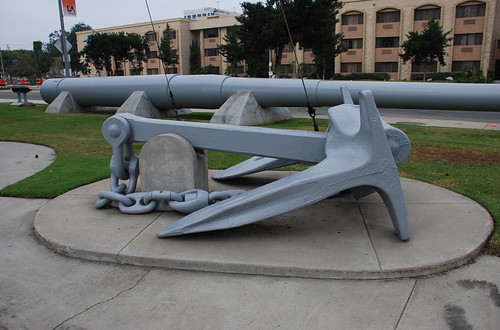
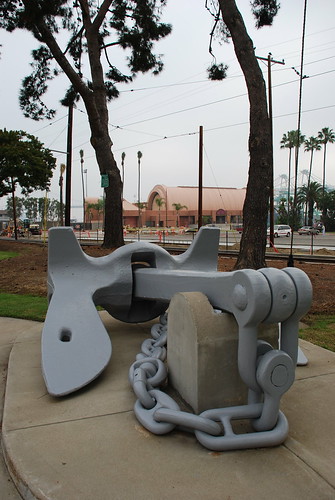
U.S.S. Los Angeles Naval Monument

As the Korean War heated up, the Los Angeles, with Captain Robert N. MacFarlane, USN, in command, was recommissioned on January 27, 1951. After more training cruises and a stop at the Long Beach Naval Shipyard, the big boat was off again to Pearl Harbor. It arrived in Yokosuka, Japan, at the end of May 1951, seeing action for the first time during the Korean War. The Los Angeles sailed to Inchon in early July, but, by December, the ship was back in Yokosuka where it was relieved by the U.S.S. Manchester. The U.S.S. Los Angeles returned to California on December 5.


See a video of the Los Angeles refueling at sea here.

The U.S.S. Los Angeles made its second Korean War tour of duty on October 9, 1952. In the spring of 1953, she suffered two rounds of hits in which a dozen men were wounded. Watch the men receive their Purple Heart in this film.
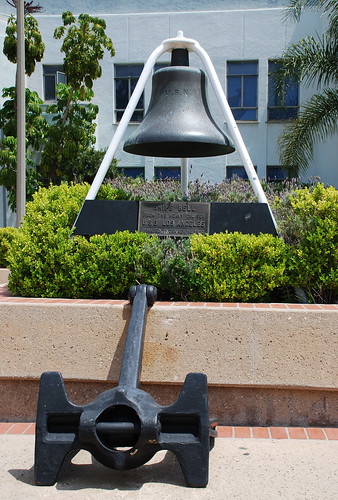
U.S.S. Los Angeles Ships Bell

For five and a half years beginning in November 1953, the U.S.S. Los Angeles made six more deployments to the Far East on peace-keeping missions. Her last two cruises were in 1961 and 1962, returning to Long Beach in June 1963. The ship was decommissioned there on November 15, 1963, after which it entered the Pacific Reserve Fleet at San Diego.

The U.S.S. Los Angeles was stricken from Navy records in January 1974. She was scrapped the following year.
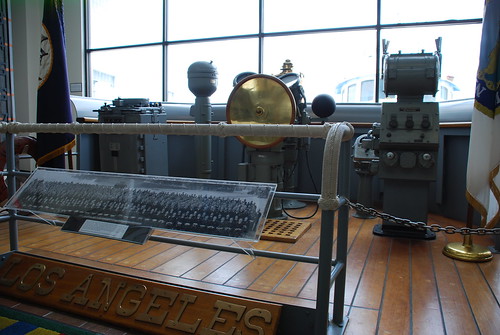
Bridge of the U.S.S. Los Angeles
The U.S.S. Los Angeles bridge.

The U.S.S. Los Angeles Naval Memorial was dedicated on December 1, 1977, to the men and ships of the U.S. Navy. In Gibson Park, along with memorials to the fishing industry, the two longshoremen who were killed in a 1934 strike, and American merchant marine veterans, stands the Los Angeles’s mainmast, anchors, mooring bits, and capstan cover. The monument was laid out by Terryle Smeed.
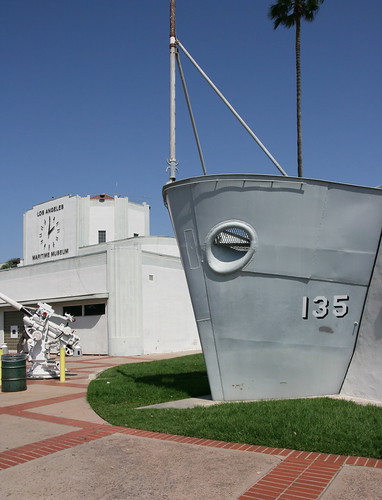
U.S.S. Los Angeles Naval Monument

The ship’s bell, removed during a 1960 overhaul, stands to the left of the L.A. Maritime Museum across the street, while a portion of its bow is to its right. Inside the museum, you’ll find all sorts of artifacts from the Los Angeles, including the boat’s bridge.

Please visit this web page, the work of Mr George Bell, for an extensive history, memorials, visitors’ log, and photograph and video collection of the U.S.S. Los Angeles. It’s where I took the black and white shot here as well as much of the information.
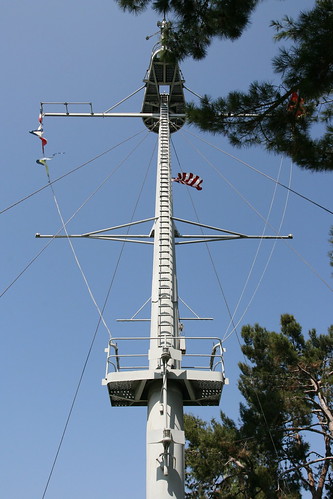
U.S.S. Los Angeles Naval Monument

Up next: 1407 Carroll Avenue Residence

continue reading...

Saturday, October 4, 2008

No. 187 - Korean Bell and Belfry of Friendship

Korean Bell and Belfry of Friendship

Korean Bell and Belfry of Friendship
1976 – Kim Se-jung
Angels Gate Park, Gaffey and 37th Streets, San Pedro – map
Declared: 5/3/78

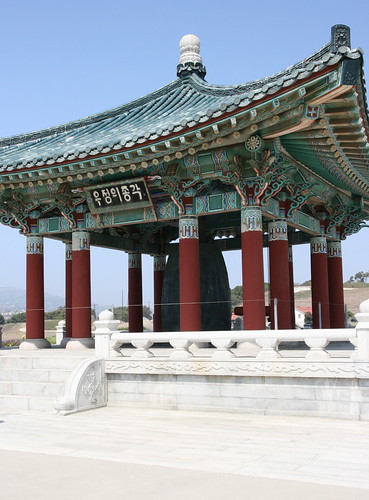
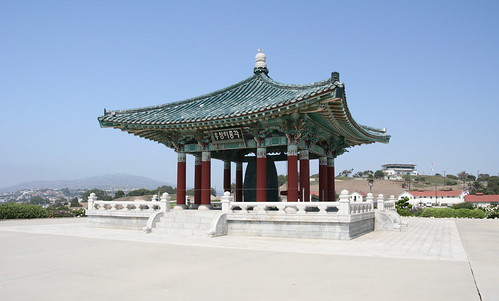
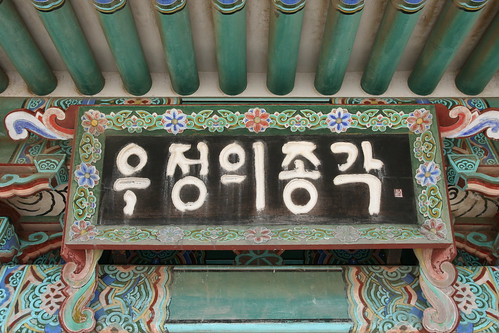
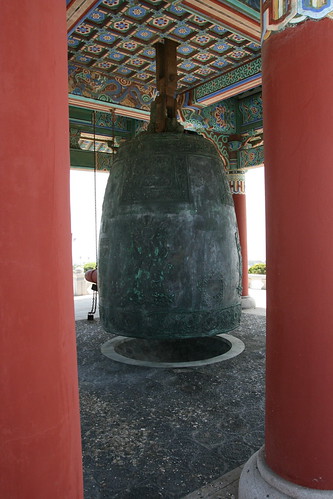
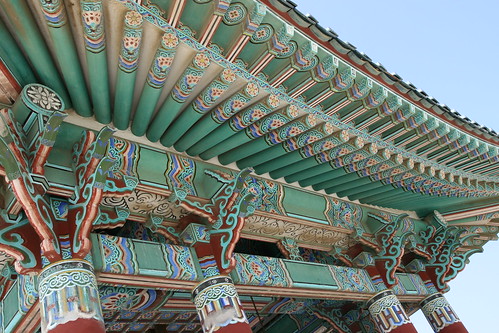
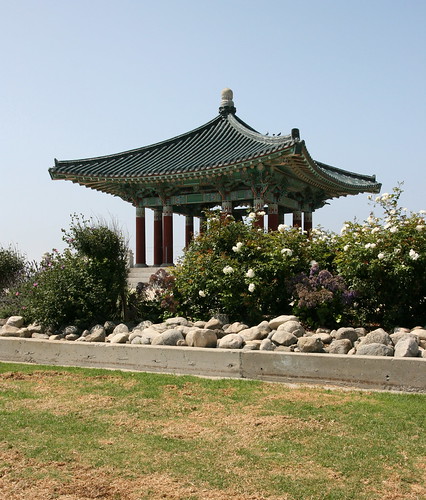
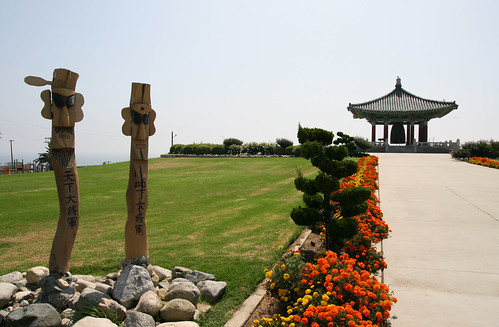
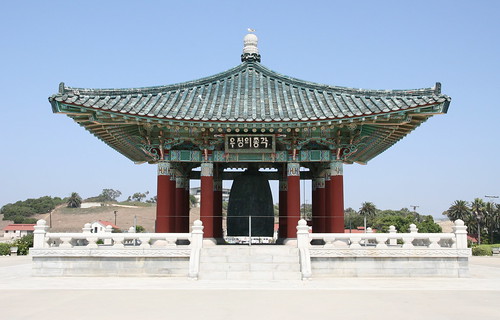
Weighing nearly 18 ¾ tons, this twelve-foot tall bell was a gift of the South Korean government to commemorate the United States’ bicentennial. And not only did South Korea give us the bell, the country also sent over about three dozen workers to build the striking pavilion in which the bell rests today. First, Taekwondo, then this.

Korean Bell and Belfry of Friendship

Kim Se-jung designed the San Pedro landmark, known as the Friendship Bell, as a replica of the Divine Bell of King Songdok the Great (the 33rd king of Shilla, remember?). (That big bell, also known as the Emilie Bell or the Pongdoksa Bell, was built in A.D.771 and is today situated on the grounds of the Kyongju National Museum.)

Korean Bell and Belfry of Friendship
Bell of Friendship

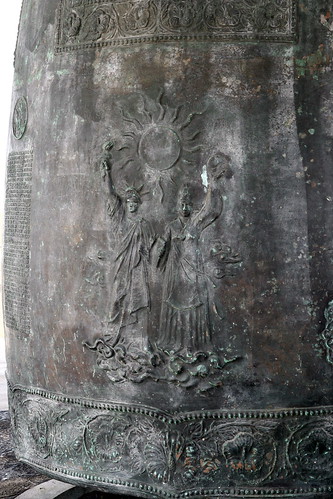
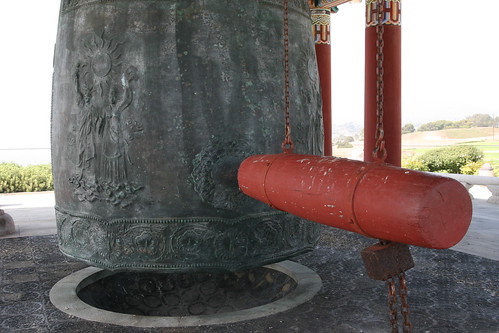
Our Los Angeles bell is an alloy of tin, copper, gold, and silver, with a pinch of phosphorous, but, unlike the 1,237-year-old Korean version, our bell lacks baby. The bell’s rim, almost twenty-four-feet in circumference, is banded by Korea’s national flower, the Rose of Sharon, which really isn’t even a rose if you want to know the truth. To mark the friendship of the two countries, four sets of two figures – the Goddess of Liberty and a Korean spirit – are also engraved on the bell. While the four goddesses are holding torches, the spirits are bearing the Korean flag, the Rose of Sharon, a laurel branch, and a dove of peace.

Korean Bell and Belfry of Friendship

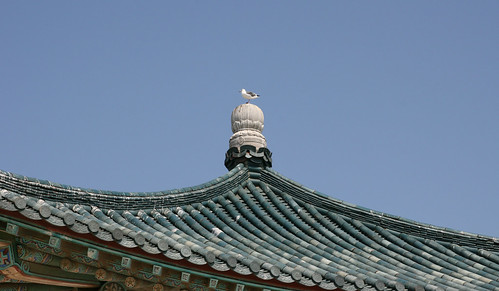
When the thirty-five Korean stonemasons (suk kongs), tile-setters (wha kongs), and carpenters came over from Seoul to work on the belfry, they brought with them 435 tons of stone, traditional blue tile, and other materials. Living in a pair of Fort MacArthur army barracks, the crew wound up working twelve to fourteen hours a day to finish up by dedication day.

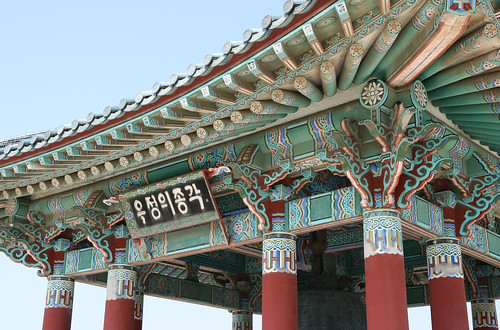
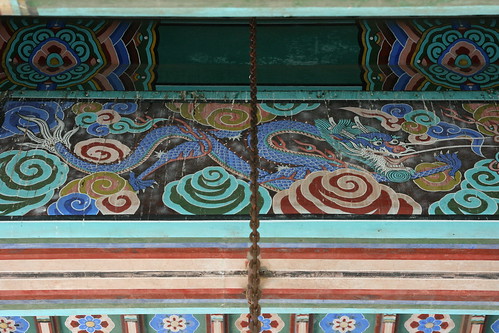
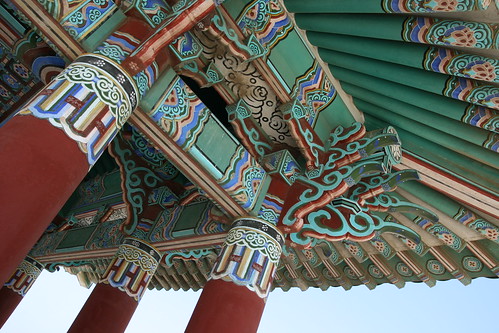
The tanch’ong-styled bell pavilion is supported by a dozen columns, representing the twelve signs of the Oriental zodiac.

Korean Bell and Belfry of Friendship

Located in Angels Gate Park on Fort MacArthur’s old Upper Reservation, the Friendship Bell is rung four times a year: July 4th; August 15th (Korean Independence Day); New Year's Eve; and sometime in September to celebrate Constitution week. Rather than being struck with a clapper, the Friendship Bell is rung with this wooden log:

Korean Bell and Belfry of Friendship

The bell and belfry have got to be one of the youngest – if not the youngest – L.A. Historic-Cultural Monuments, having been declared an official landmark just nineteen months after its dedication on October 3, 1976.

Korean Bell and Belfry of Friendship
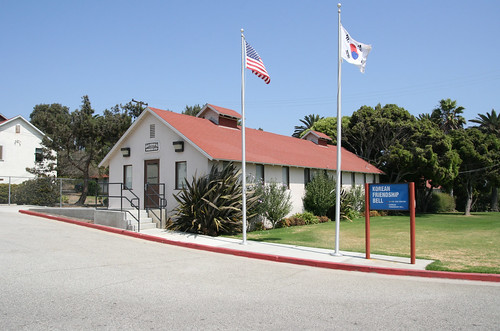
Korean Friendship Bell Information Center
The Korean Friendship Bell Information Center

When you visit HCM No. 187, right next to the Pacific Ocean, make sure you pop in the Korean Friendship Bell Information Center (above), also in Angels Gate Park.

Finally, the IMDb.com says you can see the Friendship Bell in 1995’s The Usual Suspects. I haven’t seen the movie since it came out, probably, so I don’t remember.

Korean Bell and Belfry of Friendship

Source:

Hillinger, Charles “West Coast ‘Liberty Bell’” The Los Angeles Times Sep 16, 1976, p. C1


Up next: U.S.S. Los Angeles Naval Monument

continue reading...
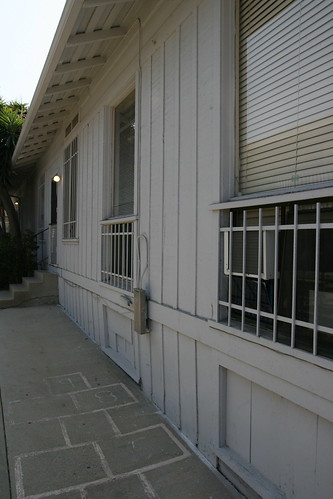
Wednesday, October 1, 2008

No. 186 - Morgan House (Harbor Area YWCA)

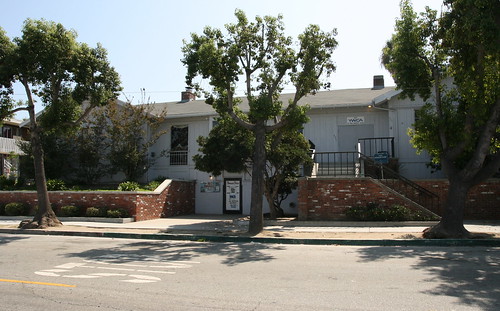
Morgan House (Harbor Area YWCA)

Morgan House (Harbor Area YWCA)
1918 – Julia Morgan
437 West 9th Street, San Pedro – map
Declared: 5/3/78

Shhh. Listen. Do you hear that? Do you know what that noise is? That’s the sound of architect Julia Morgan spinning in her Oakland grave.

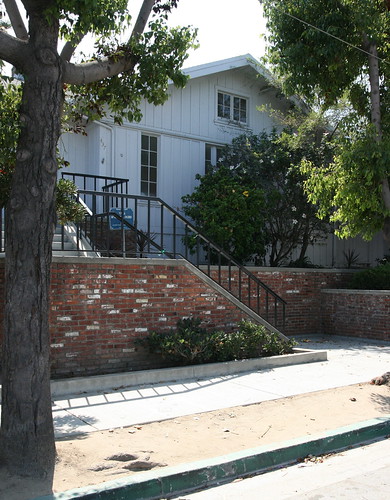
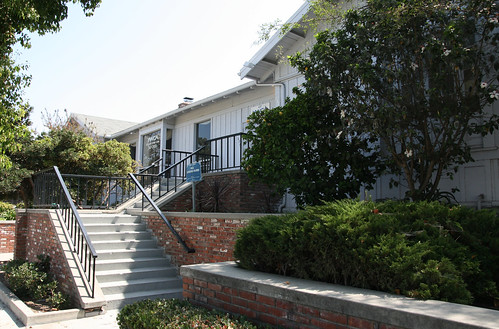
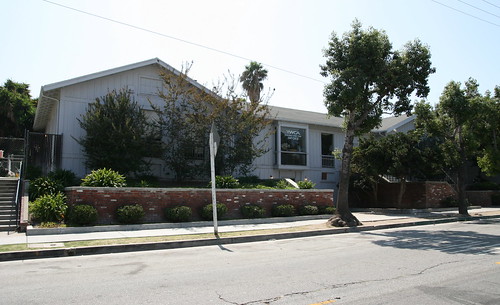
Eh, maybe I’m being a little harsh. But, clearly, to a woman who had the reputation for being an ultra-perfectionist (she once ripped out some new tile work with her bare hands because it failed to meet her standards), she would not have been doing a jig over the state in which a series of remodels has left her board and batten building in the San Pedro.

Morgan House (Harbor Area YWCA)

One of most important women in the history of American architecture, Julia Morgan was born in San Francisco in 1872, soon moving with her family to Oakland. In 1904, she earned the honor of being the first woman licensed as a California architect. This was shortly after the completion of two of her first major projects, assisting John Galen Howard in building (her alma mater) UC Berkeley’s Greek Theatre and Hearst Memorial Mining Building.

Morgan House (Harbor Area YWCA)

This 1918 Craftsman building was one of five local YWCA buildings designed by Morgan. You can still see her 1926 Hollywood Studio Club, landmark No. 175, and her gorgeous Pasadena YWCA stands empty and is slowly falling apart. Her 1925 Long Beach Italian Renaissance branch has been demolished. Finally, Morgan’s Riverside YWCA from 1929 still stands, but as the Riverside Art Museum. Morgan designed YWCAs in California, Utah, Arizona, and Hawaii. Julia Morgan’s affiliation with the YWCA began when Phoebe Apperson Hearst recommended her for the organization’s Asilomar summer conference center near Monterey. Asilomar’s first building, the Administration Building, opened in 1913. Morgan’s last major building for the Young Women’s Christian Association was the Residence on San Francisco’s Nob Hill.

Morgan House (Harbor Area YWCA)

As for this 1918 Craftsman building, completed right around the time she began working on what would become her most famous project, it’s one of several “hostess houses” Morgan designed during World War I. Located near military camps, these buildings served as meeting places for soldiers and their families. A women’s group, the Warwork Council, handled the initial planning and fund-raising. The 9th Street land cost $4,800.

Morgan House (Harbor Area YWCA)

In her book on the architect, Sara Holmes Boutelle says the San Pedro facility, one of just two remaining hostess houses created by Morgan (remaining as of 1988, that is), is a lot like Asilomar’s Administration Building, “featuring open trusses, fireplaces, and a balcony over the service and clubroom areas at either end of the long main room.” Also included were classrooms and a swimming pool (since filled in). It was chartered as an official YWCA after the war, on October 6, 1920.

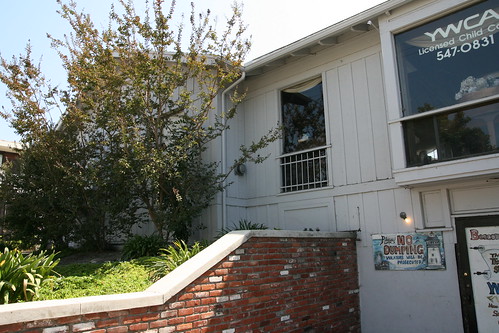
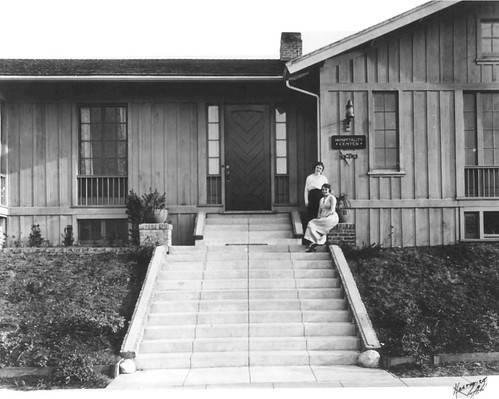
Compare the two shots below. The upper is from L.A.’s Department of City Planning website. It dates from 1921. Was the hill’s removal to gain street-level access? Or maybe due to a street-widening? I don’t like the result. And who wouldn’t prefer those original windows and door? Some remodeling architect whose taste is in his mouth, I guess.

Morgan House (Harbor Area YWCA)

Today, Julia Morgan’s San Pedro landmark is still being used as a YWCA, offering child care, teen programs, women’s health and family services, and programs on racial justice. I stopped by on a Sunday when the place was closed. It’s a safe bet I would’ve been stopped from wandering around taking pictures of the women’s club's indoors (“Hi! I’m here for a peak at your open trusses!”), but I still would’ve liked to have seen what’s left of the ninety-year-old interior.

Morgan House (Harbor Area YWCA)

Source:

Boutelle, Sara Holmes Julia Morgan, Architect Abbeville Press Publishers 1988 New York

McKinney, Betty "Y.W.C.A. – The Julia Morgan House" The Shoreline San Pedro Bay Historical Society Jun 1989

Wadsworth, Ginger Julia Morgan: Architect of Dreams Lerner Publications Company 1990 Minneapolis

Wilson, Mark A. Julia Morgan: An Architect of Beauty Gibbs Smith 2007 Layton, Utah


Up next: Korean Bell and Belfry of Friendship

continue reading...
Monday, May 26, 2008

No. 147 - James H. Dodson Residence

James H. Dodson Residence

James H. Dodson Residence
1880s
859 West 13th Street, San Pedro – map
Declared: 9/17/75

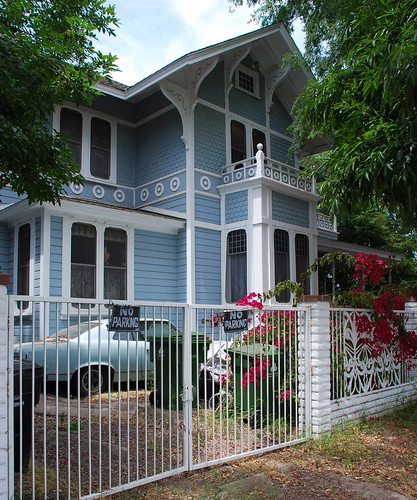
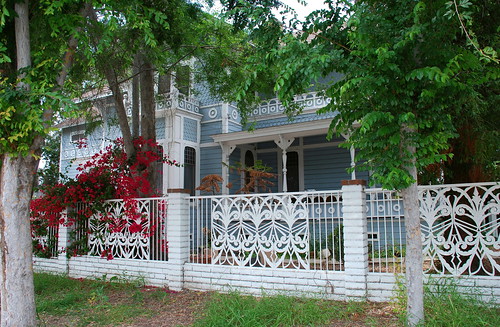
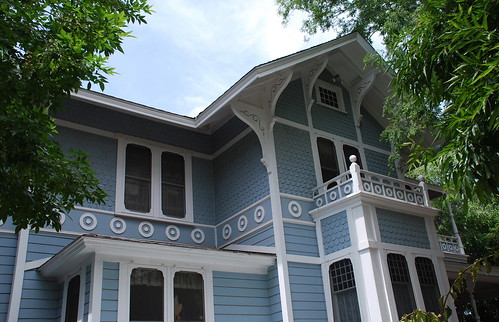
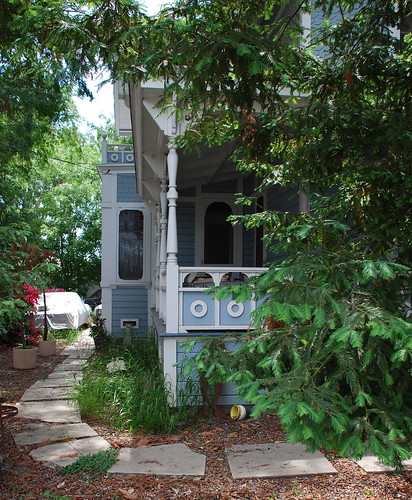
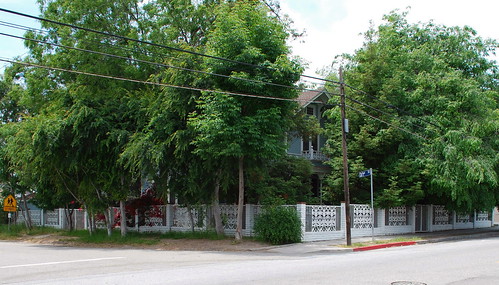
Moved a bunch of times over its 1.2 centuries of existence, the old James H. Dodson residence is now pretty much blotted out by trees, bushes, shrubs, and more trees. Some of its history is a little obscured, too.

James Hillsey Dodson’s bio lists gigs in the building supplies and contracting business with his brother John and as a junior partner in the meat-packing firm of Vickery & Hinds. He was also a member of the San Pedro School Board, Director of the First National Bank, and San Pedro’s postmaster between 1893 and 1897. If that’s not enough, Dodson twice served as president of the San Pedro Board of Trustees, the precursor to the City Council.

Los Angeles, 3/29/30
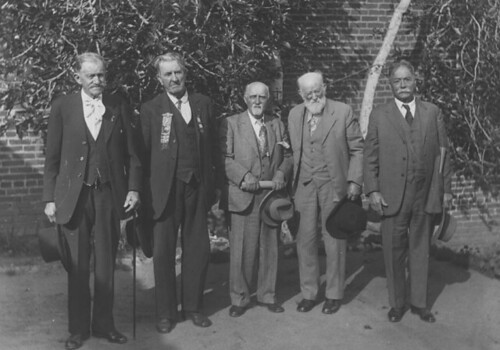
From 1930, that's James H. Dodson on the right. The quintet is clearly celebrating the birthday of Methuselah, standing next to Dodson. Photo from the L.A. Public Library.

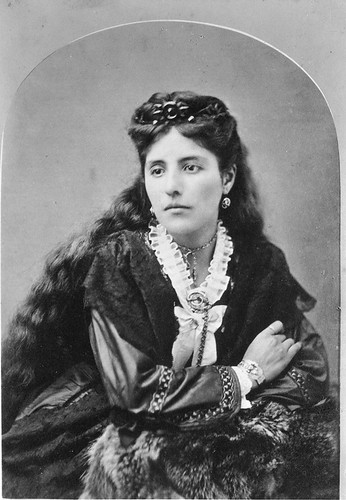
In 1879 or 1881, he married Rudecinda Sepulveda (b. 1857), the daughter of Maria Elisalde and Jose Diego Sepulveda, owner of the 3,200-acre Palos Verde Rancho. If not quite royalty, Rudecinda and Dodson – a descendent of the Dominguez clan – were certainly at the center of the social world of early San Pedro. It’s said the Sepulvedas built this twelve-room, two-story Victorian house with its three-way fireplace as a wedding present for the young couple. I’ve seen constructions dates of 1881, 1882, 1885, 1886, and even 1890. From USC's Digital Archive, Rudecinda:

Rudecinda Sepulveda (1857-1929)

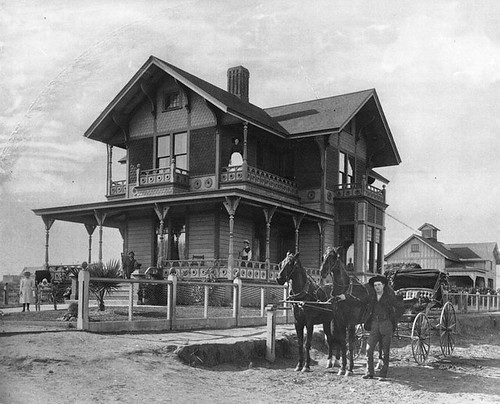
In any event, the home was built on Sepulveda property at the northwest corner of Beacon and 7th Streets on the edge of Vinegar Hill. Just after the turn of the century, the Dodson Residence was moved to another plot of Sepulveda-owned land, roughly bounded from Leland to Meyler and from 15th to 17th Streets, school land today.

James H. Dodson Residence
James H. Dodson Residence, c. 1890

(Aside: Later on, the Fox Cabrillo Theatre was built on the original site of the Dodson House at 115 West 7th. It opened in November 1923 and was demolished in 1958.)

James H. Dodson Residence

To accommodate the needs of the growing high school, the house was relocated in the mid-1930s a few blocks to the north side of 13th Street. After a short time, it was moved again, this time to its current site at 13th and Parker. Here, it took on life as a rooming house. (Rudecinda died in 1929; James moved out in 1931, dying eight years later. They, along with their children – Carlos, Florence, and James Jr – are interred in the Rudecinda Crypt, part of Historical-Cultural Monument No. 53.)

James H. Dodson Residence

John and Betty Reed bought the house in 1954 and began a decades-long restoration of the old home. The grand Victorian remained in the Reed family as late as 1989. I don’t know who lives there now, but, whoever it is, they sure like shade.

James H. Dodson Residence

Sources:

Vickery, Oliver “The Dodson House Restoration” The Shoreline Jan 1978, Vol. 5, No. 1

Vickery, Oliver “Rudecinda Sepulveda” The Shoreline Sep 1977 p. 12

Houston, John M. “The Dodson-Sepulveda Home” The Shoreline Jun 1989 p. 47


Up next: Coral Trees

continue reading...
Thursday, August 9, 2007

No. 53 - (Old) St Peter’s Episcopal Church and Harbor View Cemetery
(Old) St Peter's Episcopal Church

(Old) St Peter’s Episcopal Church and Harbor View Cemetery
1884/1883
Harbor View Memorial Park, Grand Avenue and 24th Street, San Pedro – map
Declared: 12/6/67

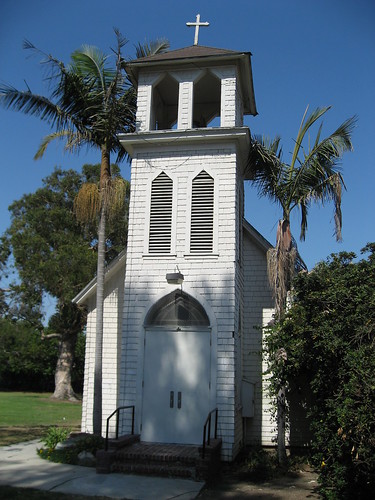
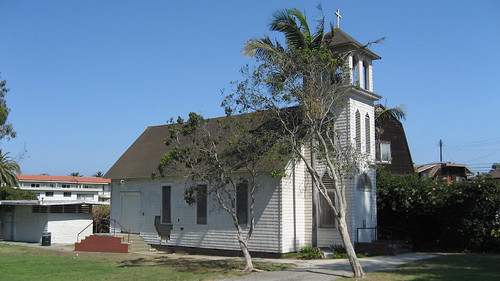
The site’s declaration marker states Historic-Cultural Monument No. 53 is “San Pedro’s Oldest Church and First Cemetery”. That would be St Peter’s Episcopal Church (1884) and Harbor View Cemetery, previously known as San Pedro Cemetery (1883).

(Old) St Peter's Episcopal Church

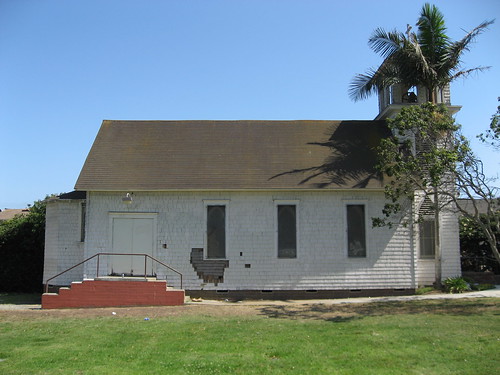
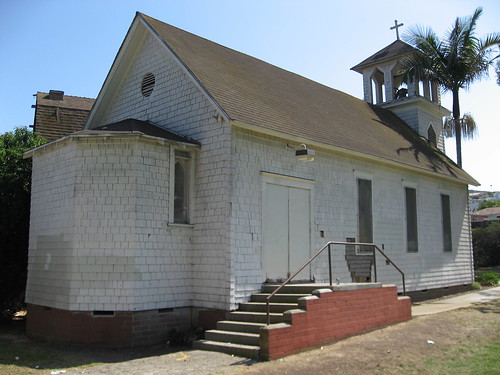
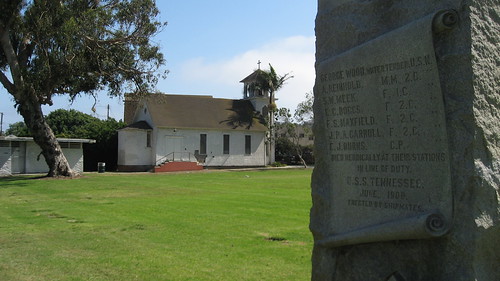
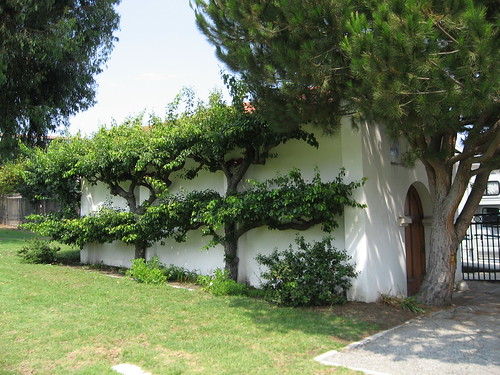
This is the third site for the St Peter’s building. The first was on Beacon Street, between 2nd and 3rd, and the second was at 10th and Mesa Streets, having been relocated in 1904. In 1956, the building was deconsecrated and moved to its current home. Most recently the Carpenter Gothic structure was used for concerts. I write “most recently”, but it must’ve been many, many moons ago. (However, McGrew and Julian said in 1994, in Landmarks of Los Angeles, that it was available at that time for public use.) The new St Peter’s Episcopal Church building is now on 9th Street.

(Old) St Peter's Episcopal Church

The San Pedro Peninsula Chamber of Commerce reports the “church features hand-hewed pews and an alter [sic]. Its lectern is upheld by an intricately-carved wooden angel. All are of redwood.”

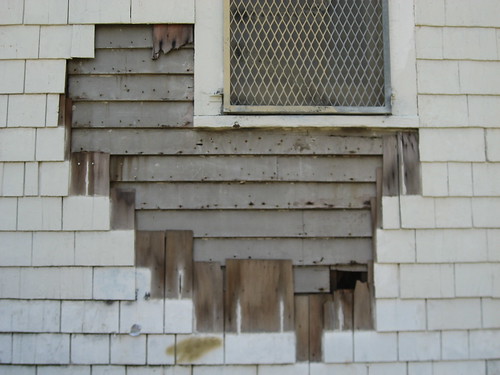
The building’s in somewhat sad shape, the victim of the elements and vandals. (The Sunday afternoon I was there, a pack of teenagers was stretched out, sucking on some beers, in front of the church. Now, I’m all for teens drinking in graveyards, but, in my day, we at least waited until nightfall. I mean they waited until nightfall. Heh.)

(Old) St Peter's Episcopal Church

So looking at this big patch of destruction below, you can see where a couple dozen shingles have been ripped away, exposing those base slats of wood.

(Old) St Peter's Episcopal Church

(Old) St Peter’s Episcopal Church and Harbor View Cemetery

Harbor View Cemetery

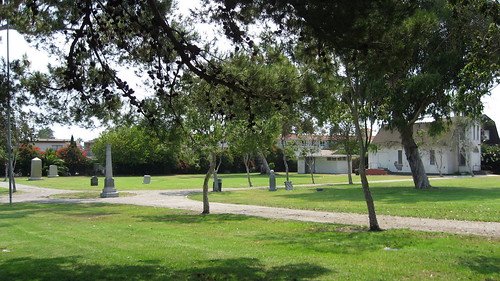
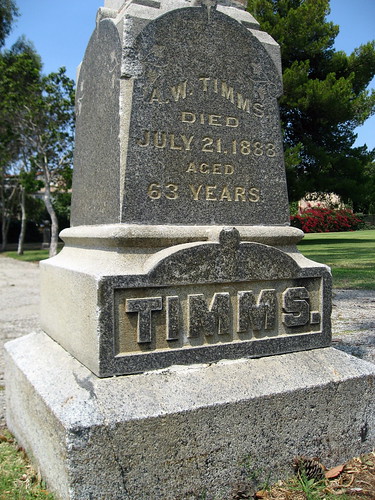
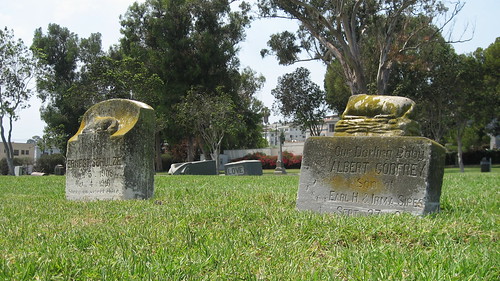
As for the cemetery itself, it was spread out on land deeded by A.W. Timms, whose obelisk monument takes center circle in the graveyard. To read whose remains remain here, see this site for the meticulous marker research done by the South Bay Cities Genealogical Society. While at the cemetery, I noted more than a few early 20th century children’s graves, along with the resting places of a couple of Freemasons and members of the OES, which my research shows stands for either Order of the Eastern Star or Old English Sheepdog.

Harbor View Cemetery

Harbor View Cemetery

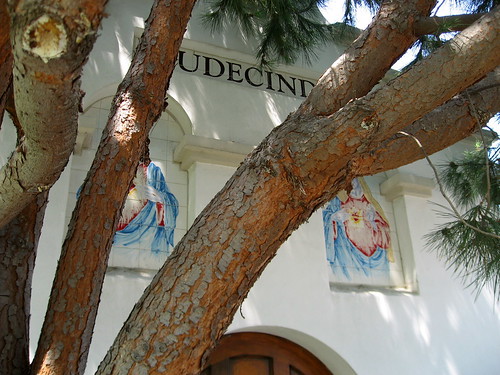
This mausoleum at the cemetery’s entrance bears the name “Rudecinda”. That’s Rudecinda Sepulveda, whose corpse is inside keeping company with an unknown number of other Sepulvedas. The good folks at the San Pedro Bay Historical Society let me know they’re awaiting confirmation from the Los Angeles Department of Recreation and Parks as to who else exactly lies in Sepulveda’s tomb. Rudecinda was the granddaughter of Delores Sepulveda, original owner of the Palos Verdes Rancho. (See a Myron Chester Nutting painting of Rudecinda half-way down this page.) She married James Dodson in the 1880s. HCM No. 147, The Dodson House, now on West 13th Street, was built for the newlyweds by her parents. Rudecinda Sepulveda Dodson Middle School bears her name today.

Harbor View Cemetery

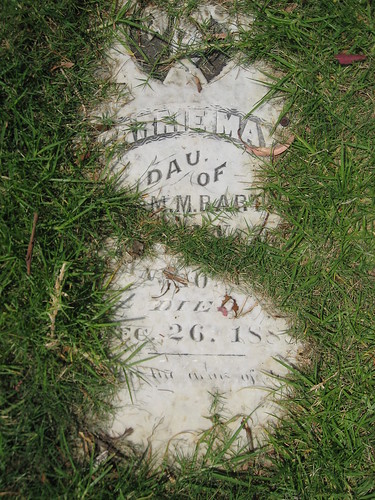
Below: Carrie May Barton, who died the day after Christmas, 1888.

Harbor View Memorial Cemetery

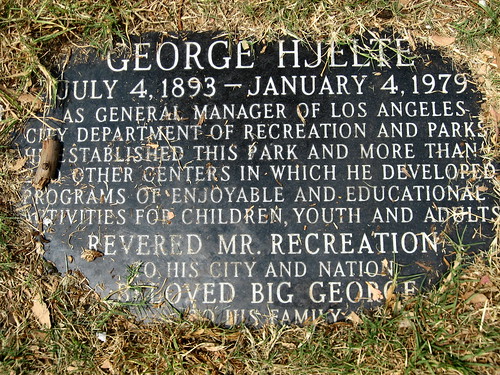
Below: The resting place of Mr Recreation, “Big George”.

Harbor View Cemetery

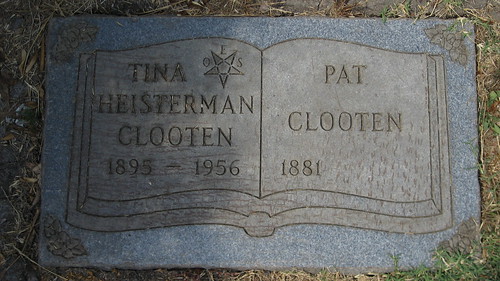
Poor Tina Clooten (OES) passed more than half a century ago, but good ol’ Pat is still going strong at 126.

Harbor View Cemetery

Harbor View Cemetery

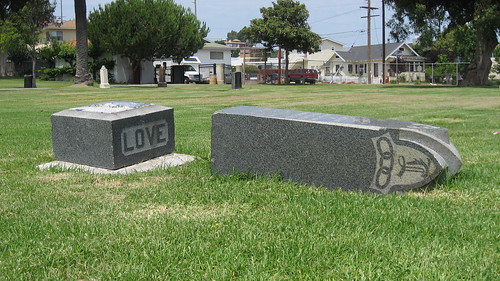
I can’t even comment on the irony of vandals destroying the memorial to the family of Love.

Harbor View Cemetery

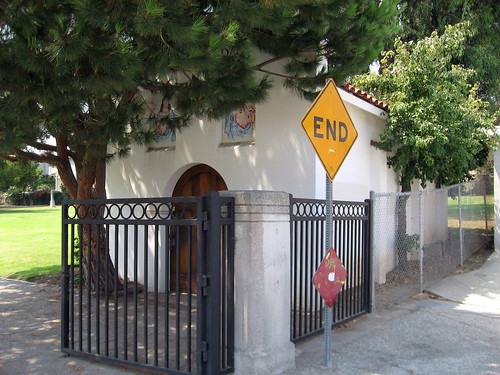
In conclusion, an appropriate road sign for a cemetery entrance.

Harbor View Cemetery

Up next: Old Sixth Street Wooden Bridge

continue reading...