Showing posts with label Westlake. Show all posts

Thursday, January 29, 2009

No. 210 - Terrace Park and Powers Place

Terrace Park and Powers Place

Terrace Park and Powers Place
1904
Powers Place and 14th Street – map
Declared: 2/21/79

Back in July 1904 the Los Angeles Times reported the Alvarado Terrace Company had bought the handful of acres between Pico and 14th and Iowa and Alvarado Terrace for $7,000. The paper went on to say, “a portion of the strip is already set out in grass, and the Alvarado Terrace people are to put a $500 fountain on the property. The land will make a very pretty little park.” Officials broke ground on what was then called the Alvarado Terrace Park at the end of the month.

Soak in this morsel of a Sanborn fire insurance map from 1900. (Sanborn’s surveyors must’ve loved coming upon barren blocks like this.) Just a few years later it would bear Terrace Park and Powers Place. Remember Iowa Street? I sure don’t.
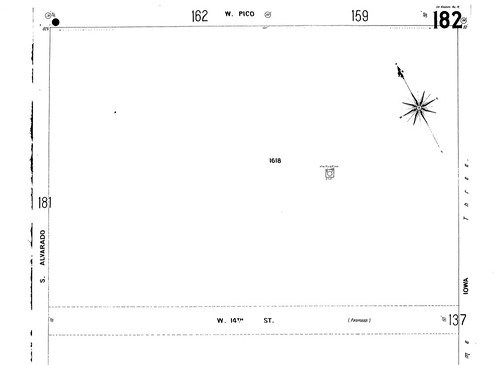
Los Angeles, 1900

For a bit of backstory, at this time the city councilman for the Fourth Ward, in which the park was located, was a man by the name of Theodore Summerland. In early 1903 he ran his campaign promising he’d bring his constituents two things: a street railway line on West 11th Street and a park. He delivered of both of these promises, earning a bucket of good will. So much so, from the very announcement of the city’s buying a chunk of Fourth Ward land for a park, it was assumed it’d take the name of the popular councilman.
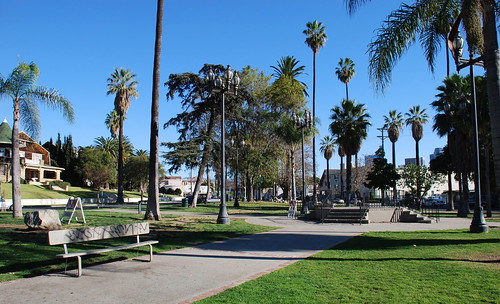
Terrace Park, Los Angeles

However, in August, the city went ahead and named the new park Terrace Park. Upon hearing what council had done, the Park Commission, on August 25th, raised its hackles. The commission rescinded the City Council’s action, saying naming parks was its territory, not the council’s. The Park Commission thereby christened the park after our old friend, Mr Summerland. The City Council balked and repealed its ordinance.
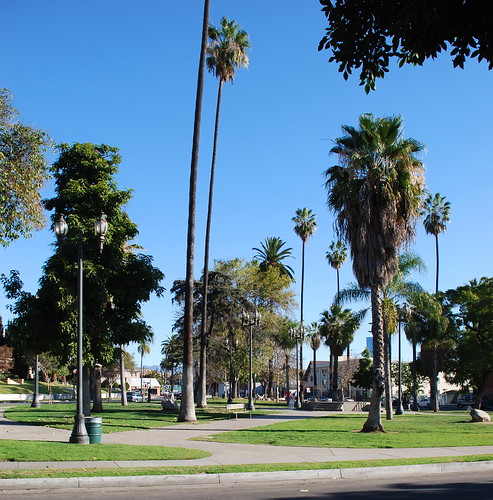
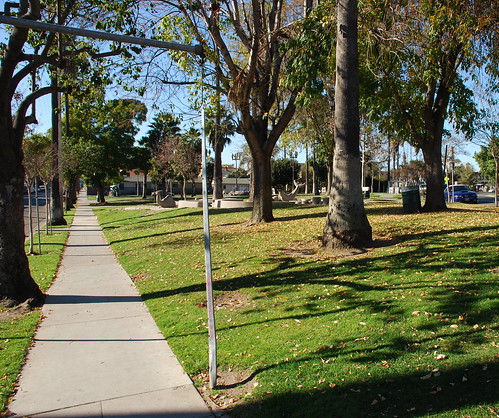
Terrace Park, Los Angeles

But get this. By early September, with his political enemies’ scorn making waves, councilman Summerland was modestly filing a statement with the city clerk asking the name revert to Terrace Park, claiming he was in San Diego when it was decided the park would take his name. The city council, though, ignored Summerland’s request! On Halloween 1904, ultimately, the name was switched from Summerland Park back to Terrace Park.
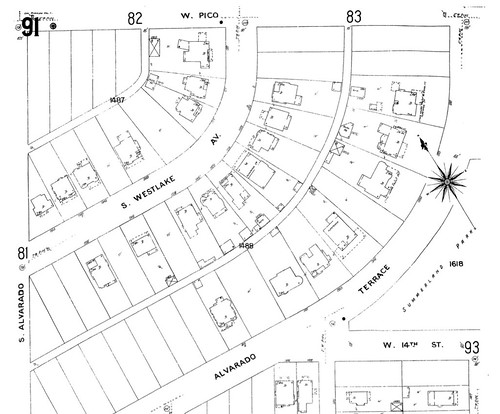
Los Angeles, 1906
From a 1906 Sanborn map. Even though the name had changed two years earlier, the park here still bears the name Summerland.

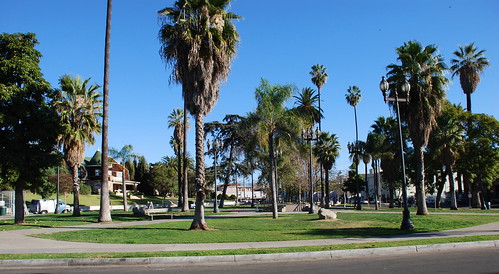
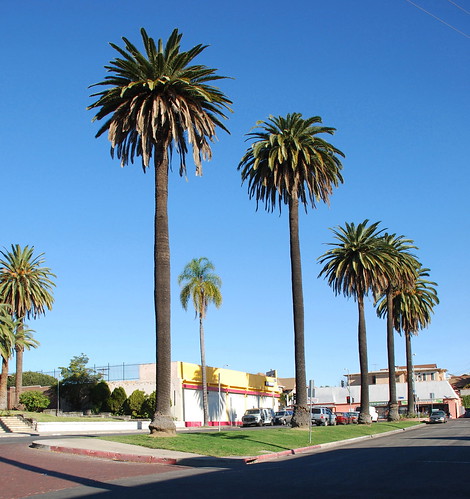
The 1.17-acre park held a cobblestone fishpond with that cobblestone tower/fountain “upon which elephant ears were gracefully entwined.” The park was also home to rose bushes, fan palms, geraniums, deodar cedar, Norfolk Island pines (some of which were standing as late as a 1982 park remodeling), and Australian willow trees. At the north end, on Pico, stood a large, shell-shaped horse trough. Here’s what the Pico end looks like today:
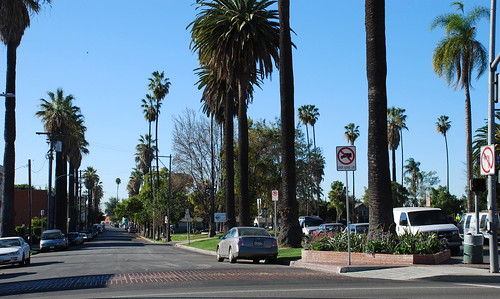
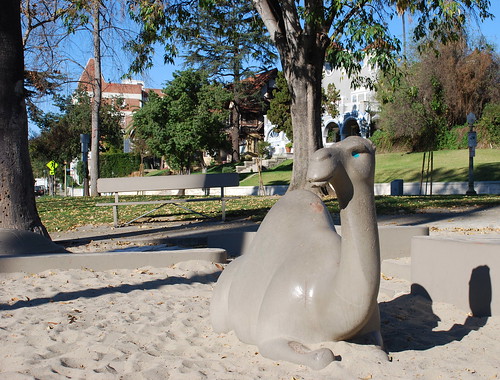
Terrace Park, Los Angeles

You know what’s cool? The park had at one time an underground storage shed where the full-time gardener kept his tools. I wonder where that was (and if the remains of said gardener have decomposed within).

An extensive remodeling in 1921 was followed by smaller scale revisions throughout the years.
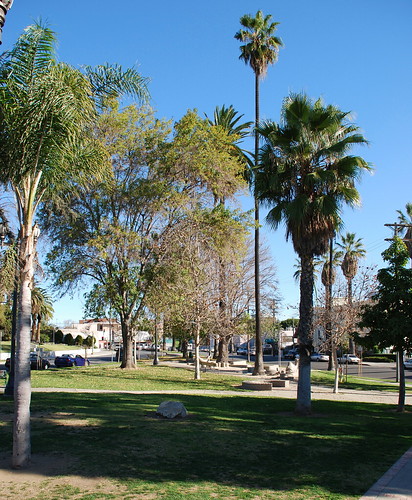
Terrace Park, Los Angeles

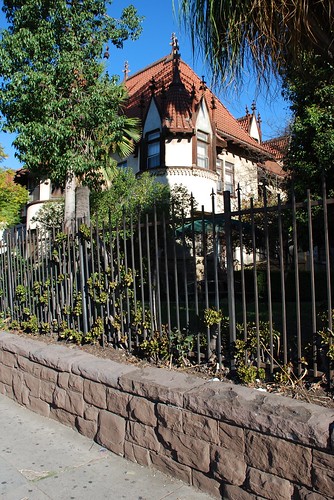
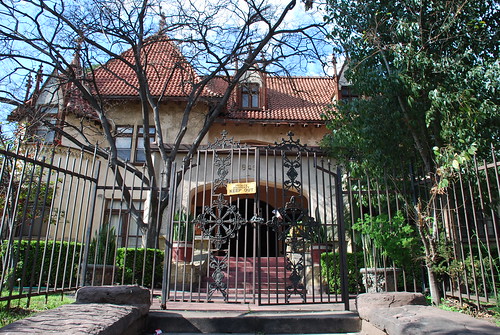
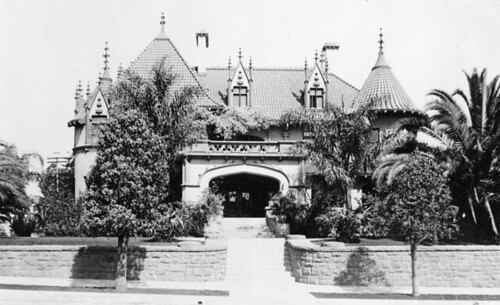
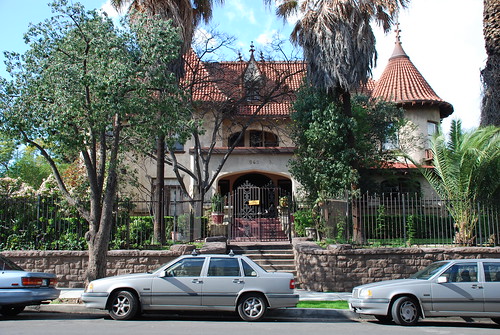
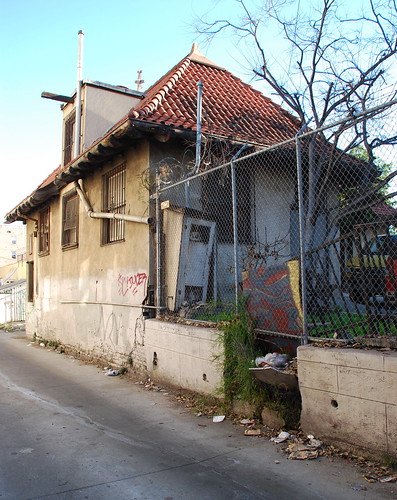
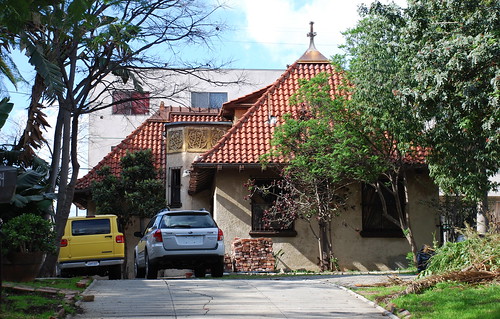
As for the original brick-laid Powers Place, its namesake is Mr Pomeroy W. Powers, the manager and a principal owner of the original Alvarado Terrace tract. City Council president from 1900 to 1904, Pomeroy built L.A. Historic-Cultural Monument No. 86, his Mission Revival home bordering the park. Here’s a picture of his old house, put up right around the time the city first bought the parkland:
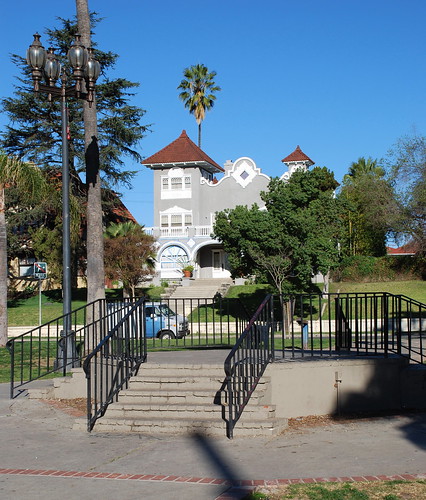
Terrace Park and Powers House, Los Angeles

I like this park real well. A tiny oasis, it benefits by the seven HCMs on its westside, of course. If it were up to me (and it’s not), I’d scatter smaller neighborhood parks of this sort across the city of Los Angeles rather than lay out grandiose projects like the city’s State Historic Park currently in the works. But, again, it’s not up to me.
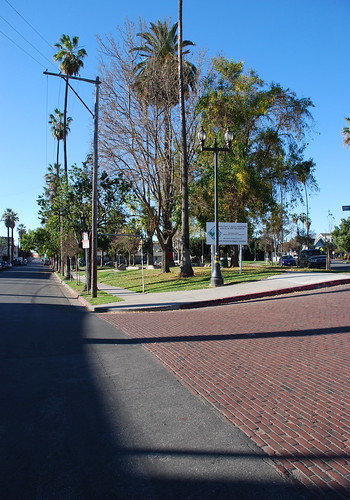
Terrace Park and Powers Place

Sources:

“Along Owners and Dealers” The Los Angeles Times; Jul 10. 1904, p. D1

“New City Park.” The Los Angeles Times; Jul 31, 1904, p. 12

“Clever Scheme of Official.” The Los Angeles Times; Aug 26, 1904, p. A2

“Ordinance No. 9873” The Los Angeles Times; Aug 29, 1904, p. 11

“Saratoga Chips” The Los Angeles Times; Aug 30, 1904, p. A2

“Fight over Street.” The Los Angeles Times; Sep 7, 1904, p. A2

“School Nurse” The Los Angeles Times; Sep, 1904, p. A2

“Now Terrace Park.” The Los Angeles Times; Nov 1, 1904, p. A2


Up next: Granite-Paving Block

continue reading...

Thursday, January 22, 2009

No. 208 - Bernard Residence and Carriage House

Bernard House

Bernard Residence and Carriage House
1902 – John Parkinson
845 South Lake Street – map
Declared: 1/17/79

Today Los Angeles Historic-Cultural Monument is the Casa Libre/Freedom House, “an emergency and long-term shelter for minors without homes, including unaccompanied immigrant and refugee children.” The Center for Human Rights and Constitutional Law, Inc., bought the landmark in 1996, opening a shelter there for homeless children in 2002.

Bernard House
Bernard House

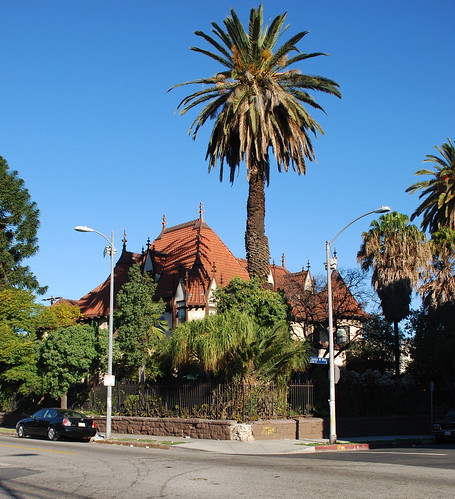
John Parkinson designed this two-story, thirty-five-room mansion for Mrs Susana Merchao de Bernard in 1901. Susana was born February 8, 1839 in Los Angeles. Her dad, Augustin Machado, and his brother, Ygnacio, along with the brothers Talamentes laid claim in 1820-1821 to the 14,000-acre Spanish land grant Rancho La Ballona, now Marina del Rey, Playa del Rey, and parts of Culver City. Now, going back even further, Augustin’s pop was Jose Manuel Machado. Jose came to Southern California in 1781, and, following Governor Felip de Neve, was one of the forty-four pobladores who hoofed it from the San Gabriel Mission on September 4, 1781, to found Our Fair City, El Pueblo de la Reina de los Ángeles. Good bragging rights for Susana, like if your great(x18)-granddad came over on the Mayflower.

Bernard House
Bernard House

Susana Merchado married rich Swiss-French businessman Jean Bernard on November 27, 1865. Bernard died in 1889 at the age of 64, leaving Susana and eleven children (not all of whom were his widow’s).

Bernard House
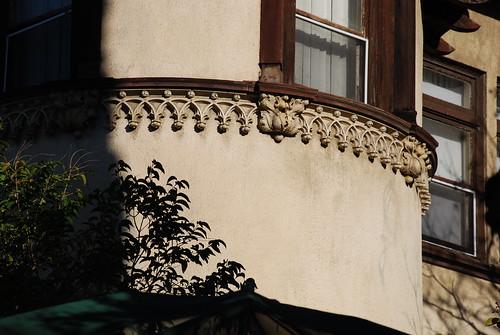
Grape leaf motif.

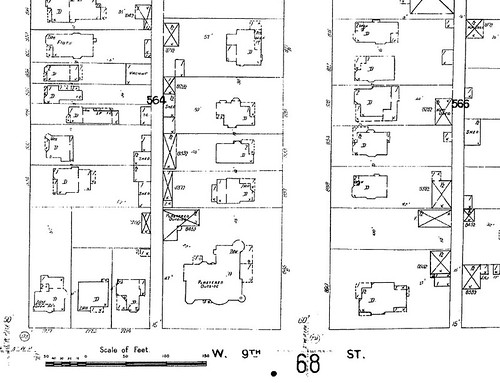
1906 Map of 9th and Lake, Los Angeles
From a 1906 Sanborn fire insurance map. Bernard Residence at bottom, center.

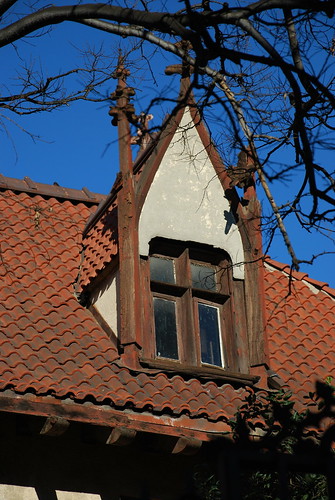
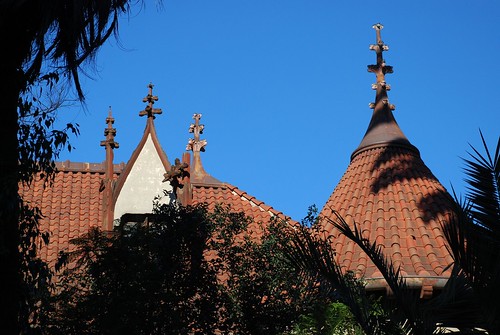
Parkinson created this 10,000 square-foot mansion – along with its carriage house – with elements of Gothic, Art-Nouveau, and Moorish styles, situated on Ninth Street fronting South Lake Street. The house cost the widow Bernard $50,000. (Don’t forget: John Parkinson, alone and with partners, is all over the list of the city’s Historic-Cultural Monuments like white is all over rice – Union Station, the L.A. Athletic Club, Bullock’s Wilshire, and City Hall to name but four.) The contractor on the Bernard residence was John Rebman.

Bernard House
Bernard House
Alley side.

In April 1902, a front-page L.A. Times article reported:
“The entrance is across a spacious recessed porch, and through massive doors into a reception hall, 20x20 feet. On the first floor is a library, 22x22 feet; a drawing room 19x24 feet; a sitting-room, den, two dining-rooms, the principal one of which is oval and 18x27 feet, and a kitchen and refrigerator room.

On the second floor are ten bedchambers arranged both singly and en suite, with staeionary [sic] marble-top washstands and similar conveniences for each; and two bathrooms.

The attic contains rooms for servants.

The basement contains a gymnasium, 20x50 feet; a billiard-room 21x20; a wine room, bathroom, storage-room and furnace-room. The building heated by hot air, which is conveyed from the furnace-room to different parts of the house by pipes, and the temperature is regulated by registers in the rooms and dampers in the basement. Fireplaces are also provided for the principal rooms of the building, and the massive mantels, with handsomely-carved woodwork, add much to the beauty of the interior decorations. Those in the drawing-room are of exquisite design. Heavy beamed ceilings, handsome art glass windows and decorations that indicate artistic study and cultivated taste without and attempt at ostentatious display give a charming completeness to the interior of the dwelling. The rooms of the first floor are finished in quarter-sawed white oak, birdseye ample and cedar. Those of the second floor are in cedar and Oregon pine, stained to oak. The best arrangements in the way of lighting and ventilating the building are provided, together with the latest modern conveniences, so that the house is not only a beautiful piece of architectural workmanship, but is also a model of substantial comfort and convenience as a dwelling.”

Bernard House
Bernard House
c. 1912 (L.A. Public Library)/2009

Susan Machado de Bernard passed away on April 8, 1907, but the home stayed in the Bernard family until 1962. Subsequent owners included Leslie Grant and Jim and Gloria Gindraux, the couple who had the house designated a city landmark thirty years ago this month.

Bernard House, Barn
Bernard House, Barn
The carriage house/barn/garage.

As the Susana Machado Bernard House and Barn, the site was added to both the list of California’s Landmarks and the National Register of Historic Places in 1979.

Bernard House

Source:

“Doings of Builders and Architects.” The Los Angeles Times; Apr 6, 1902, p. A1

Up next: Wilshire Christian Church Building

continue reading...
Saturday, August 16, 2008

No. 173 - Welsh Presbyterian Church Building

Welsh Presbyterian Church Building

Welsh Presbyterian Church
1909 – S. Tilden Norton
1153 Valencia Street – map
Declared: 4/20/77

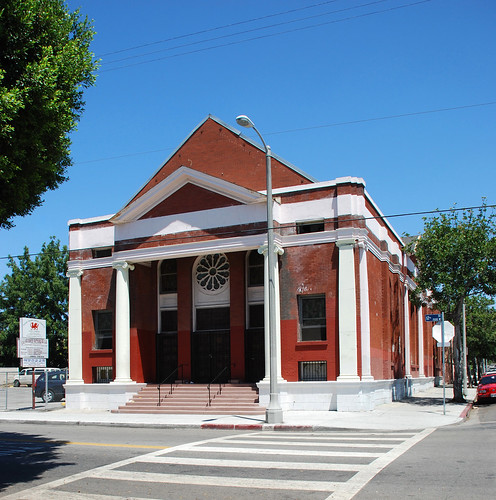
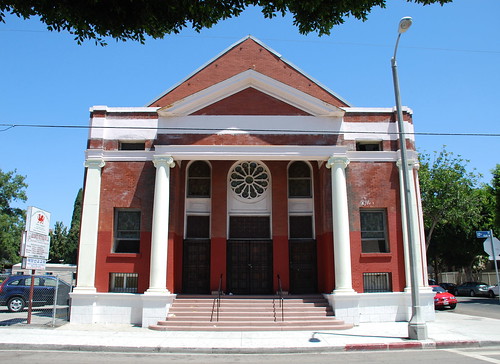
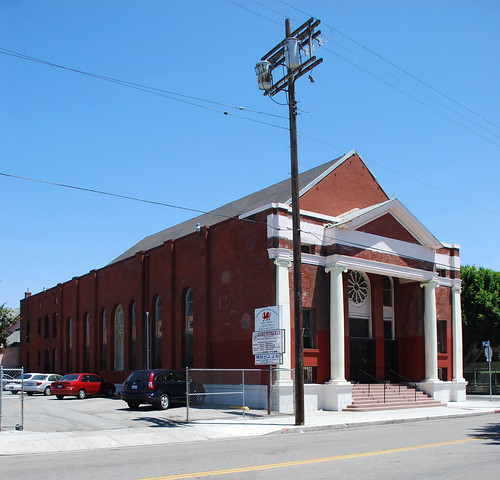
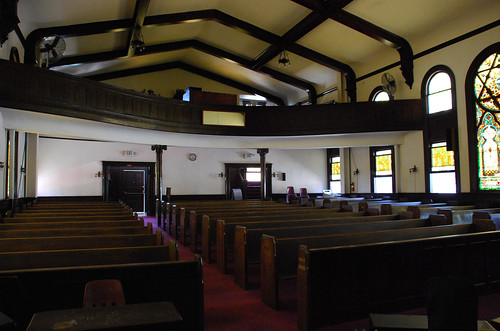
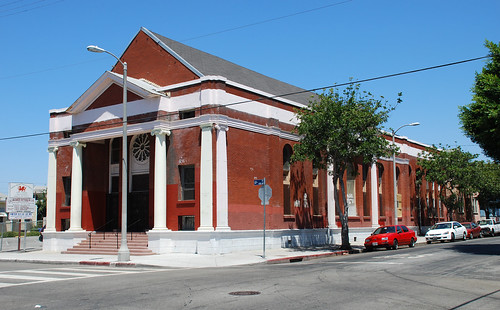
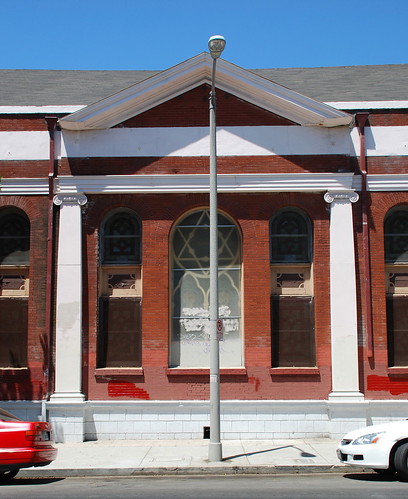
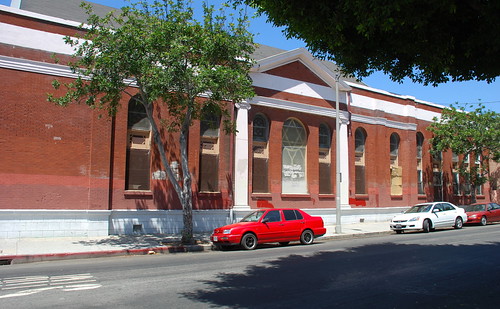
This red brick, Greek Revival church building, situated about three blocks northwest of the Convention Center, celebrates its centennial next September. That is, if it doesn’t crumble away before then.

Welsh Presbyterian Church Building

Around 1906, after a rift between the city’s Orthodox Jews, the newly-formed Sinai Congregation split off from Beth Israel (the Olive Street Shul). The group held services on West Pico, then commissioned Samuel Tilden Norton to design its first synagogue at 12th and Valencia Streets. Costing $30,000, it was dedicated with a ceremony lasting three and a quarter hours (I hope they had seat cushions way back then) on Sunday, September 5, 1909.

Welsh Presbyterian Church Building
The Valencia Street side.

According to a contemporary Los Angeles Times account, the program that summer day included thirty-four numbers (pre-dating Springsteen concerts by sixty-some years). Highlights for the afternoon included J.L. Jonas accepting the building and key from M.S. Kornblum and Edith Jonas, respectively. Mrs A. Granas lit the perpetual lamp, and Mrs Esther Isaacs and Mrs M. Leventhal lit the menorahs. Among other speeches and readings, the dedicatory sermon was delivered and prayer offered by the founder of the new synagogue, Rabbi Isidore Myers. (Myers, born in Australia in 1856, was killed in April 1922 when a pair of cars ran over him at the intersection of Sunset and Alvarado. The father of Carmel and Zion Myers, he was living at nearby 1910 Kent Street at the time of his death.)

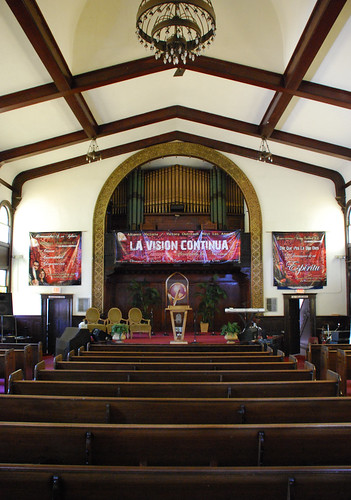
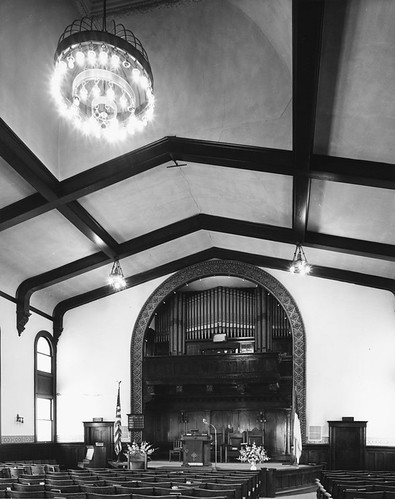
The synagogue opened without its permanent seats. Once they were installed, the building held 415 worshippers on the main floor and about 200 in the gallery.

Sinai Congregation Building, 1909
Welsh Presbyterian Church Building
The black and white picture, c. 1909, is from the USC Libraries Digital Archive.

In 1926, when the Sinai congregation moved to its new home on South New Hampshire (Los Angeles Historic-Cultural Monument No. 91, also the work of S. Tilden Norton), the congregation sold the Valencia building to the Welsh Presbyterian Church, which owns and uses the structure to this day.

Welsh Presbyterian Church Building

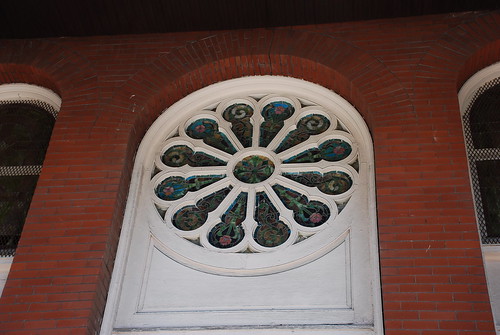
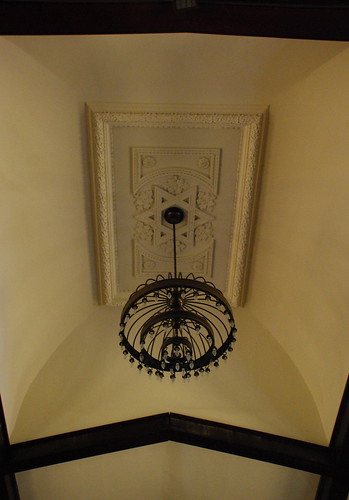
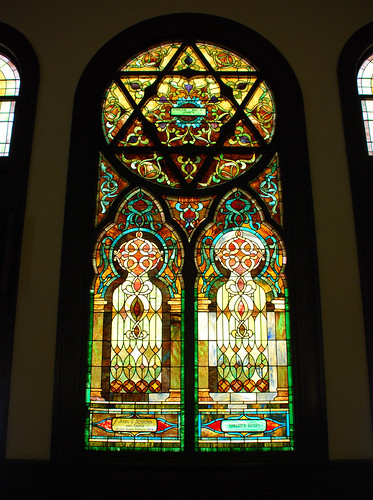
You can still see the Stars of David displayed in the building, in the stained glass windows and the ceiling medallion. Unfortunately, the structure is the worse for wear, with broken windows and running cracks in the bricks’ mortar being the most obvious problems. Also, it looks like the building is graffitied on a regular basis. It would be nice if the various congregations in its history could team up and do something nice for the landmark in conjunction with its 100th anniversary next summer. Just let me know when the fund-raising bake sale is.

Welsh Presbyterian Church Building

Sources:

“Stars Light in Synagogue” The Los Angeles Times; Sep 6, 1909, p. I11

“Noted Rabbi Is Run Down; Is Killed” The Los Angeles Times; Apr 26, 1922, p. II1


Up next: Village Green

continue reading...
Tuesday, July 29, 2008

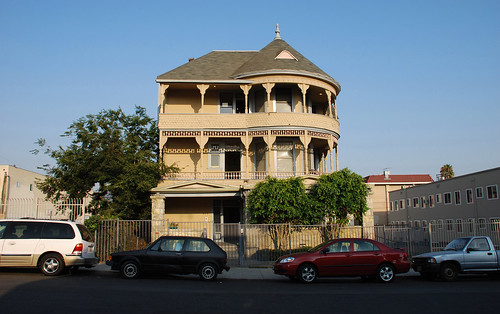
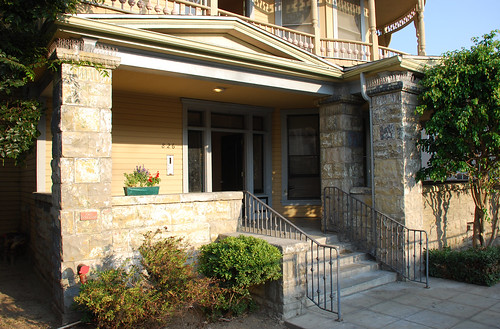
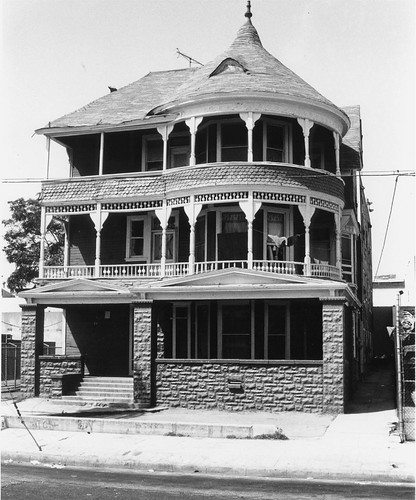
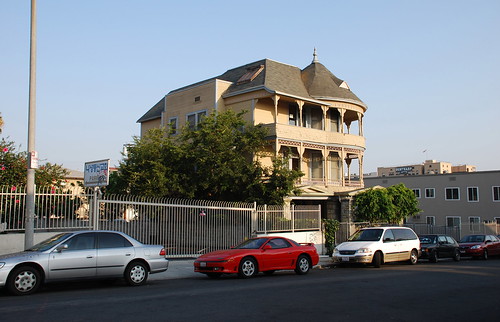
No. 167 - Strong Residence

826 South Coronado Residence

Strong Residence
1887
826 South Coronado Street – map
Declared: 11/17/76

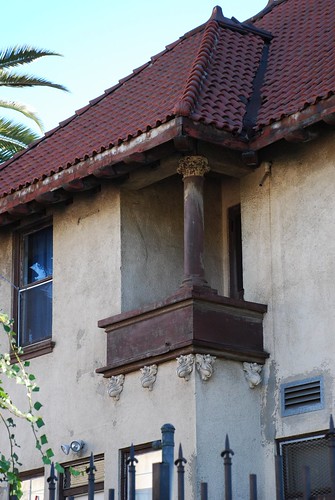
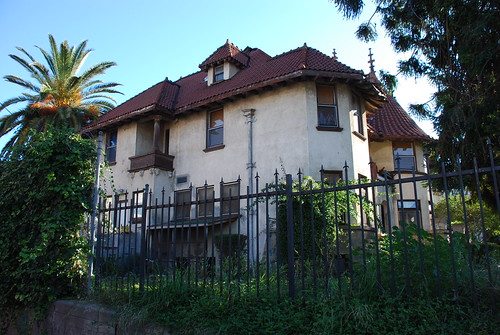
Well, let’s all be thankful this 1887 home was moved from its original location on West 15th Street downtown. Had it not been relocated, it’d have been squished by the Los Angeles Convention Center.

826 South Coronado Residence

The first known resident of the home – back when it was at 633 West 15th Street (although, up until 1890, the street was named Adele Street) – was salesman Edward A. Strong (what in the hell was he selling to afford such a place, I ask you). The property, part of the Harvey tract, had been owned by hotshot attorney Henry W. O’Melveny. It was subdivided in 1886.

826 South Coronado Residence
826 South Coronado Street Residence

Jumping ahead a century, in 1988, the Community Redevelopment Agency was threatening to raze the home to make way for the $390 million expansion of the Convention Center. A month away from demolition, the three-story building was finally saved, however, when the city moved it in May 1989 to its current plot, offered by the Department of Water and Power, on South Coronado, about a pair of blocks from MacArthur Park. Architects Tom Micahli and Barry Milofsky did such a superb job transforming the old building into half a dozen “very-low-income” units, the city awarded them with a Historic Preservation Award in 1992.

826 South Coronado Residence

I've read in a few places the ol’ Strong House is very Queen Anne-ish with elements of Caribbean and Craftsman styles, but I sure don’t know which bits are Caribbean, and I’m unaware of any Craftsman details used way back in 1887. In reviewing the property for Historic-Cultural status, the city pointed out a variety of notable features, including the roof that’s “punctuated by a blind eyebrow window” (I get why it's called that). In some of these shots, you can make out pretty well the later addition to the building's backside.

826 South Coronado Residence
From L.A.'s Department of City Planning website.

It looks to be in great shape. As is often the case, the landscaping could be changed to better show off the home, but that’s a quibble. I’m glad it’s sill around. Who knows, maybe fifty years from now the house will have different, architecturally sympathetic neighbors, or maybe it’ll even be relocated again.

826 South Coronado Residence

Source:

Ramos, George “Mansion Moves Out Ahead of Wrecker’s Ball” The Los Angeles Times; May 12, 1989, p. 3


Up next: Griffith Observatory

continue reading...
Saturday, June 28, 2008

No. 158 - Mary Andrews Clark Residence of the YWCA
Mary Andrews Clark Residence of the YWCA

Mary Andrews Clark Residence of the YWCA
1912 – Arthur B. Benton
306 Loma Drive – map
Declared: 7/7/76

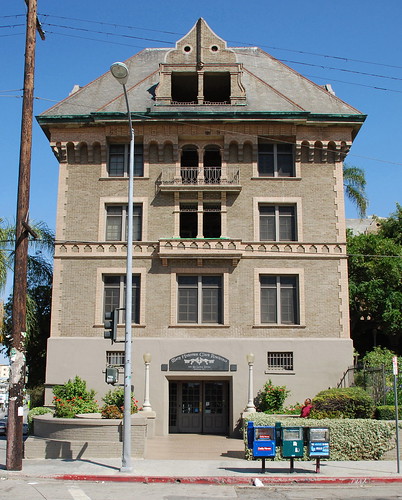
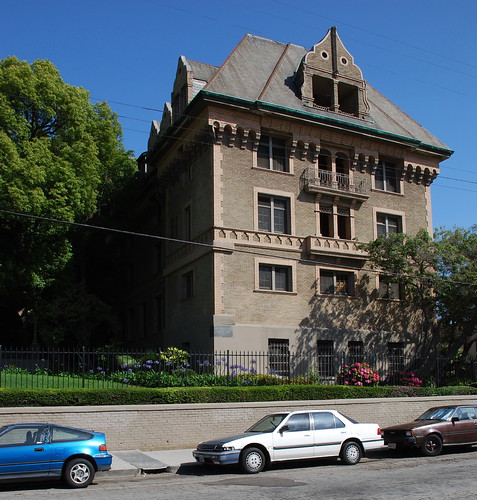
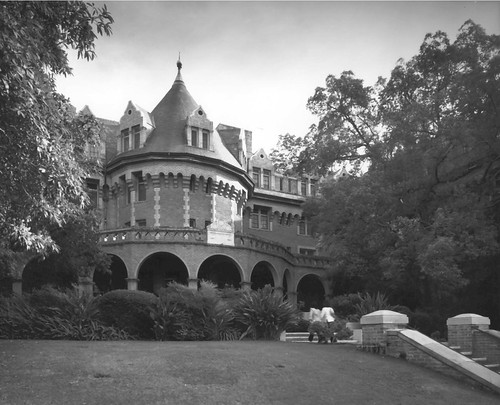
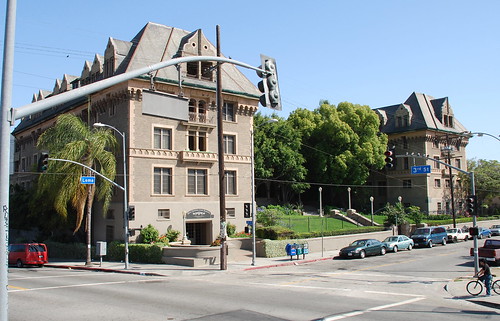
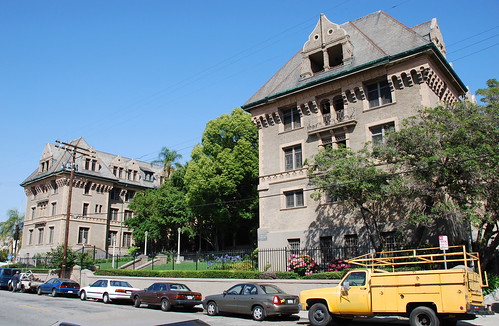
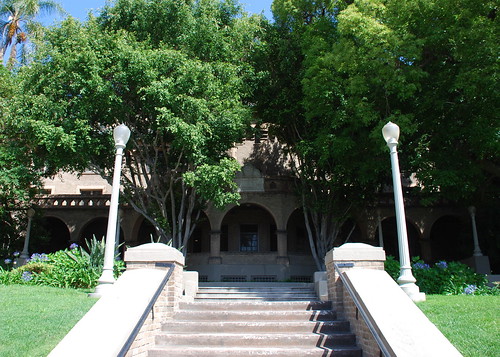
Two decades before William Andrews Clark, Jr, bequeathed HCM No. 28, the 1925 Clark Library, to UCLA in memory of his dad, Clark Sr built this YWCA residence hall as a memorial to his mother, Mary.

Mary Andrews Clark Residence of the YWCA

Actually, the idea of building the Mary Andrews Clark Memorial Home, an “Institution of Comfort and Uplift,” can be credited to Clark’s sister, Mrs T.F. Miller, chairwoman of a special committee of the YWCA in Los Angeles, then on Hill Street downtown.

Mary Andrews Clark Residence of the YWCA

Clark, a former Montana senator, donated the cost of the project, about $200,000, chicken-feed, if you consider the stinking-rich Copper King was then living in his $10,000,000 mansion on Fifth Avenue in Manhattan.

Mary Andrews Clark Residence of the YWCA

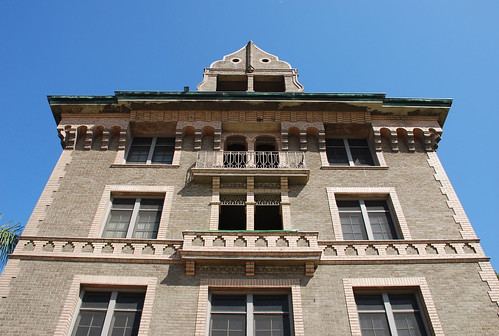
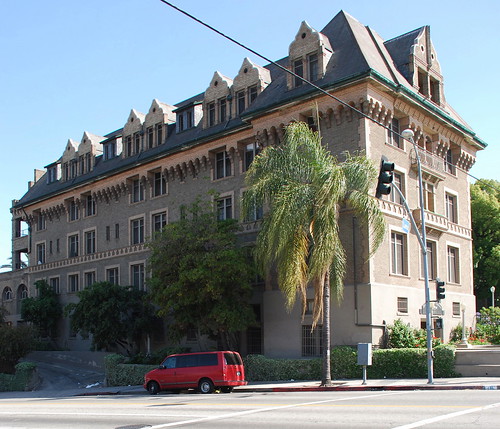
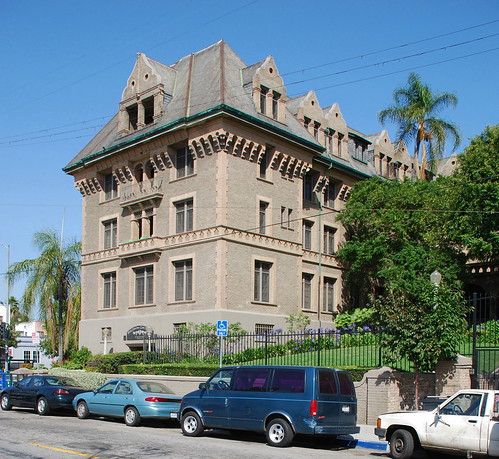
Architect Arthur Burnett Benton (we ran into him at HCM No. 63), was already responsible for a few of the city’s YMCA and YWCA quarters when he created for Clark a very, very large building in the French Chateauesque style at the southeast corner of 3rd Street and Loma Drive. The memorial was “designed to afford a comfortable home and a protecting influence for working girls.”

Mary Andrews Clark Residence of the YWCA
From the Dept of City Planning website.

Did I mention it’s large? 200 x 132 feet including an open court of 100 x 112 feet. In fact, it’s so huge, it’s tough to get a shot of the whole thing (a little help, Martin Schall?). And don’t bother trying to get a good shot of the courtyard. I’m quite pro-tree, but it sure would be nice to see it opened up a bit.

Mary Andrews Clark Residence of the YWCA

In the early summer of 1912, while the building’s roof was being put up, the Los Angeles Times reported on what we’d find inside the building back then. The first floor originally held the lobby, administration offices, a large reception hall, two private parlors, a library, a lecture room to seat 300, a dining room for 200, and a gymnasium. The rest of the building held dormitories for about 200 girls, sleeping porches, sewing and workrooms, classrooms, a laundry, and a complete hospital suite.

Mary Andrews Clark Residence of the YWCA

After sustaining heavy damage in the Whittier Narrows earthquake, the building closed in 1987. Three years later, the YWCA sold it for $3 million to a non-profit developer, the L.A. Community Design Center. The group hired Killefer Flammang Architects to perform a seismic upgrade and renovation on the 76,600 square-foot landmark, turning the structure into an SRO with more than 150 rooms (had they not gotten to work when they did, the monument, in all likelihood, would’ve been lost in the Northridge earthquake). The Mary Andrews Clark Residence was rededicated in 1993 and re-opened in October 1994, with each floor having “a communal kitchen and lounge, and shower enclosures have been built into the hallways because most of the rooms have only half-baths.” Total rehabilitation costs ran to $16 million.

Mary Andrews Clark Residence of the YWCA

Killefer Flammang won a bunch of awards for their work, including a Merit Award from the AIA California Council and the L.A Conservancy’s Preservation Award. It was also in 1995 when the building was added to the National Register of Historic Places.

Mary Andrews Clark Residence of the YWCA

Thanks to a security guard, I got a quick look inside, but missed out seeing many of the rich details heralded back in 1912. It still looked to be in good shape.

Oh, and check out this list of just some of the movies (including The Wedding Planner and The Ring 2) and TV shows (ER and Charmed, for instance) filmed at the Mary Andrews Clark.

Mary Andrews Clark Residence of the YWCA

Sources:

“Working Girls’ Home Now Taking Shape.” The Los Angeles Times; Aug 11, 1911, p II1

“Memorial Home Takes Shape.” The Los Angeles Times; Jun 30, 1912, p. V1

Berestein, Leslie “Old YWCA Home is Reincarnated” The Los Angeles Times; Feb 5 1995, p. 8


Up next: Ralph J. Bunche Home

continue reading...