Showing posts with label Mission Hills/North Hills/Panorama City. Show all posts

Friday, May 11, 2007

No. 23 - Mission San Fernando Rey de España

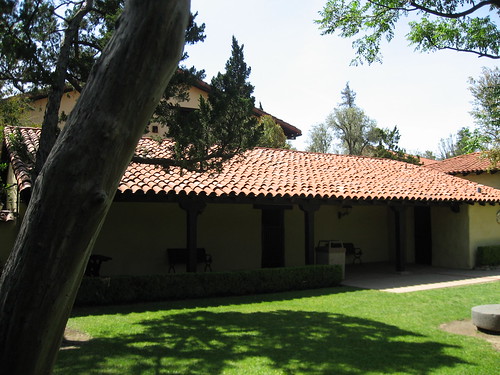
San Fernando Mission - Convento

Mission San Fernando Rey de España
1797
15151 San Fernando Mission Boulevard – mapDeclared: 8/9/63

The San Fernando Mission – the seventeenth in the chain of the twenty-one Alta California missions – was established on September 8, 1797 by Padre Fermin Francisco de Lasuén. It’s too bad that nearly none of that original mission survives today.

What is there is the mission museum and archives, a church, a seminary, a cemetery, the headquarters of the archdiocese, and several gardens, including the Bob Hope Memorial Garden. But none of it original.
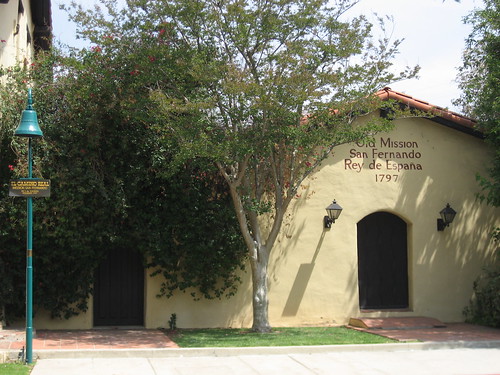
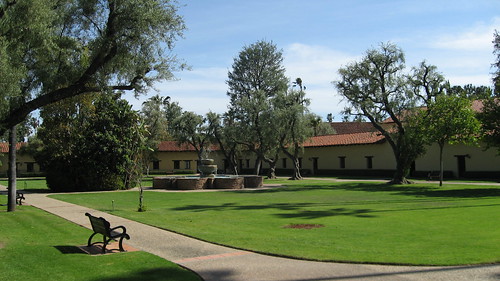
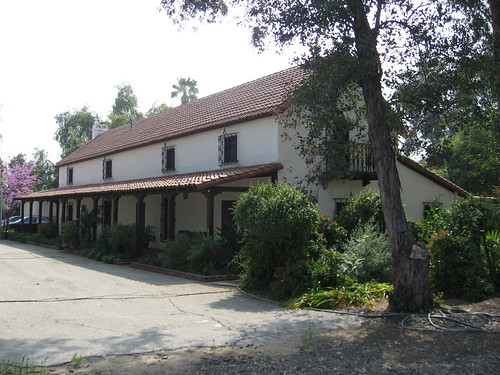
San Fernando Mission
I counted three El Camino Real bells on the site.

Named after 13th century King St Ferdinand, the mission was very prosperous in its first twenty years or so. Unfortunately, the results of increased demands on the mission, the thinning of the local Indian population (a primary source of cheap labor, there were 1,000 Indians there in 1804), and a huge earthquake in 1812 took their toll.

San Fernando Mission
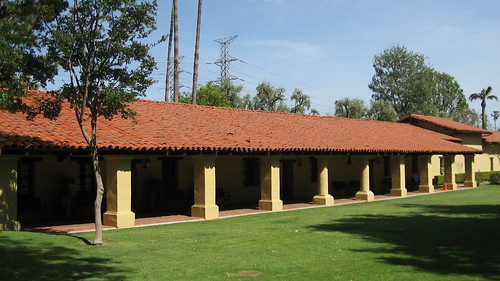
The quadrangle.

San Fernando Misson - Mayordomo's House
The foreman's house.

The string of missions was secularized in 1822 after Mexico gained independence from Spain. Father Ibarra, who had been running the mission and had always stayed loyal to Spain, finally left in 1835.

In the early 1840s a decades long digfest at the property began beginning with the church floor being dug up by prospectors when gold was discovered nearby.
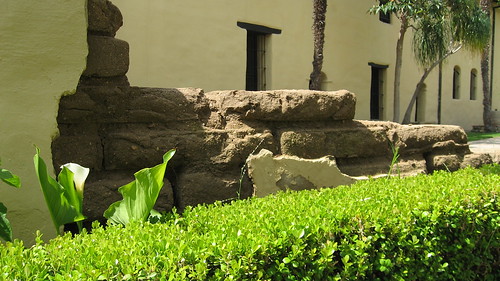
San Fernando Mission
Old adobe.

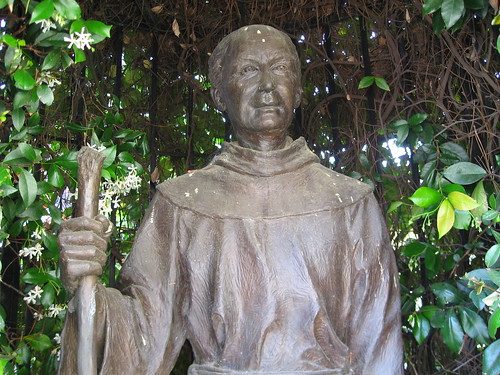
San Fernando Mission - Fray Junipero Serra
Blessed Junipero Serra, founder of the California missions.

In 1845 Governor Pio Pico leased the mission lands to his brother Andres who used it as a summer home for a couple of years. Not too long after that the land was sold again. Then things went downhill fast.
San Fernando Mission

By mid-1890s, the property had seen life as a warehouse, a stagecoach stop, a stable, and even a hog farm. Things looked brighter when, in 1896, Charles Fletcher Lummis, founder of the Landmarks Club, began a campaign to take back the mission property. In 1923, the Church once again returned to the mission and the property was turned back into a working church.
San Fernando Misson


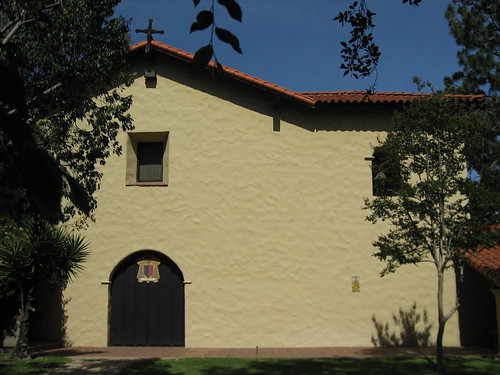
San Fernando Misson - Old Mission Church, rear
The back of the church.

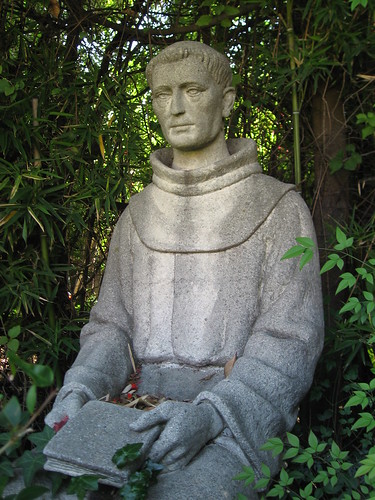
San Fernando Misson - Statue of Fray Fermin Francisco De Lasuen

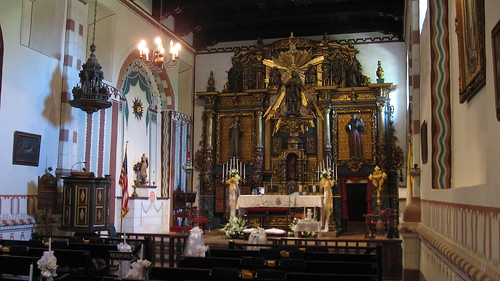
The Sylmar earthquake in 1971 pretty much wiped out what was left of the original buildings. A replica of the previous church (but not of the original one), the current church opened in 1974.
San Fernando Mission - Old Mission Church
The interior of the 1974 church with a 16th century gold-leafed reredos. Pope John Paul II visited here in 1987.

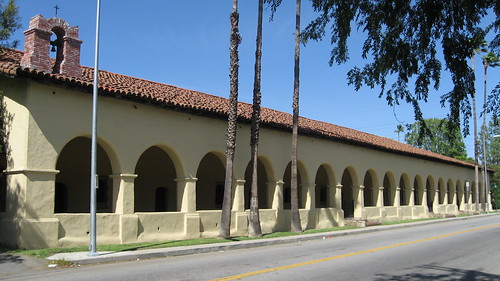
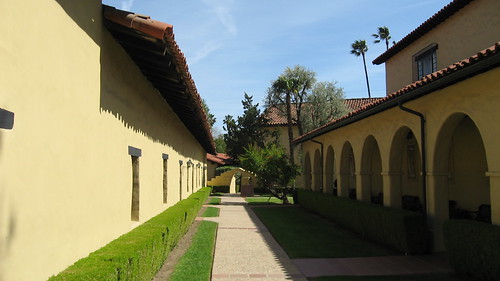
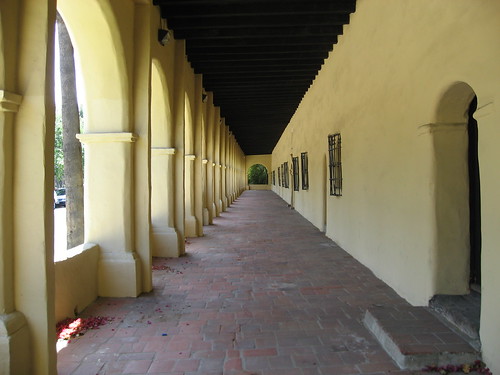
The mission highlight, at least for me, is the convento. It took thirteen years to build and was finished in 1822. Later enlarged to two stories, it used to be the largest adobe structure in California. The building was also used by Colonel John C. Fremont when the Army invaded California in 1847. Today, the convento contains more of its original components than any other structure there, and its restoration looks great and is as authentic as can be. After touring the mission’s museum, church, workshops, and grounds, it’s hard not to feel a little churchy by the time you leave.
San Fernando Mission - Convento
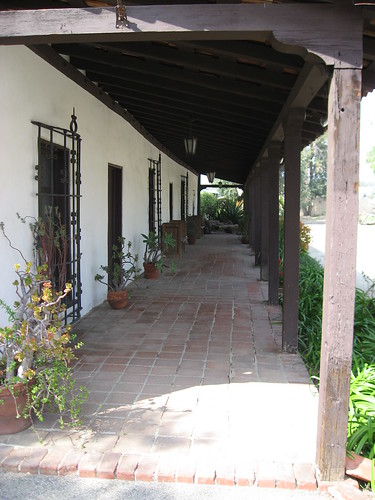
The convento corridor.

Guess who's buried in the Bob Hope Memorial Garden? On July 22, 2005, Bob Hope was entombed there in the garden behind the church. In his lifetime, Hope “performed for twelve presidents and entertained six.”
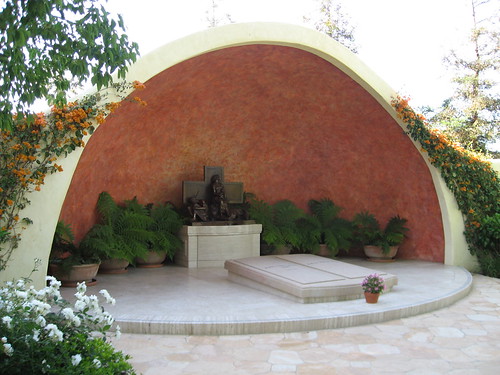
San Fernando Mission - Bob Hope Memorial Garden / Bob Hope's Grave
The tomb of Hope.

Mission San Fernando Rey de España is a California Historical Landmark and is also listed on the National Register of Historic Places.
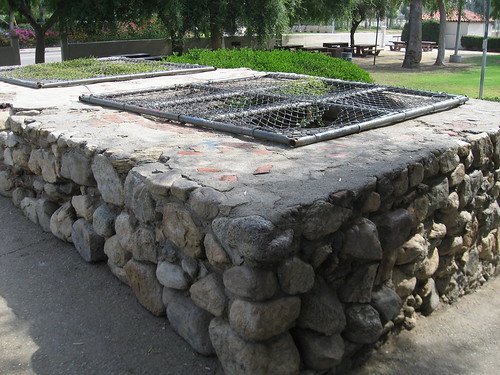
San Fernando Mission - Tallow Pit in Brand Park
The mission's original tallow pits/soap works in Brand Park.
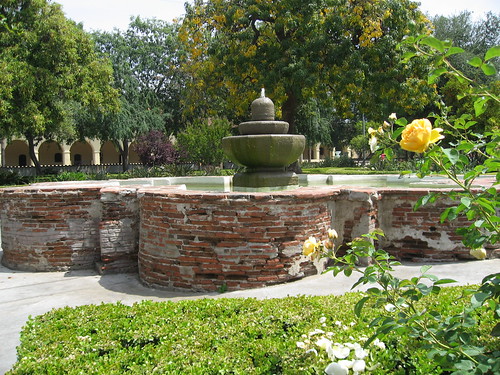
San Fernando Mission - The Fountain in Brand Park
Also across the street in Brand Park, the mission garden's fountain (1812-1814), moved 300 feet from its original site in 1922.
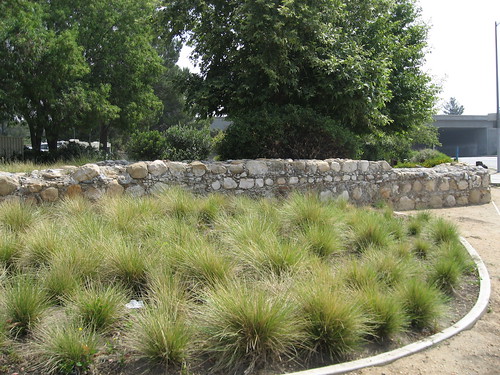
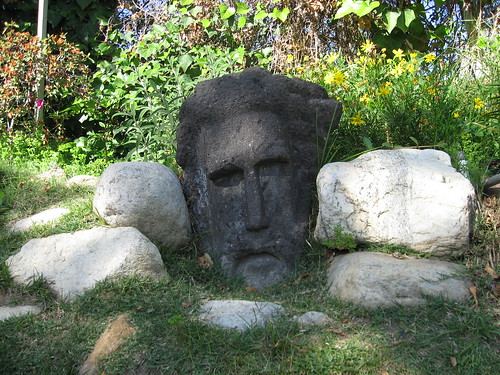
San Fernando Mission - Mission Dam
A few blocks away, you can see the remains of the mission's 1808 dam.

San Fernando Mission

Up next: Oak Tree

continue reading...

Saturday, March 24, 2007

No. 7 - Andres Pico Adobe

Andres Pico Adobe

Andres Pico Adobe
c. 1834
10940 Sepulveda Boulevard – map
Declared: 9/21/62

Here’s a quick history of the Andres Pico Adobe AKA De Celis Residence AKA Romulo Pico Adobe AKA Ranchita Romulo, cobbled together primarily from a San Fernando Valley Historical Society handout and this site summarizing the relevant section of John R. Kielbasa’s book, Historic Adobes of Los Angeles County.

c. 1834 A 40-odd-foot long, one-room adobe is built, probably by Native Americans, maybe for storage for the nearby San Fernando Mission.

1845 Pio Pico, governor of Mexican Alta California, allows his brother, Andres, to co-lease what remains of the San Fernando Mission land, about 118,000 acres.

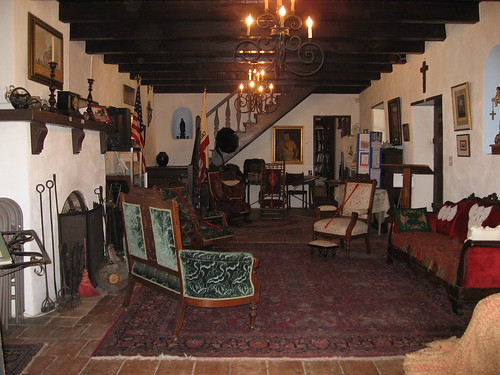
Andres Pico Adobe - Main Room
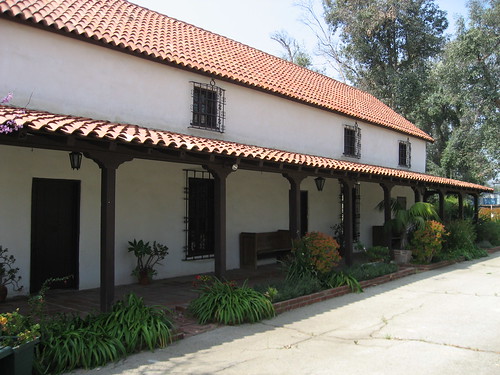
The original room

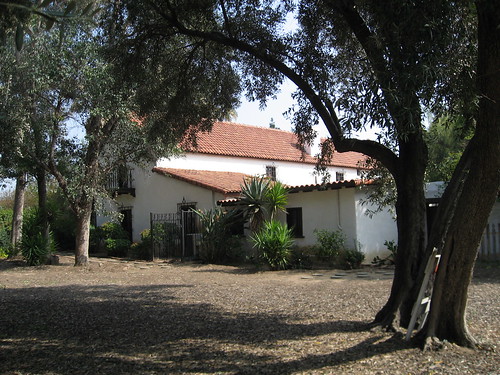
Andres Pico Adobe
The north side

1846/47 Needing money for the U.S.-Mexican War, Pio Pico sells the San Fernando Valley (except for two ranchos), including the Adobe, to Don Eulogio de Celis for $14,000.

1853 Don Andres Pico, Pio’s brother and, more famously, the Mexican general who surrendered to John C. Fremont and signed the 1847 Treaty of Cahuenga, putting a stop to the U.S.-Mexican War, buys half of the Valley for $15,000.

1862 Facing debt, Andres sells his Valley land to Pio. By this time, a library and dining room had been added to the structure, although it’s likely Andres never actually resided at the Adobe.

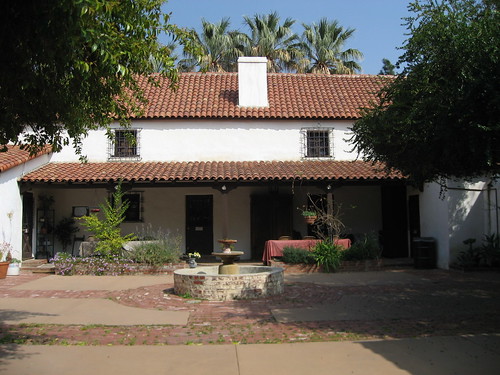
Andres Pico Adobe - Back court
The back of the Adobe, facing west

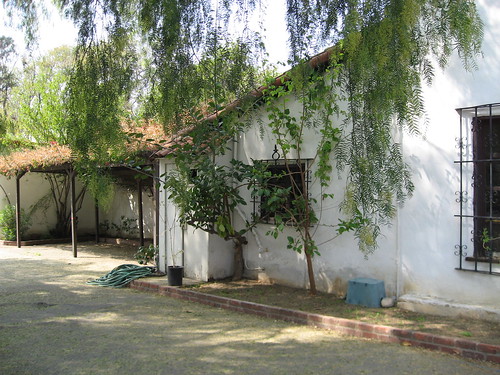
Andres Pico Adobe
South side

1869 Pio sells his Valley land to the San Fernando Farm Homestead Association, led by a pair of Isaacs – Lankershim and Van Nuys. The sale did not include the Adobe.

1874 Romulo and Catarina Pico, children of Andres, marry and take up residence in the Adobe (don’t worry, they were legally adopted). They modernized the home, adding a second floor, a kitchen, two wings, and a new floor.

Andres Pico Adobe


Andres Pico Adobe

1930 The Adobe, after being bought and sold a few times since the Picos moved out in the late 19th century, is a vacant and vandalized wreck. Archaeologist Dr. Mark Harrington, curator of the Southwest Indian Museum, and his wife buy the Adobe and restore the Monterey-style home more in the manner of an older hacienda, pre-dating the Pico renovations of the 1870s and 1880s by fifty years.

1927, before the Harrington restoration.

1945 Harrington sells the Adobe to Dr. G. M. Lindblade and his wife.

Early 1950s Morris D. Farnell and his wife buy the home.

1957 The North Valley YMCA buys the Adobe with five acres, using it for office space.

1965 The building’s put up for sale and threatened with demolition.

1968 The city of Los Angeles buys the property and hands it over to its Department of Recreation and Parks, which maintains the exterior and grounds to this day.

The Adobe is listed in the National Register of Historic Places.

It’s California State Landmark No. 362.

The Andres Pico Adobe serves as the headquarters for the San Fernando Historical Society. The building’s open for tours on Mondays and the third Sunday of each month.

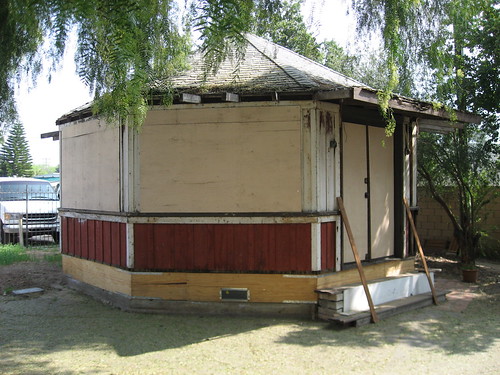
Bonus! Also on the site is a small, hexagonal building in ill-repair. It was built in the early 1900s as a reading room on the Lankershim Ranch. In the mid 50s, Roy Rogers and Dale Evans bought the place, and moved it to their ranch in Chatsworth. Just a few years ago, facing the wrecking ball, the little building was re-located to the Adobe, where it awaits restoration funds. See a short clip of the building being put on its new foundations by clicking here.

Andres Pico Adobe - Lankershim Reading Room
The Lankershim reading room

For what it’s worth, finding the Adobe was no easy task (at least for me). Despite the address being a Sepulveda Boulevard one, the site’s actually on a little one-way road that veers off Sepulveda toward Brand. Keep a lookout for it soon after you go north from the 118. That’s if you’re going north from the 118.

Up next: The Foy House

continue reading...