Showing posts with label Port of Los Angeles. Show all posts

Sunday, August 10, 2008

No. 171 - (Site of) Timms' Landing

(Site of) Timms' Landing

(Site of) Timms’ Landing
San Pedro Harbor – map
Declared: 2/16/77

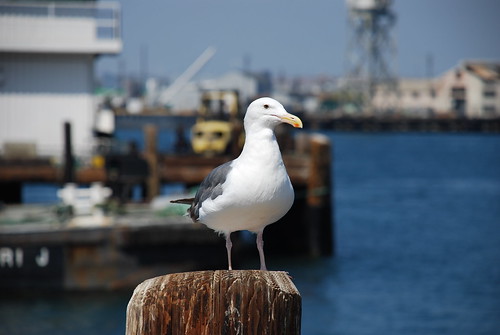
Timms’ Landing in San Pedro was the first Port of Los Angeles. However, any hint of the former landing and wharf is long gone, and not just in terms of structures, either. The very formation of the land and water has been altered to the point of unrecognizability for a century.

German-born Augustus W. Timms started up a goat ranch on Santa Catalina Island after serving in the Mexican War (the veteran Timms marched in L.A.’s first July 4th parade, in 1876). He built a small landing on the island, which became known as Timms’ Cove/Timms’ Landing (later known as Avalon).
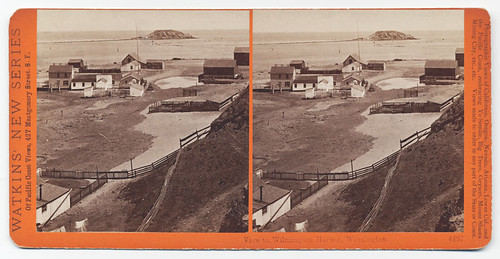
Timms' Landing (with Dead Man's Island)
California State Library That's Deadman's Island in the background.

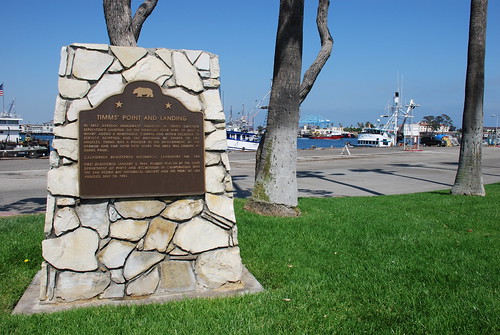
Back on the mainland, in 1852 or 1853, Timms bought and developed the old Diego Sepulveda wharf and surrounding area. The approximate location of Timms’ Point and Landing today is where 14th to 16th Streets would be if they’d be extended to the wharf at Ports o’ Call. (However, the 1993 California State Landmark monument, shown at the top of the post, is on Sampson Way down by 22nd Street.) Upon this point, Timms towed the hulls of a pair of wrecked ships’ hulls, using the deck houses to live in. His extending and improving Sepulveda’s Landing for shipping and receiving, coupled with his running stages to L.A., made him a chief rival of “The Father of the Los Angeles Harbor”, Phineas Banning. Timms also started one of the world’s largest lumber companies, selling out to Tomlinson & Company in 1865.
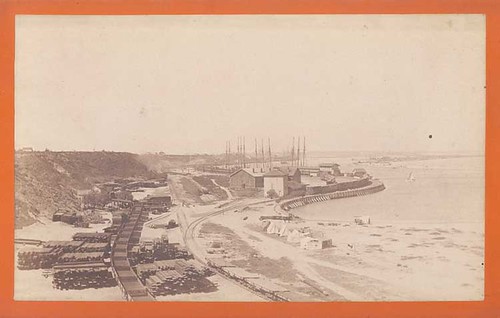
Timms' Landing on San Pedro Bay

Augustus W. Timms was a developer, and he continued to build up the area. His development included a two-story mansion, a hotel and bathhouse, a warehouse, a store, a corral, and a couple of houses. (The hotel was standing as late as 1930, having been moved to 4th Street between Mesa and Palos Verdes Streets.) Timms’ Point became a popular beach resort, known for its terrific clam hunting.
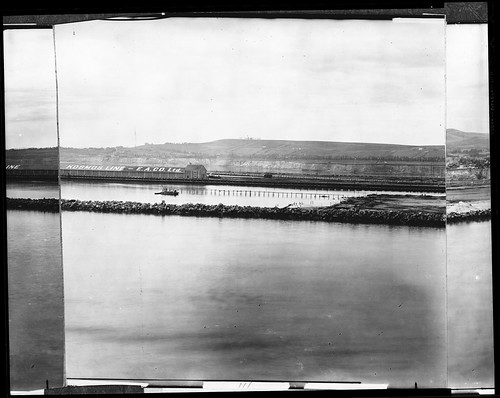
Timms' Landing (with Point Fermin and the Outer Harbor)
A later shot of Timms Landing, with Point Fermin and the Outer Harbor, from the U.S.C. Libraries Digital Archive.

In the 1871, a jetty was built from Timms’ Point southeast to about 600 feet from the earlier built east jetty connecting Rattlesnake (i.e. Terminal) and Deadman’s (dredged away in the late 1920s) Islands. San Pedro really began to boom in the 1880s after the Los Angeles & San Pedro Railway was extended to Timms’ Landing.
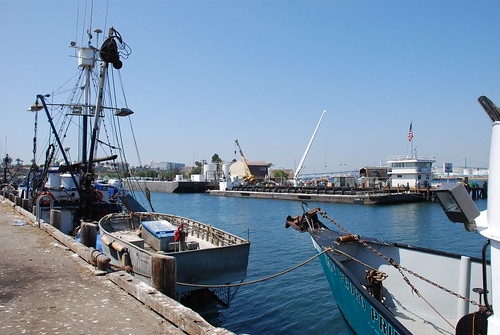
(Site of) Timms' Landing
I'm standing, looking NNE, about where 18th Street would finish if it didn't end back on South Crescent Street.

By 1906/1907, the Southern Pacific owned Timms’ Point, dredging the three slips there to thirty-feet deep each. Afterwards, the landing became known as the Southern Pacific Railroad Slip, and, later, Fishermen’s Slip.
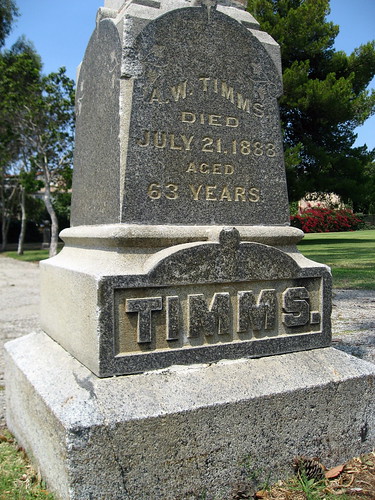
Harbor View Cemetery

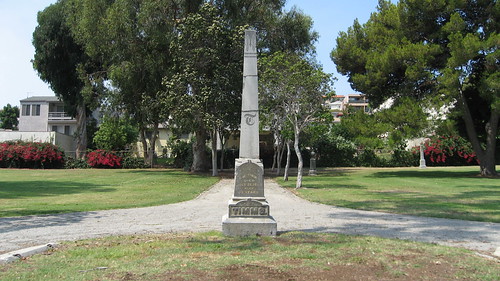
Augustus W. Timms is also to be remembered for donating, in 1888, the three acres of land for San Pedro Cemetery (now Harbor View Memorial Park) to the township of San Pedro. He died and was buried there that same year (I mean he was buried there the same year he donated the land, not the same year he died, although I’m sure that was the case, too). Timms’s monument stands in the center of the cemetery today.
(Site of) Timms' Landing

Sources:

Newmark, Harris Sixty Years in Southern California 1853-1913 The Riverside Press 1916 Cambridge, MA

Weinman, Dr Lois J. and Dr E. Gary Stickel Los Angeles-Long Beach Harbor Area Cultural Resource Survey; Prepared for U.S. Army Engineer District, 1978, Los Angeles, CA

McKinzie, Joe San Pedro Bay Arcadia Publishing 2005 Charleston, SC

Dennis, Eddie “Augustus W. Timms” April 18, 1934


Up next: Stonehurst Recreation Center Building

continue reading...

Monday, June 16, 2008

No. 154 - Fireboat No. 2 and Firehouse No. 112 (Demolished)

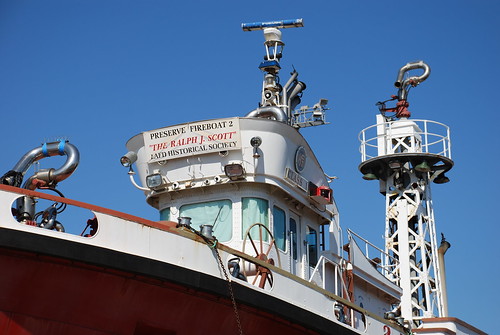
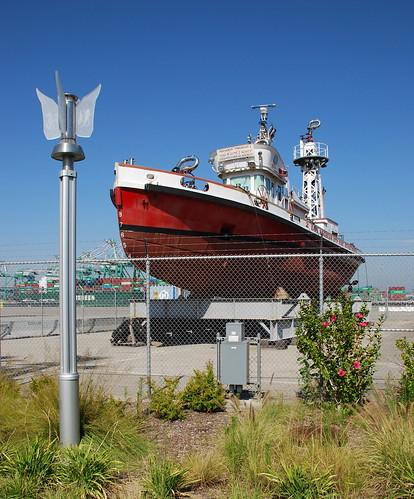
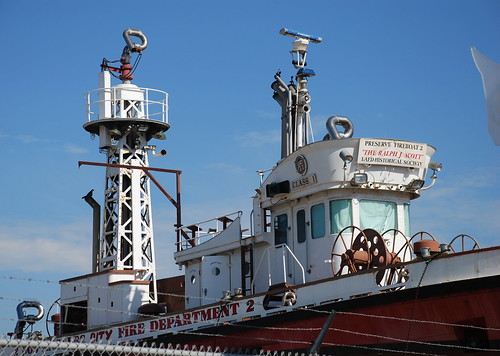
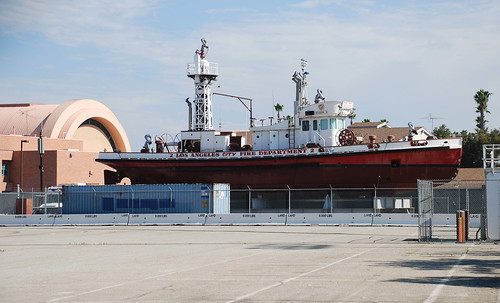
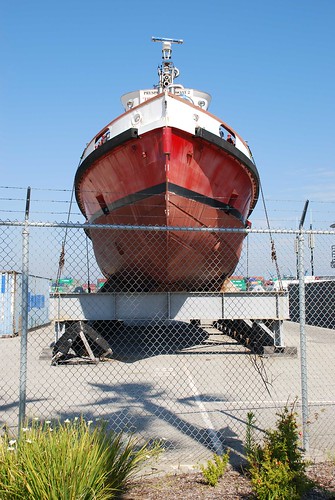
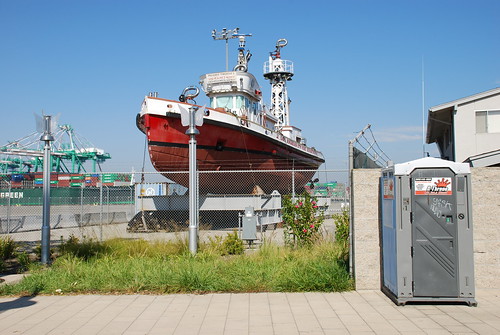
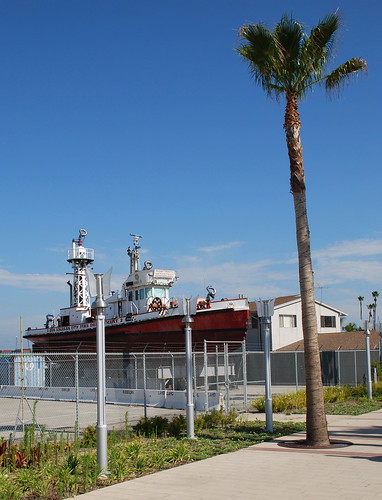
Fireboat No. 2, the Ralph J. Scott

Fireboat No. 2
1925 – L.E. Caverly
444 South Harbor Boulevard, San Pedro – map

Firehouse No. 112
1926, demolished 1986

Declared: 5/5/76

And now for something completely different – a boat, the first, but not the last, on the list of Los Angeles Historic-Cultural Monuments.

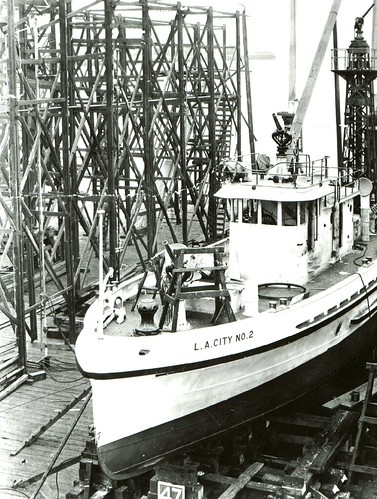
Fireboat No. 2, October 9, 1925
October 9, 1925

Commissioned on December 2, 1925, the fireboat originally known as L.A. City No. 2 was built at the Los Angeles Shipbuilding and Drydock Corporation at a cost of $214,000. The L.A.S. & D.D. Corp., using a design by L.E. Caverly, constructed a 99-foot vessel, one of the country’s first triple-screw, gasoline-powered fireboats. The L.A. City No. 2 had a wrought steel hull (still does, I’d think), could reach speeds of 17 knots, held 2156 gallons of fuel, and boasted a pumping capacity of 10,200 GPM (later increased to 18,600).

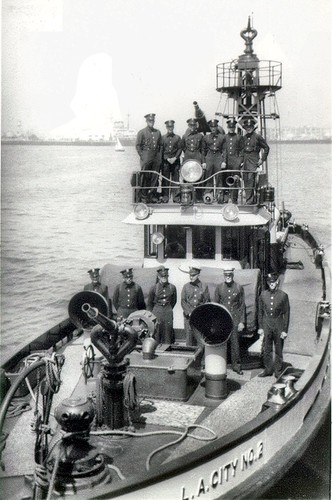
Fireboat No. 2 Crew - 3/23/41
March 23, 1941

Originally, seven 300 HP Winton marine engines powered the fireboat: one drove the center propeller; two handled the wing propellers and the after pumps; and the balance drove the four remaining pumps.

The L.A.S. & D.D. Corp. launched the fireboat at 10:15 a.m. on October 20, 1925. The boat was staffed with fourteen officers and crewmen.

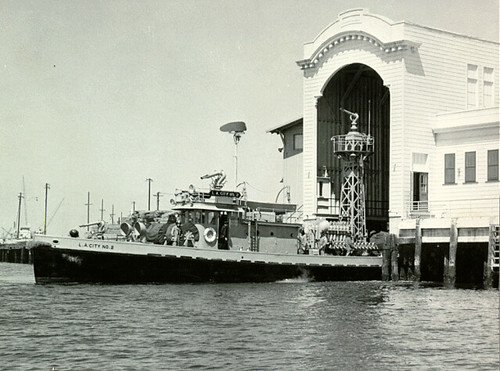
Fireboat No. 2 and Firehouse No. 112, around 1955
L.A. City No. 2 and Firehouse No. 112

In 1926, the city built Firehouse No. 112 for the boat’s home base. It was located at Berth 227 on Terminal Island, near where the legs of the Vincent Thomas Bridge are today. "One of the few covered boathouses ever built for American fireboats", it was demolished on July 22, 1986, and replaced by a cargo container complex.

Fireboat No. 2, the Ralph J. Scott

L.A. City No. 2 fought its first major fire on March 3, 1926, when the lumber schooner Sierra blazed away at the E.K. Wood Lumber wharf. It’s first major wharf fire was on December 28, 1926. That was at Berth 175.

Fireboat No. 2, the Ralph J. Scott

On May 18, 1965, Fireboat No. 2 was renamed the Ralph J. Scott. Scott was the Chief Engineer of the L.A. City Fire Department from 1919 to 1940, and he oversaw the development of the fireboat. His wife had christened the boat forty years earlier.

In the late 1960s, the vessel was modernized and subsequently recommissioned on October 29, 1969. The remodeling resulted in lowering the crew number from fourteen to eight.

Fireboat No. 2, the Ralph J. Scott

Fireboat No. 2 moved to Berth 85 in 1986 when the old, landmarked Firehouse No. 112 was razed.

The Ralph J. Scott was named a National Landmark in 1989 and is listed on the National Register of Historic Places.

On April 12, 2003, the Ralph J. Scott passed command to a brand new, 105-foot, Fireboat No. 2, “the world’s most powerful fireboat.”

Fireboat No. 2, the Ralph J. ScottFireboat No. 2, the Ralph J. Scott
The Ralph J. Scott and the Job O. Johnny

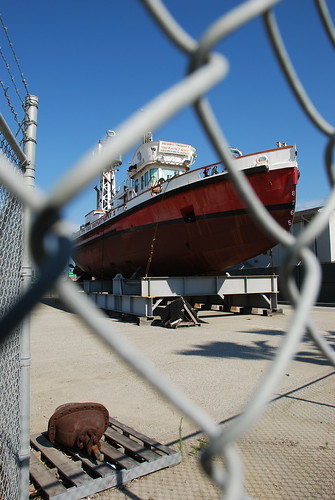
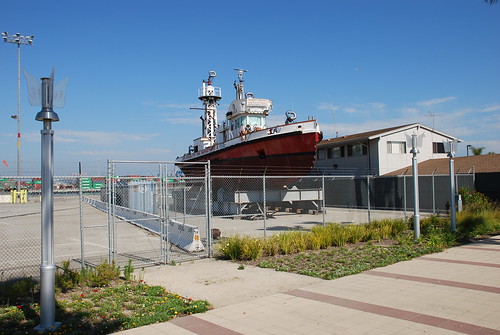
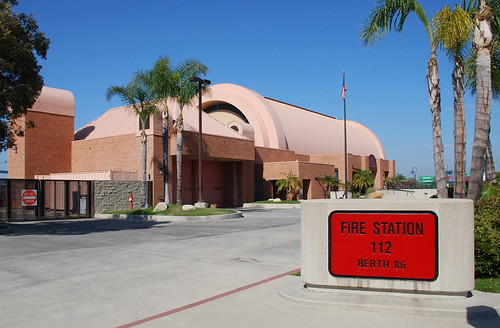
Today, the new Firehouse No. 112 sits at Berth 86. It was closed the Saturday afternoon I swung by, but there’s a bunch of old photos and information in cases outside, including many of the fireboat in action. It’s from where I got most of this information. Behind the new firehouse is where you can find the old Ralph J. Scott.

Fire Station No. 112

There are lots of pictures of the Ralph J. Scott on the web, like here, here, and the L.A. Fire Department Historical Society page here. A big help was this post from LAFire.com, it’s from where I plucked the black and white shots. Oh, and sorry, but Code 3 Collectible’s Ralph J. Scott model is sold out.

Fireboat No. 2, the Ralph J. Scott

Up next: Memory Chapel, Calvary Presbyterian Church

continue reading...
Friday, May 23, 2008

No. 146 - Municipal Ferry Building

Municipal Ferry Building

Municipal Ferry Building
1941 – Derwood Irvin
Sixth Street at Harbor Boulevard – map
Declared: 9/17/75

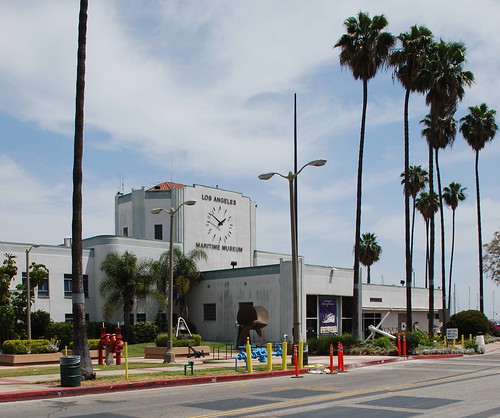
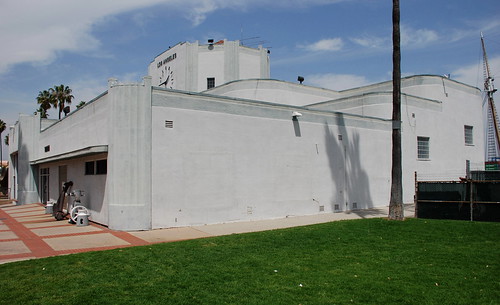
Finished in 1941 as a WPA project, San Pedro’s Municipal Ferry Building was one of the pair of terminals for the auto ferry service carrying passengers – lots of military personnel and cannery and shipyard workers – to and from Terminal Island.

Municipal Ferry Building

The building was the work of architect Derwood Lydell Irvin, born in the early 1880s in Eagle Rock. After studying at Berkeley, Irvin was working for the Los Angeles Harbor Department when he got the assignment to design the ferry terminal buildings at Berths 84 (this one) and 234 (on Terminal Island, demolished in the early 1970s).

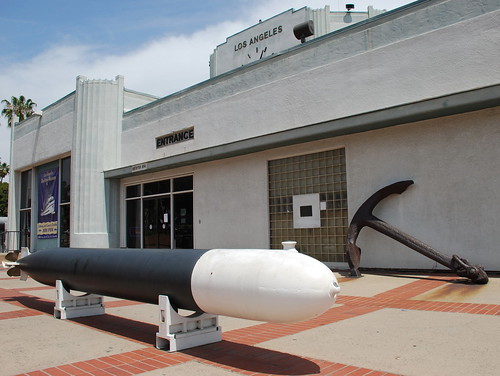
WWII Torpedo at the L.A. Maritime Museum
Municipal Ferry Building
Since those two windows have been sealed up, this wall looks ripe for graffiti.

In 1963, the brand new Vincent Thomas Bridge, “San Pedro’s Golden Gate”, made the double-decked ferries – the Islander and the Ace – obsolete. After the Islander’s last run on November 14 of that year, the building became an overflow office for the Harbor Department.

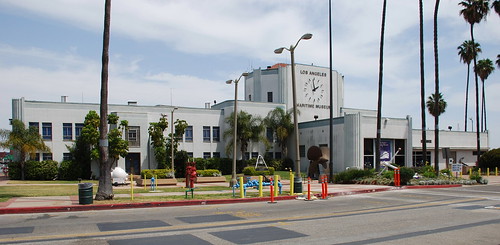
Los Angeles Maritime Museum

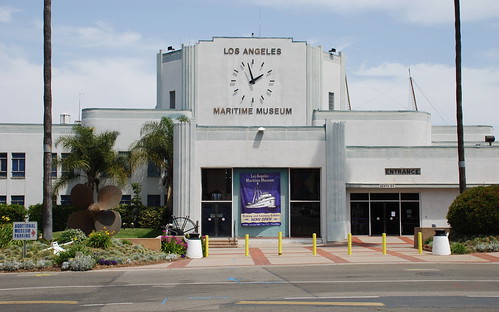
With some re-design work by architects Pullman and Matthews, the old Streamline Moderne building with its five-story octagonal tower has been home to the L.A. Maritime Museum since 1979.

Los Angeles Maritime Museum
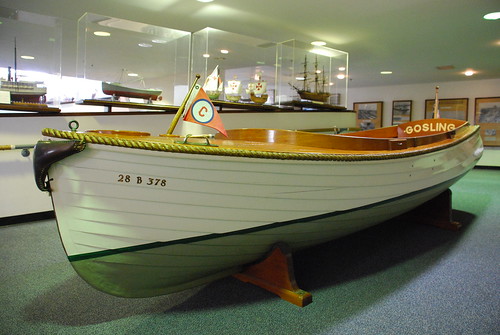
"Gosling"
The 'Gosling', built in 1924.

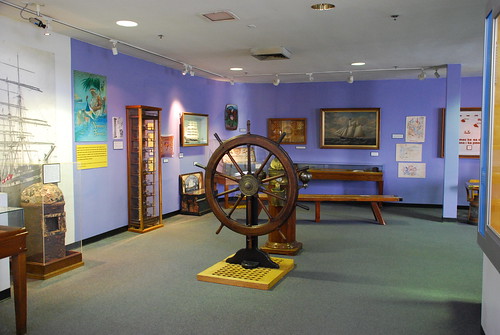
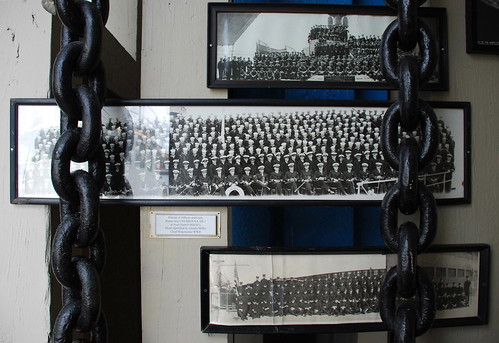
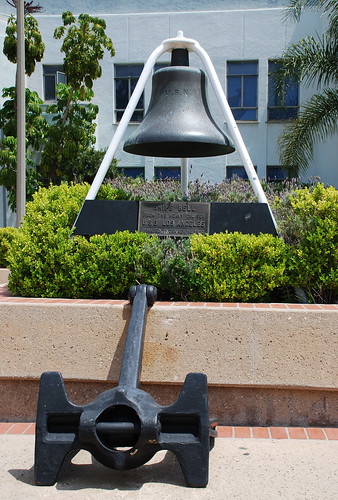
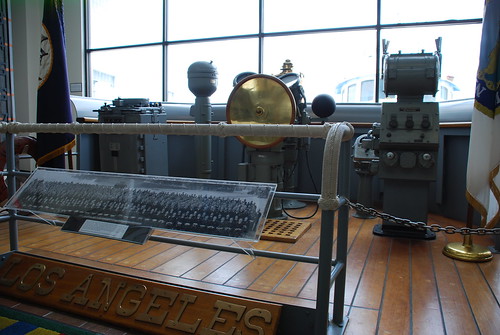
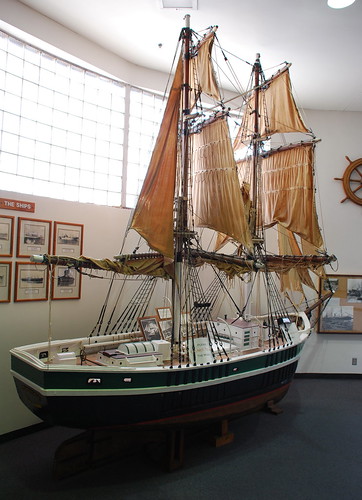
The largest of its kind on the west coast, the museum has all the displays, equipment, and artifacts you’d expect and then some. You can see models of the United States Ships the Los Angeles, the Long Beach, and the San Pedro, in addition to a whole bunch more. Along with the ship’s bell on the museum’s lawn, the Los Angeles’s bridge can be found re-assembled inside.

U.S.S. Los Angeles Ships Bell
Bridge of the U.S.S. Los Angeles

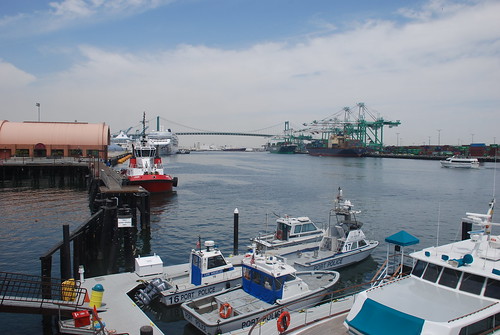
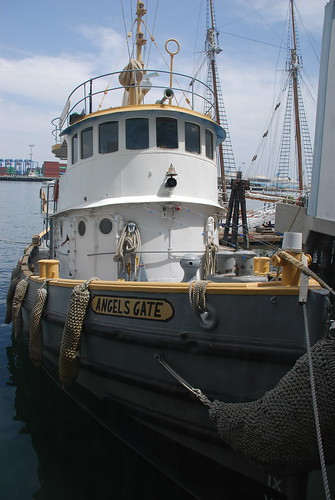
Here’s a pair of shots looking through a museum back window out upon the Glenn M. Anderson Channel. The first shows the Vincent Thomas Bridge in the background, the second is of the tugboat “Angels Gate”, built in 1944.

Los Angeles Main Channel in San Pedro
"Angels Gate" Tug

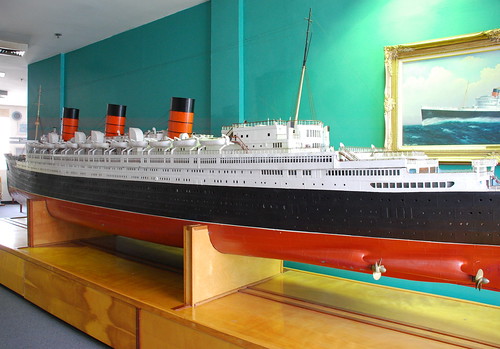
At the museum you can watch the radio operators of the United Radio Amateur Club broadcast from the second floor. There’s also the model of the S.S. Poseidon, used in the 1972 movie The Poseidon Adventure. It was built, 1/48th to scale, using the original plans for the Queen Mary. I tried flipping it over to see how long Shelley Winters could hold her breath, but was stopped by security.

Poseidon Model

San Pedro’s Municipal Ferry Building was listed on the National Register of Historic Places in 1996.

Municipal Ferry Building

Sources:

“Derwood Irvin: The Man Behind the Ferry Terminals” Channel Crossings Summer 2005 Vol. 2, No. 1

McKowen, Ken and Dahlynn Best of California’s Missions, Mansions, and Museums Wilderness Press 2006 Berkeley, CA


Up next: James H. Dodson Residence

continue reading...