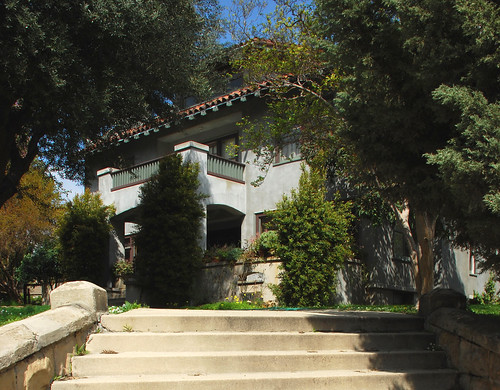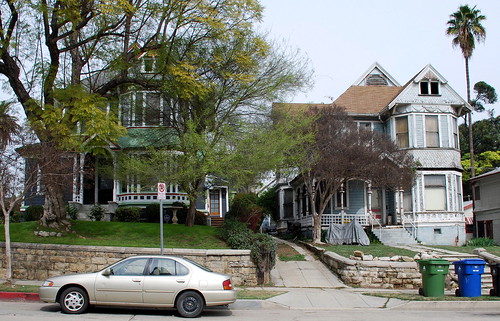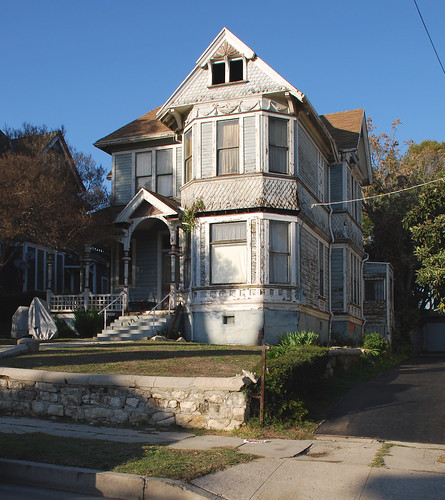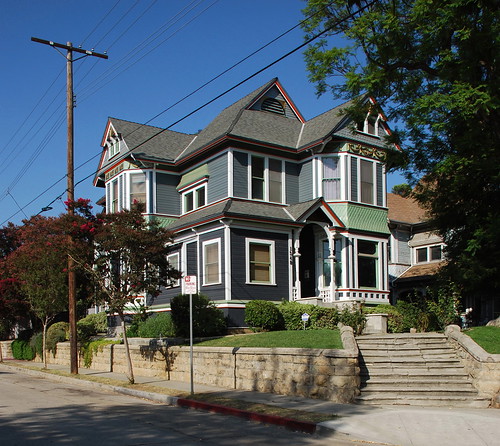
Showing posts with label Silver Lake/Echo Park/Elysian Valley. Show all posts

Saturday, March 14, 2009

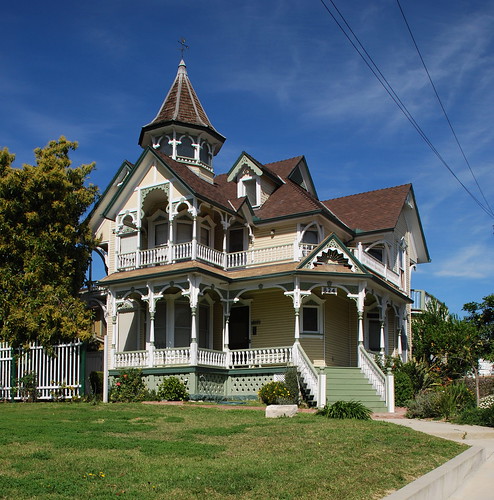
No. 223 - Weller Residence

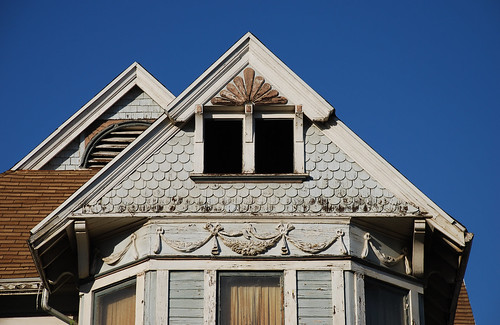
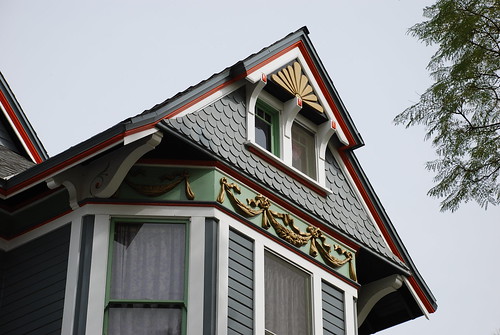
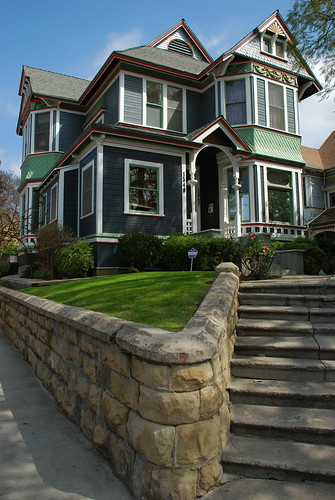
Weller Residence

Weller Residence
1894
824 East Kensington Road – map
Declared: 6/20/79

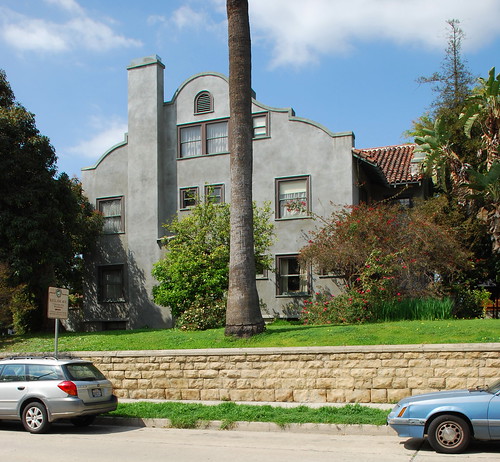
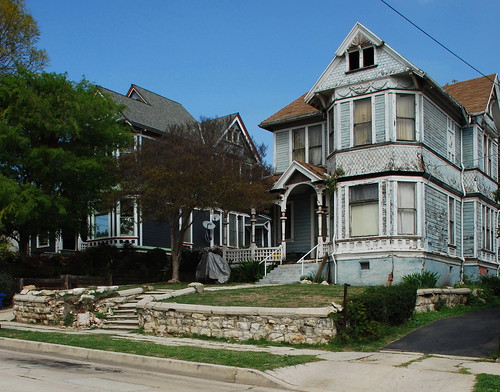
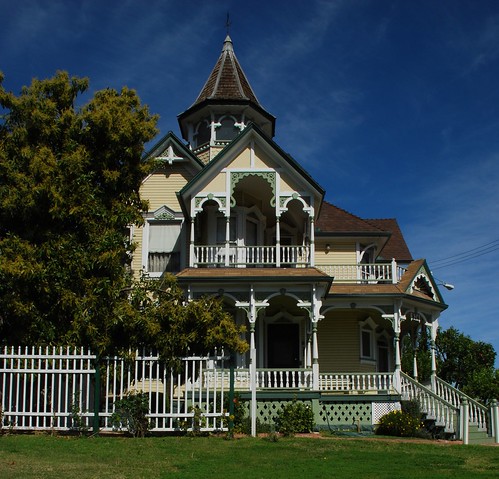
Businessman Zachariah Weller’s house was just six years old in 1900 when he sent his family off for a short vacation on Catalina Island, split the house in two, and moved it about 3,000 feet north (as the crow flies), deep into Angeleño Heights. When the Weller clan’s Avalon holiday was up, they returned to a home not only no longer encroached upon by filthy oil wells, but one which was newly wired for electricity, the first home in the Heights to be powered as such.
Weller Residence

Born in Somerset County, Pennsylvania, on April 4, 1847, Zachariah Weller moved to Waterloo, Iowa, in 1864, where he worked as a building contractor and, later, a hardware merchant. In 1887, along with the rest of the state of Iowa, Weller moved to sunny Los Angeles. Here he continued in the hardware trade, forming a partnership with E.A. Hoffman under the moniker Hoffman & Weller. The duo also entered the oil business together.

Weller Residence

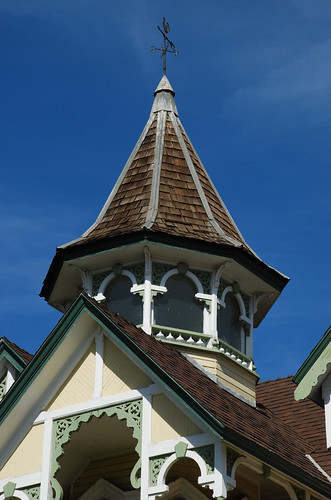
In early 1893, Zach Weller bought from Charles Stimson a pair of lots in the Beauvoir Tract for $2,000. A Queen Anne home, with bits of Eastlake elements and hints of Moorishness, would be completed the following year and claim the address of 401 North Figueroa Street.
Weller Residence

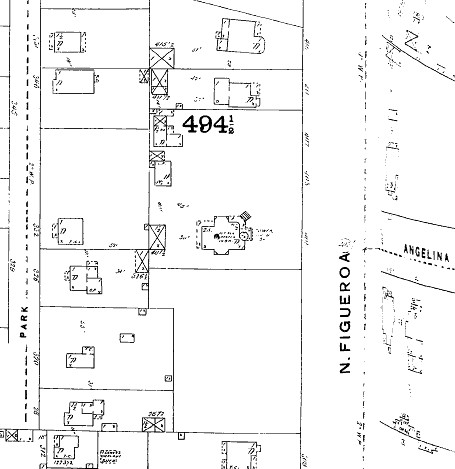
Below are two Sanborn maps. The top, from 1888, shows the land before Weller got hold of it. The bottom, grabbed from the 1894-1900 Sanborn volume, has his house more or less at the end of Angelina.
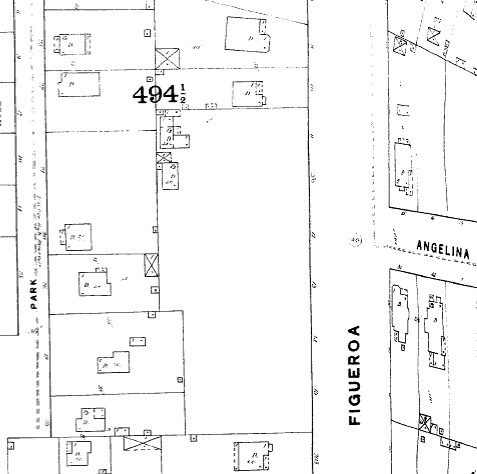
Figueroa & Angelina, Los Angeles, 1888
Figueroa & Angelina, Los Angeles, 1894-1900

When Hoffman & Weller decided to end their partnership, Weller traded his interest in the hardware shop to Hoffman for the latter’s share in the oil wells. Set your eyes on this L.A. Times ad from April 17, 1898, announcing the close-out sale at their store at 109 North Main Street. What bargains we missed!
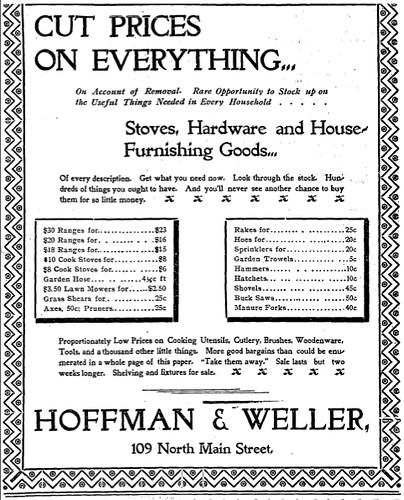
Hoffman & Weller Advertisement

Now the word is Weller moved his house because he was fed up with the oil derricks in his neighborhood and, literally, backyard. I don’t doubt this, but, considering he owned or co-owned up to thirty wells at one point, I can’t help thinking some of these were Weller’s wells. Either way, I know I wouldn’t be too crazy if my yard looked like this:
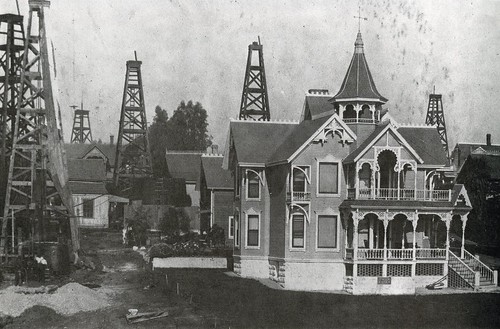
Weller Residence
Weller Residence at 401 North Figueroa (original location)

(This may be a crazy question, but does anyone know of any remnants of oil drilling in the area? David L. Clark, in Los Angeles: A City Apart, says the area of Edward Doheny’s original strike, bounded by Figueroa, First, Union, and Temple, had more than 500 producing oil wells by 1897. You’d think there be some evidence somewhere.)
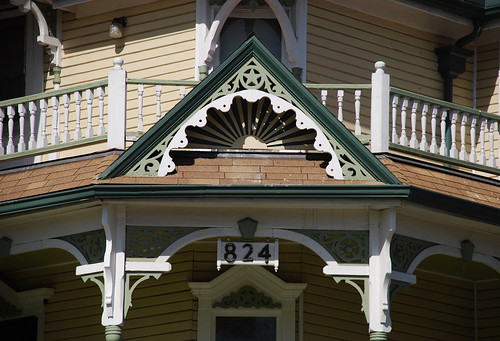
Weller Residence

On Sunday, June 21, 1903, Weller, a member of the Ancient Order of United Workmen and of the Royal Arcanum, died of a series of strokes at his home after a long illness (blamed in part on overdoing it on his ten-acre orange orchard in Ontario). He left behind his widow, Eliza, three daughters, and a son.
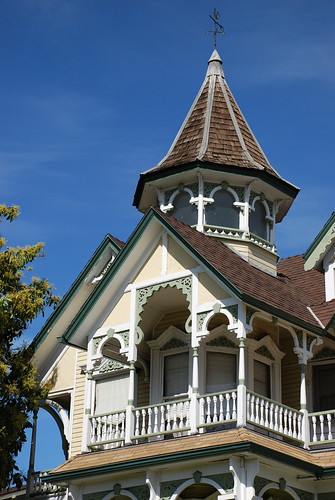
Weller Residence

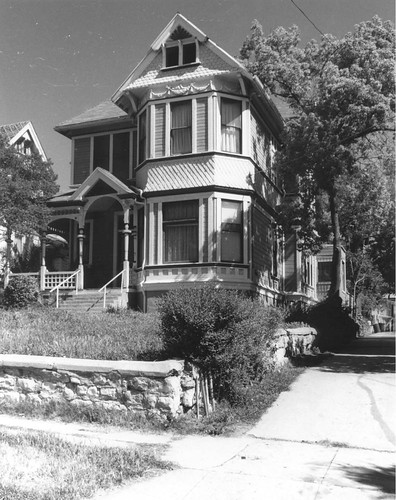
The house stayed in the Weller family into the early 1950s. Albert and Helen McNellis, who had purchased the home in 1953, owned the residence at the time of its 1979 designation. My (somewhat irresponsible) guess is the picture below was taken around that time. Besides the differences in the landscaping and paint, note how at some point a portion of the porch was enclosed, only to be re-opened during a later renovation.
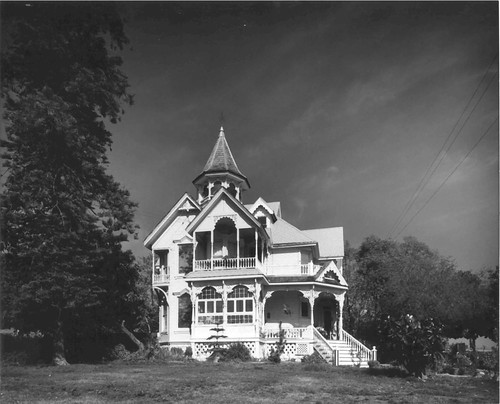
Weller Residence
Courtesy of the Los Angeles Department of City Planning

Oh. And 401 North Figueroa? Well, Angelina Street is no longer there to meet it, and, since 1897, North Figueroa is North Boylston. Finally, on the old Weller lot stands this vaguely Spanish multi-family residence from the mid-20s. There are handful of vintage homes on the block, though. And they must all have a grand view of downtown Los Angeles.
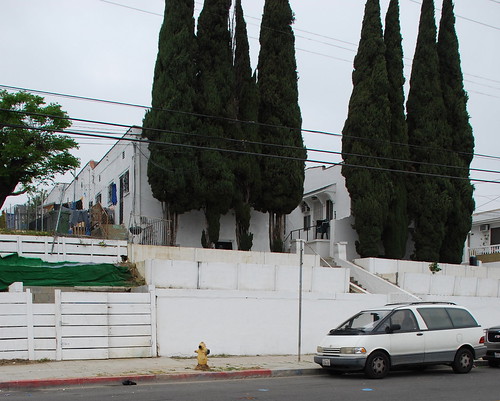
401 North Boylston, Los Angeles
401 North Figueroa, now 401 North Boylston

The Weller Residence ends this month-long stay in Angelino Heights. We’ll be back in the neighborhood in four months, though, so don’t throw away your map just yet.
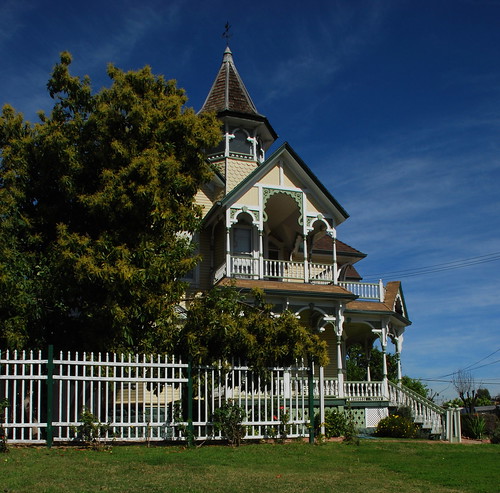
Weller Residence

Sources:

“Real Estate Transfers.” The Los Angeles Times; Jan 15, 1893, p. 15

“A Good Investment.” The Los Angeles Times; April 3, 1898, p. A10

“Well-Known Citizen Passes Away.” The Los Angeles Times; Jun 22, 1903, p. 13

Morales, T.M. “Closer Look at Angelino Heights” Parkside Journal; Jul 4, 1979, p. 1

Clark, David L. Los Angeles: A City Apart Windsor Publications, Inc. 1981 Woodland Hills, CA

Up next: Cesar Chavez Avenue (Macy Street) Bridge

continue reading...

Wednesday, March 11, 2009

No. 222 - Daggett Residence

Daggett Residence

Daggett Residence
c. 1909 – R.L. Gifford
1405 Kellam Avenue – map
Declared: 6/6/79

Charles H. Daggett was born in 1847 to Hiram and Sarah Daggett of Canton, Massachusetts. The family moved to Minneapolis, with Charles marrying Sarah Marilla Bidwell. Charles and Sarah (his wife, that is, not his mom) had a son, Hubert Lindsley Daggett, in September 1877. The Charles Daggetts headed west to Los Angeles in 1901 to find fortune in the oil industry.

Daggett Residence

The Daggetts settled into a home at 1277 Bellevue Avenue, with eyes on both the relatively exclusive neighborhood of Angeleño Heights and the oil wells lining Temple Street. Soon after, Charles, son Hubert, and William H. Fletcher of nearby Calumet Avenue, formed an oil production company, one which would grow to include thirty producing wells in L.A.

Daggett Residence

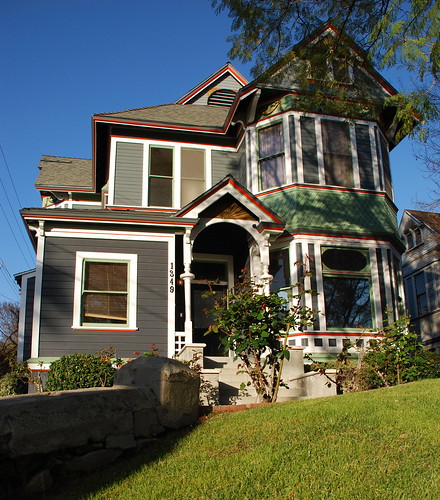
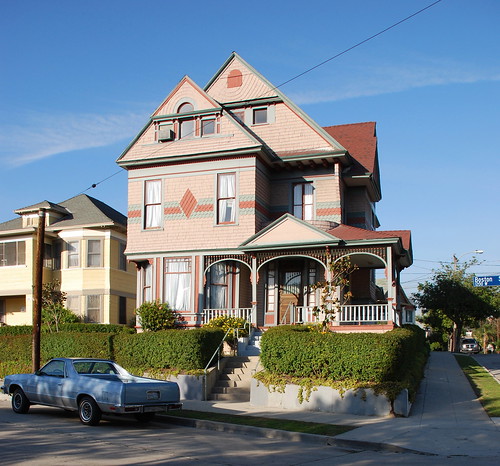
In 1902, the Daggett family moved into 1321 Carroll Avenue (there is a landmarked home today at 1321, but the site’s original house in which the Daggetts lived was demolished in 1970). The following year, Charles purchased part of the old Everett E. Hall property at the northwest corner of Kellam Avenue and Douglas Street. It took a few years, but finally in the late oughts, local builder Sylvester J. Cook (he was living on Beaudry Avenue nearby), working off an R.L. Gifford design, built for the Daggetts one of the few Mission Revival houses in Angelino Heights today.

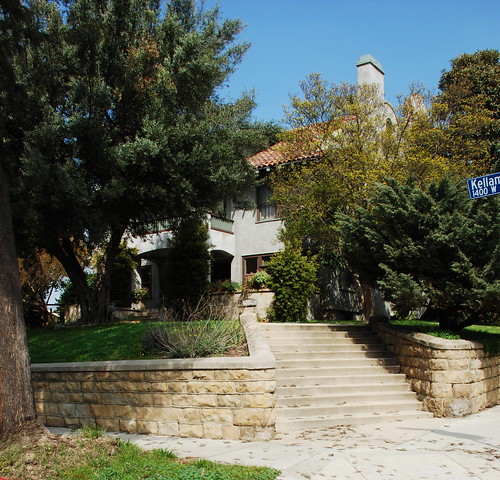
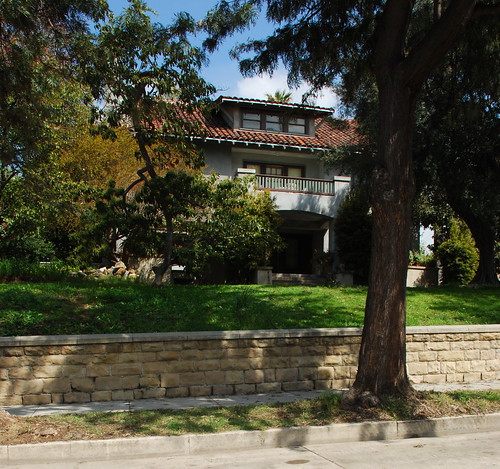
Much of the home is obscured today by trees, but you still can enjoy the style’s eaves and rafters, red-tiled roof, glimpses of leaded windows, and the tell-tale parapets.

Daggett Residence

Hubert died in 1933. Charles had passed on years before (a 1929 city directory has listed living at 1405 Kellam both Hubert and his widowed mom).

Grace W. Trentani and Betty Fox were the home’s owners during its designation as a city landmark in 1979.

Note: A big thanks to Pete Daggett for his comment below. I
ve gone and edited the post based on the information he provided. Thanks, Pete.

Daggett Residence

Sources:

Morales, Thomas M. “Incongruous Style of Barn, Home Raise Curiosity” Northwest Leader; Sep 26, 1979, p. 2

An Album of Architecturally Significant Homes in Century-Old Angelino Heights Carroll Avenue Restoration Foundation 1987 Los Angeles, CA

Up next: Weller Residence

continue reading...
Saturday, March 7, 2009

Nos 220 & 221 - The Hall Twins

The Hall Twins

The Hall Twins
1887
1343 and 1347 Kellam Avenue – map & map
Declared: 6/6/79

Well, after two years of blogging individual Historic-Cultural Monuments, I feel compelled to break with tradition and document two landmarks in the very same post. The reasoning behind such craziness lies with the fact when local contractor John M. Skinner (he was living on Carroll Avenue) built these two homes for $6,000 per, they sported identical floor plans and designs. That, coupled with the fact they were owned early on by Hall families, inspired historian Thomas Morales to designate them the “Hall Twins”.

Henry Hall Residence
Jesse Hall Residence

Just a few posts ago, we visited the 1887 home of one of the two subdividers of Angelino (Angeleño) Heights, Everett E. Hall. It was that same year that Skinner (Skinn-ERR!) built a literal stone’s throw from Everett’s home our two Victorian subjects using a single blueprint.

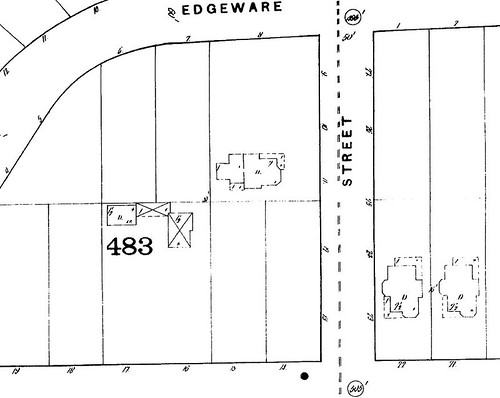
Take a good look at this 1888 Sanborn map and you can see four city landmarks: the Everett Hall Residence in the center; Everett’s carriage house (now the property of 1417 Kellam Avenue home); and the twin homes across Waters Street (now called Douglas Street). Note our twins at this point enjoy no carriage houses.

Angeleno Heights, 1888

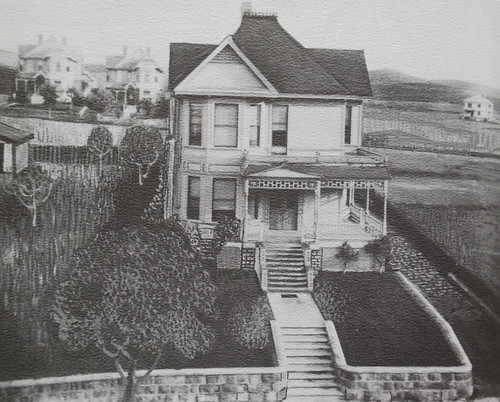
Now set your orbs on this vintage (retouched) photo of Carroll Avenue’s Monument No. 74, the Sanders House. In the background, the Hall Twins stand looking more twinly (twinnish?) than today.

Sanders House

Boy, there sure were a lot of Halls in early Angelino Heights. A whole hell of a lot of Halls. (For instance, a Giles S. Hall, the secretary of the Los Angeles and Santa Monica Land and Water Co., was living on East Edgeware in 1890). And while both of this post’s landmarks are named for Halls, I’ve seen conflicting reports as to how they were related to Everett, if at all. But they probably were.

Jesse Hall Residence
Henry Hall Residence
There’s the enclosed porch of 1347 (top) and original open porch of 1343 (bottom).

No. 220 –the Henry G. Hall Residence

Henry Hall Residence
From the L.A. Department of City Planning website.

As you look at both landmarks head-on, the home on the right is 1343 Kellam Avenue. It was where real estate agent Henry G. Hall lived with his wife, Anna L., through most of the 1890s. Maxwell’s Directory of Los Angeles City & County for 1887-1888 said “capitalist” Hall was living on Bellevue Avenue between Edgeware and “the Crescent” (Kensington). In 1890, he was listed as living on East Edgeware between Bellevue and Carroll. Since 1343 Kellam Avenue was built in 1887, this means Henry Hall wasn’t its first resident. However, he was there by 1893, and he was still there in 1901. By 1903, however, the city directory had him residing at 714 Edgeware Road. Morales tells us 1343 was sold in 1904 to non-Halls. A jump to 1915 has that year’s city directory showing the home’s residents including Cora A. Rannells and the auditor for the Hollenbeck Hotel, John M. Wood. Sammy and Pat Lee were 1343’s owners during its declaration of landmark status in 1979.

Henry Hall Residence
Jesse Hall Residence
Compare these images of 1343 and 1347 and 1347.

No. 221 –the Jesse Hall Residence

Jesse Hall Residence

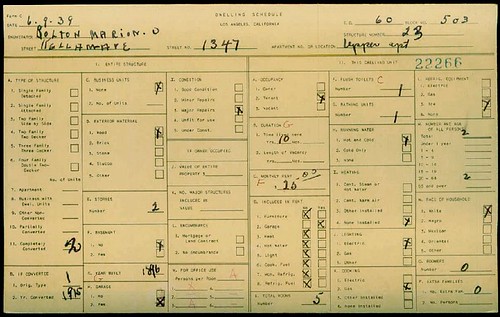
The corner house was the home of Jesse Q. Hall, his wife, Mary, and children, Tracey (a guy) and Jessie (a gal). While Jessie became a telephone operator and moved out around 1900 (presumably after her father’s death), Tracey stayed at the home with his widowed mom. Both were there in 1915, but Tracey split around 1920. (He moved to 7070 Franklin Avenue, then to 2209 Canyon Drive in the Hollywood Hills with his wife, Sophie.) Tracey had worked his way up in the banking industry from clerk to Vice-President of the Security-First National Bank of Los Angeles. It was he who converted the 1347 Kellam Avenue into a two-family home in 1915, at least according to this 1939 census, from USC's Digital Archive.

1347 Kellam Avenue Census

In 1928 Adolph Marx bought 1347 Kellam to lure his son, Charles, a sailor, to settle in the west with his Philadelphia fiancé, Tillie. Tillie from Philly was still living there when the home was landmarked in 1979.

As part of its designation, 1347 Kellam contains its carriage house with its entry off Douglas. Here is a pair of pictures of it:

Jesse Hall Residence Carriage House
Jesse Hall Residence and Carriage House

Are you as surprised as I was to learn the two homes were once identical, veritable peas in a pod? Clearly the upkeep of the one landmark compared to the other’s is the main difference, but there’s also that enclosed porch on 1347. In truth, the paint job in general was enough to throw me. In any event, I sure would like to attack the less fortunate twin (there’s always a less fortunate twin), armed only with but a scraper and a couple of cans of paint. Who’s with me?

The Hall Twins

Source:

Morales, T.M. “’Twins’ Result of Close Family Ties” Parkside Journal; Jul 18, 1979, p. 1

Up next: Daggett Residence

continue reading...
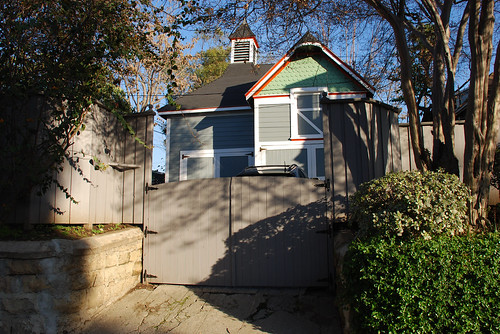
Wednesday, March 4, 2009

No. 219 - Galbreth Residence

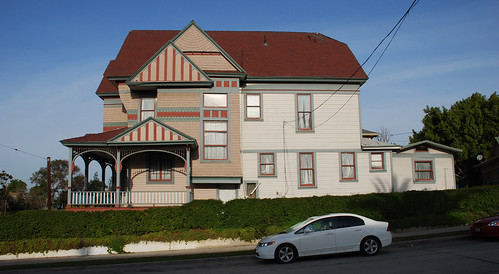
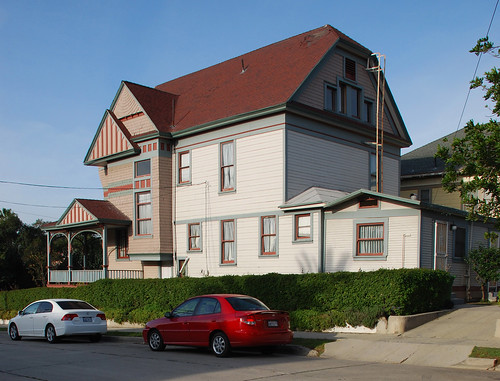
Galbreth Residence

Galbreth Residence
c. 1887
1239 Boston Street – map
Declared: 6/6/79

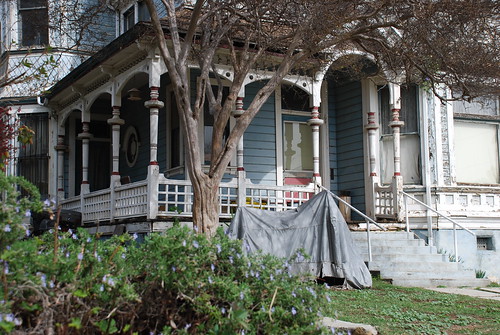
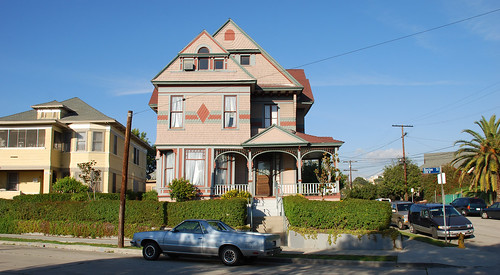
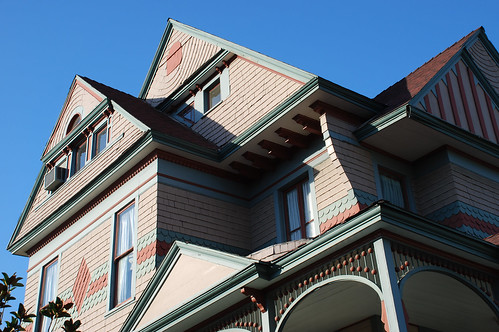
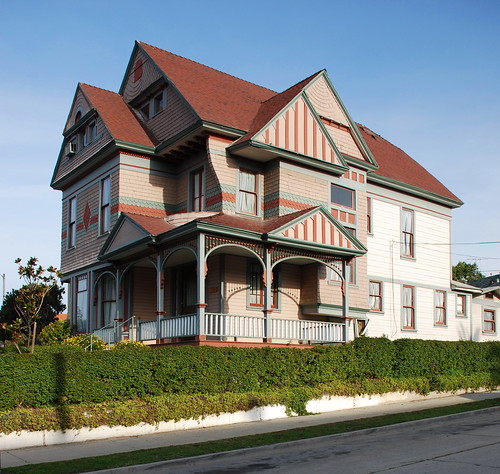
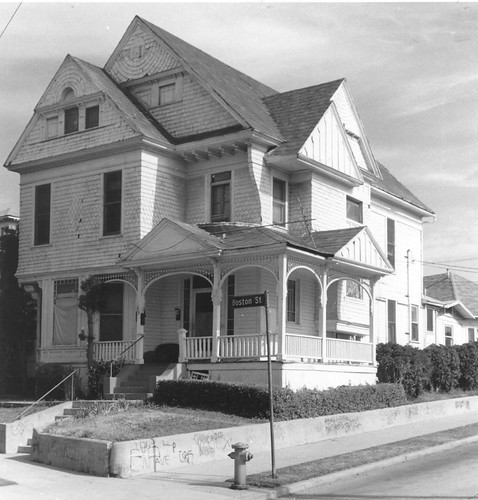
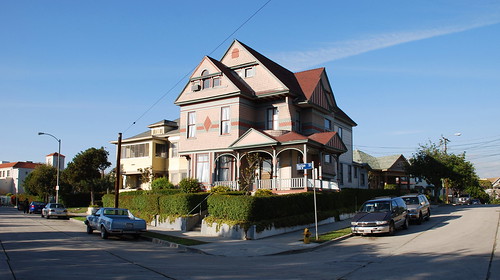
If attorney E. Edgar Galbreth wasn’t the man who built this Queen Anne house, he was at least one of its very first residents. The library’s city directories prior to 1890 show no record of Galbreth, but that year’s index has him living at 5 Cummings Street, today known as Boston Street.

Galbreth Residence

E. Edgar Galbreth was born in Lewisville, Indiana, two days after Christmas in 1845, just a handful of months after the death of Johnny Appleseed. Starting in 1870, he practiced law in Pittsburgh, PA, where he married Anna Mary Taggart and spawned four children. He relocated to Los Angeles in 1887. (Three years later, the same year he ran for L.A. township Justice of the Peace, Galbreth and Anna sold a block of Angeleno Heights land to a D. Clark Morrison for $4,000). It was here he went into practice with his son, R. Morgan, Commander of the United Spanish War Veterans of California and treasurer of Maternity Cottage and Homeopathic Hospital. Galbreth was a member of the Odd Fellows, the Foresters, and the Maccabees. He was also for years an elder of the First Presbyterian Church.

Galbreth Residence
Galbreth Residence

By 1893, the Galbreth Residence had its renamed address of 1243 Ionia Street. Now, let’s make an educated guess and say Ionia got its name from the Michigan hometown of Everett E. Hall who, with William W. Stilson, originally developed Angelino Heights. Spencer G. Millard, another Ionia native (Millard was married to the sister of a further Hall, Giles S. Hall, yet another Heights resident), was living a few doors down from Galbreth at 1259 Ionia. Or at least he was, as Lieutenant Governor of California, until his death in October 1895 at the age of a mere 39.

Galbreth ResidenceGalbreth Residence

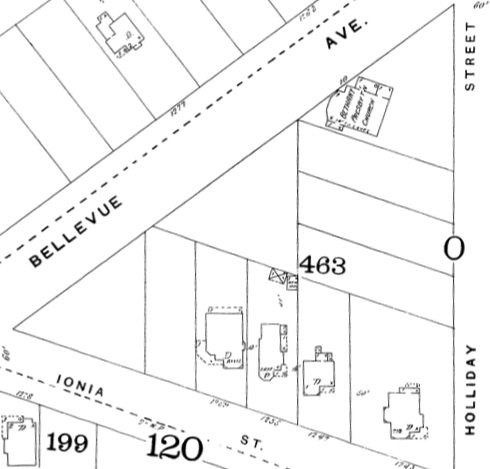
Take a look at this bit of Sanborn fire insurance map from their 1894-1900 volume. Down in the lower right-hand corner, at the intersection of Ionia and Holliday, sits the Galbreth House (the Millards lived three doors to your left).

Angelino Heights, Los Angeles

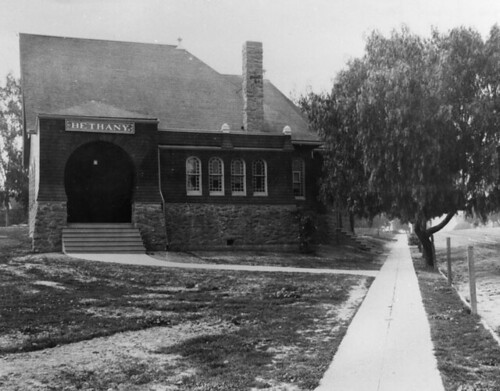
On a brief tangent, you can see on the map above, at the point formed by Bellevue and Holliday, the Bethany Presbyterian Church of which Mr Glabreth was most certainly a member, I conjecture. From the L.A. Public Library, this is that old church building (like the Millard Residence, it, too, is long gone):

Bethany Presbyterian Church

But, by 1898, while Millard’s widow, Ida H., was still living at 1259 Ionia, E. Edgar Galbreth had moved on to 223 East Adams Boulevard. He died in 1921 at the home of his son, W. Edgar, in Long Beach.

Galbreth Residence

L.A.’s 1915 directory lists the residents of 1243 Ionia as the president of Viole-Lopizich Drug Co., Jules C. Viole, along with his sons, Andre (a pharmacist at said company), and student Pierre. No mention of a wife or mother (it was 1915 – who cared?). (The drug company at that time had locations at 427 and 242 North Main Street.) Like many old Victorians in the area, the Galbreth Residence was later separated into a multi-housing unit.

Galbreth Residence

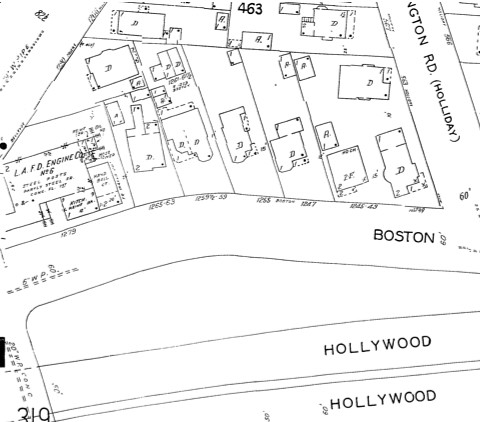
Time for another Sanborn map. This one, from the 1906-1950 volume, shows not only a couple more structures on the old Galbreth property, but also the recently completed 101 Freeway at – almost literally – the attorney’s old front door. Oh, and you see how Holliday’s now an extension of East Kensington and Ionia (formerly Cummings) is now Boston. Whew! What a lot of knowledge.

Angelino Heights, Los AngelesGalbreth Residence
From the Los Angeles Department of City Planning website.

In 1979, at the time of the property’s historic designation, it was owned by the Bethel Temple of Los Angeles. Twelve years ago, the owners got busted for removing the historic wood window frames and replacing them with a type of aluminum siding (ouch! – they were forced by the city to rip out the aluminum and re-replace it with more authentic material). Today, this site says it’s of the Iglesia Evangelica Latina Ministerio de Damas. I don’t know anything about that, but I do know the home appears in pretty good shape, what with its vintage add-ons, tucked away in the corner of Angelino Heights and slammed pretty well up against the 101 Freeway (wave next time you speed by).

Galbreth Residence

Sources:

“Real Estate Transaction 1” The Los Angeles Times; Aug 21, 1890, p. 3

“City Briefs” The Los Angeles Times; Aug 21, 1890, p. 8

“Millard Dead” The Los Angeles Times; Oct 25, 1895, p. 1

“Burial of Attorney Tomorrow” The Los Angeles Times; Dec 23, 1921, p. III3

Up next: The Hall Twins

continue reading...
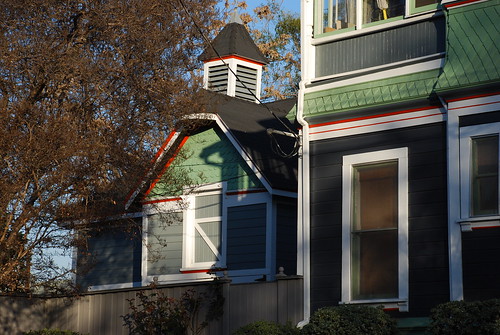
Sunday, March 1, 2009

No. 218 - Politi Residence
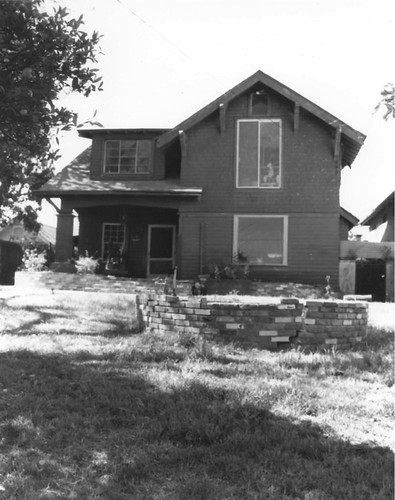
Politi Residence

Politi Residence
c. 1908
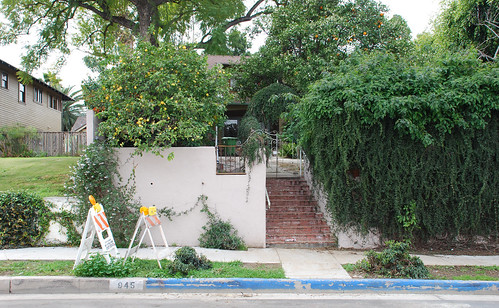
845 East Edgeware Road – map
Declared: 6/6/79

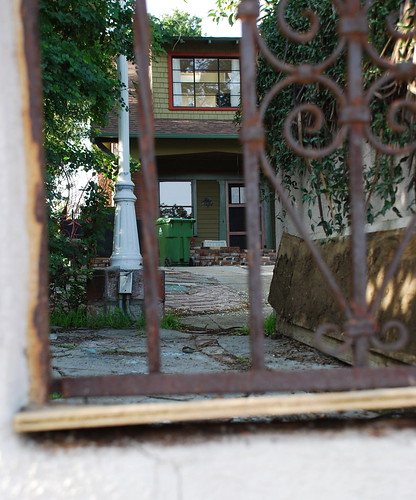
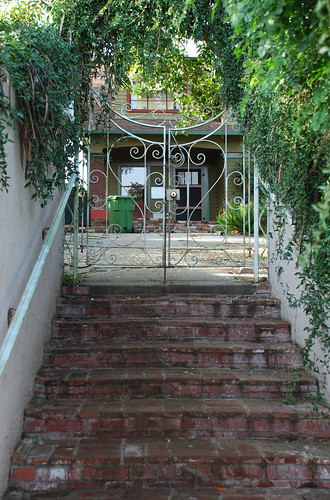
Well, there’s not much to be seen from the road of this century-old house. It’s a shame, too, as the city reports not only is this a good example of Craftsman architecture, but it’s also reminiscent of the work of Greene and Greene.

Politi Residence

The house – at least on this blog – doesn’t sport the name of its builder or original owner, but rather its – and Angelino Heights’ – most famous resident and one of the neighborhood’s biggest boosters, artist/author Leo Politi. Politi moved here in 1973 after living for a dozen years at 415 East Edgeware. Of course, the author’s well-known from his thirty years of living on Bunker Hill (he moved out of the neighborhood in the early sixties when his home was condemned with the rest of Bunker Hill’s buildings).

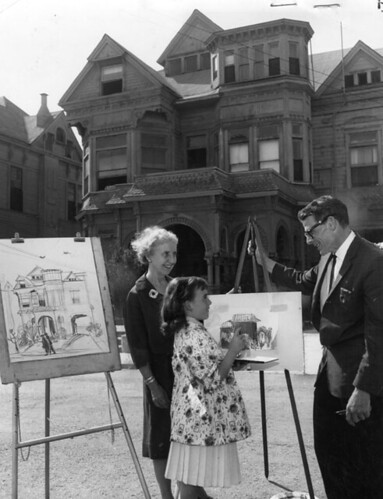
Leo Politi on Bunker Hill, Los Angeles
Politi in front of the Castle working on his 1964 book, Bunker Hill, Los Angeles, with nine-year-old Susan Marshall and county librarian Mary Rogers Smith. L.A. Public Library

Leo was born in Fresno on November 21, 1908, right around the same time his future home was built. Around six years later, he moved with his family to Italy (unfortunate timing, what with World War I breaking out and all). Leo won a six-year scholarship to study at an Italian art institute when he was just fifteen. In 1931, he returned to Fresno, moving down to Los Angeles soon after. He married Helen Fontes in 1934 after wooing her with a fifteen-cent ring he bought at Woolworth’s. He published his first book, Little Pancho, about a little Olvera Street boy who wouldn’t smile, in 1938.

Politi Residence
A less obstructed view from the city’s Department of City Planning website.

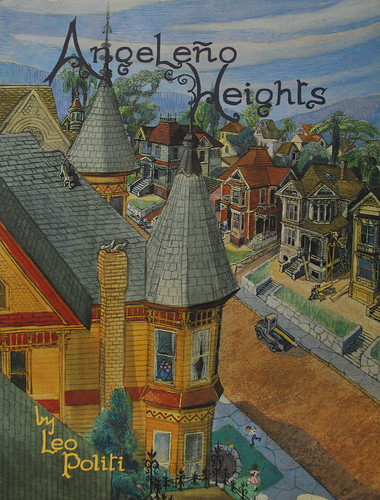
Leo Politi wrote and illustrated about two dozen books. Most of them are for kids, and many of them, including Pedro, the Angel of Olvera Street, The Mission Bell, The Poinsettia, Mieko, Moy Moy, The Nicest Gift, Piccolo’s Prank, and Juanita, take place in Los Angeles. Pedro and Juanita were awarded Caldecott Honors while Song of the Swallows received the Caldecott Medal in 1950. Bunker Hill, Los Angeles is a Southern California classic. Criminally, Song of the Swallows is the only one of Politi books still in print, I think. One I’d especially enjoy seeing available is his 1989 book about the neighborhood he loved so much, Angeleño Heights. The book was his last.

Angeleno Heights

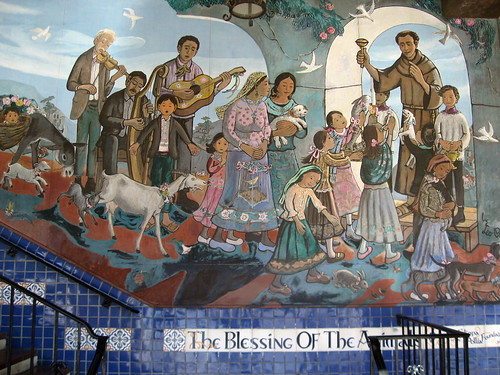
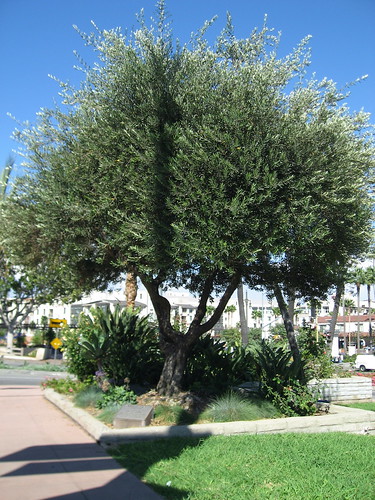
In March 1996, “the Artist of Olvera Street” passed away in the very Angelino Heights home he submitted for landmarking seventeen years earlier, but his memory lives on throughout Los Angeles. We’ve got a Leo Politi Square, Monticillo de Leo Politi Park, and the Leo Politi Elementary School. Fresno, getting in on the act, has its Politi Branch Library, too. And, of course, his Blessing of the Animals mural adorns Olvera Street’s Biscaluz Building (look for the artist’s own dogs, Emmet and Oscar, in the painting). And when you take Spot and Fido to the next Blessing of the Animals on April 11, stroll on over the Leo Politi Tree, dedicated just after Leo Politi Appreciation Month in April 1984 (just keep away Spot and Fido).

The Blessing of the Animals Mural
Emmet or Oscar

Leo Politi Tree
The Plaza’s Leo Politi Tree

Click here for a list of the many, many, many events held for the Leo Politi 2008 Centennial. Yeah, most – but not all – of them have passed (like last May’s open house tour of Leo’s landmarked house – pictures here), but there are lots of links, often leading to wonderful Politi art.

Politi Residence

Update, 5/12/09: Leo’s son, Mr Paul Politi, has been kind enough to drop me an email with a brief note and a pair of photos. Paul writes:
I noticed on the comment from some of your readers that there is interest in my father’s books. I am pleased to inform you that the Getty is re-publishing four of my father’s books and hopefully more in the future. The first four that will be published for the fall by the Getty is Song of the Swallows, Juanita, Pedro, the Angel of Olvera Street, and Emmet. We are also completing a coffee table book that will spotlight my father’s fine art. The title of the book is Leo Politi, Capturing the Heart of Los Angeles. It will be published by Angel City Press.
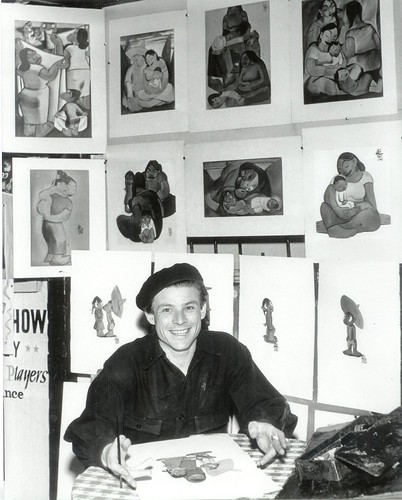
Of course, I’m already looking forward to buying copies of the books. Here, from Paul’s collection, is a shot of his father in his Olvera Street studio taken in the late 1930s.

Leo Politi

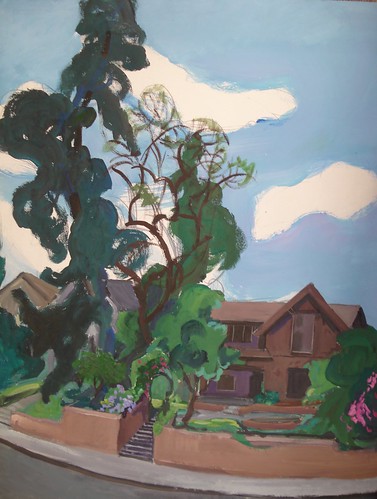
Also included in Paul’s email is Leo Politi’s only painting of his own landmarked home at 945 East Edgeware. Thanks for allowing me to share this with the readers of Big Orange Landmarks, Paul.

945 Edgeware Road by Leo Politi

Sources:

Oliver, Myrna “Leo Politi; Author of Children’s Books, Artist” The Los Angeles Times; Mar 30, 1996, p. 18

Rasmussen, Cecilia “Street Artist Tapped into L.A.’s Spirit” The Los Angeles Times; Jan 13, 2008, p. B2


Up next: Galbreth Residence

continue reading...