Showing posts with label Wilmington/Harbor City. Show all posts

Thursday, June 19, 2008

No. 155 - Memory Chapel

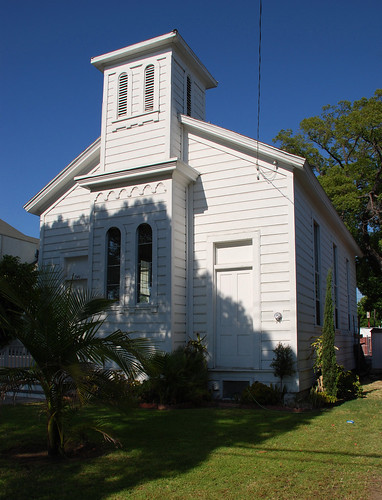
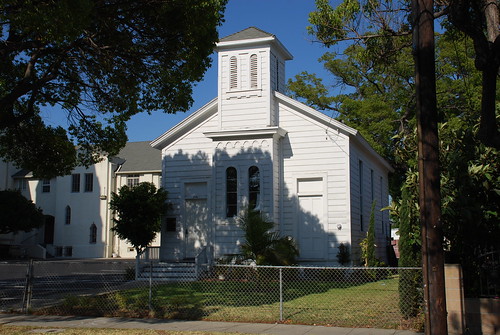
Memory Chapel

Memory Chapel, Calvary Presbyterian Church
1870
1156 North Marine Avenue, Wilmington – map
Declared: 5/5/76

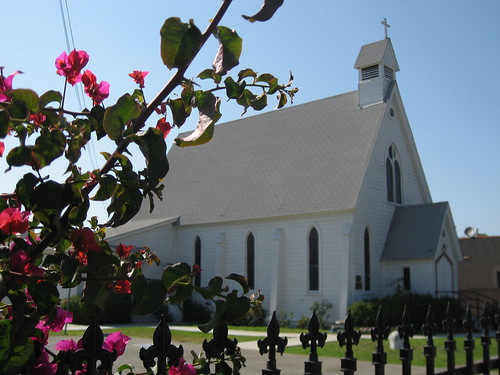
Los Angeles Historic-Cultural Monument No. 155 is the oldest Protestant church in the harbor area, maybe its oldest church, period.
Memory Chapel

I can’t tell you much, but I can report Memory Chapel has been in its current location since the late 1930s. Without actually leaving the couch, it’s difficult for me to be more specific. Here’s why:

-- The Wilmington Historical Society says Memory Chapel was built at what is now F Street and Marine Avenue and that it was moved to its current location in the 1939.

-- John R. Kielbasa is quoted as saying Memory Chapel was built at Fries Avenue and G Street and that it was moved to its current location in 1937.

I didn't hear back from the Historical Society (are they even around anymore?). However, Lester Alitagtag, an elder at Calvary Presbyterian Church, of which Memory Chapel is part today (the Chapel sits right next door) was nice enough to respond to my email. He wrote:
The Memory Chapel is the building that first hosted Calvary Presbyterian Church. In 1913, a new church building was constructed to accommodate a growing congregation. This second building that hosted Calvary burned down on October 21, 1928 while the Memory Chapel stayed in tact. The current building was dedicated on November 4, 1929 which is where Calvary now holds its regular Sunday English Worship services.
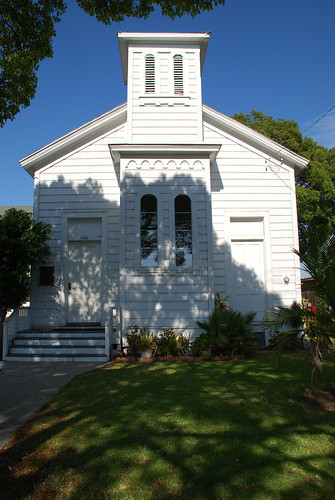
Memory Chapel

Speaking of Calvary Presbyterian Church, it’s the largest Filipino Presbyterian Church in the country. You can read about the church’s history here.
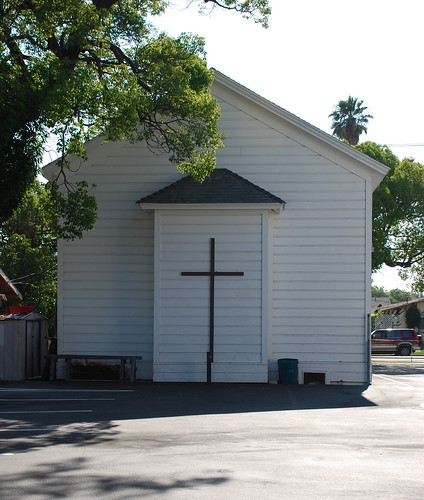
Memory Chapel
The back.

Memory Chapel is still used for services, every Sunday morning at 8:00 a.m. The service is in Tagalog, so you might want to brush up on your language skillz (it is the official language of the Philippines, you know). Lester added,
From 9AM to 11AM, the Iglesia Agape Fellowship of Wilmington uses the Memory Chapel to hold their Spanish worship service. Then, at 11:30AM, the Memory Chapel is used to host one of Calvary's Sunday School rooms. On the first Friday of every month, a church-wide prayer meeting is also held in the Memory Chapel.
Mr Alitagtag also points out the windows of the Chapel were replaced and the entire building was re-painted in recent months.

Thanks, Lester.

One more thing about the Chapel. Although there’s just one today, you can still see where there were originally two entrances – one for the ladies and one for the gents.
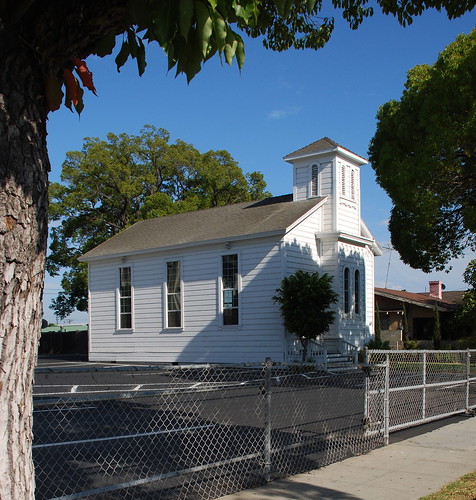
Memory Chapel

Up next: Fire Station No. 1

continue reading...

Sunday, July 22, 2007

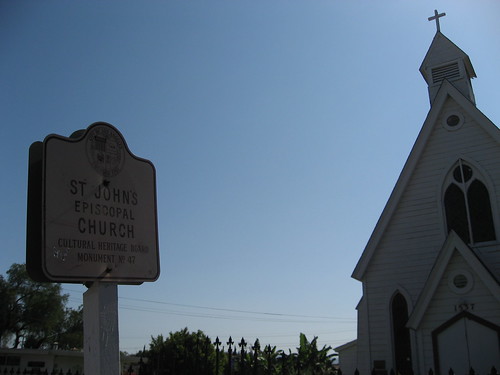
No. 47 - St John's Episcopal Church

St John's Episcopal Church

St John’s Episcopal Church
1883
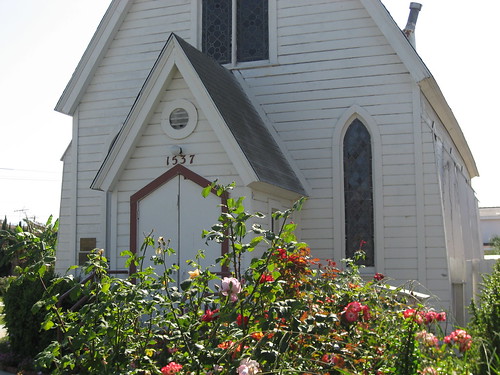
1537 Neptune Avenue, Wilmington – map
Declared: 3/15/67

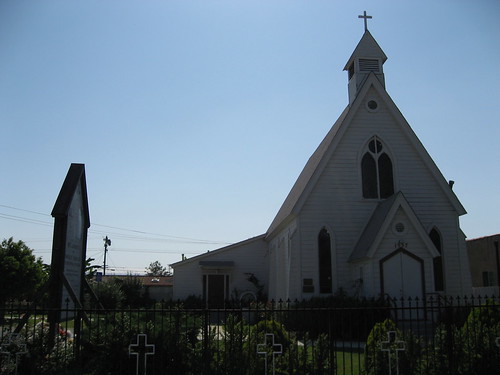
With the support of Mary Hollister Banning, second wife of Wilmington founder Phineas Banning, this frame church was built in 1883 for the Episcopal congregation established seven years earlier. The church originally stood about a mile away at 422 North Avalon Boulevard and was moved to the present site in 1943.

St John's Episcopal Church

St John's Episcopal Church

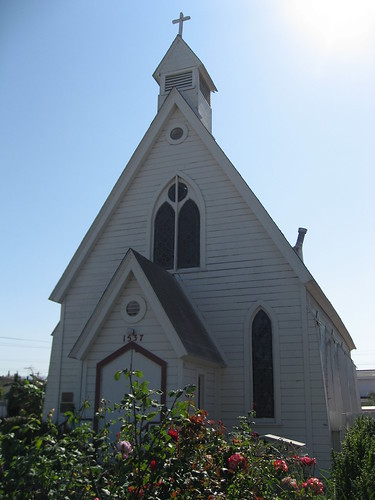
St John's maintains its record of being the oldest building being in continuous use for religious services in the harbor area. It's now home to the St John’s and Holy Child Episcopal Church, part of the Philippine Independent Catholic Church. The Reverend Greg G. Bayaca presides.

St John's Episcopal Church

St John's Episcopal Church

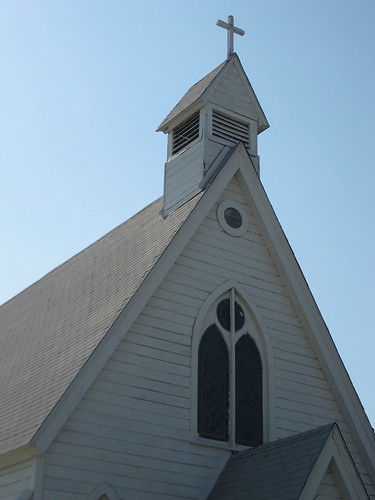
The grounds were fenced off pretty tight the Sunday when the Big Orange Landmarks staff was there, so I’ve got shots of the east and south sides only.

St John's Episcopal Church

Don’t confuse this St John’s Episcopal Church with the one built some forty years later in Exposition Park. That building’s Historic-Cultural Landmark No. 516.

St John's Episcopal Church

Up next: Chavez Ravine Arboretum

continue reading...
Thursday, May 17, 2007

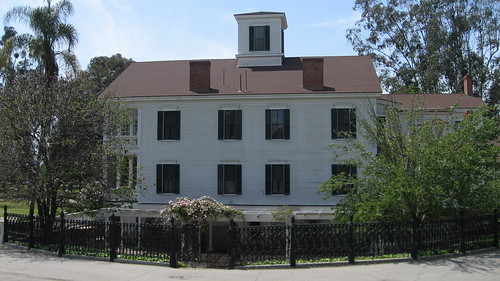
No. 25 - General Phineas Banning Residence

General Phineas Banning Residence

General Phineas Banning Residence
1864
401 East M Street, Wilmington – map
Declared: 10/11/63

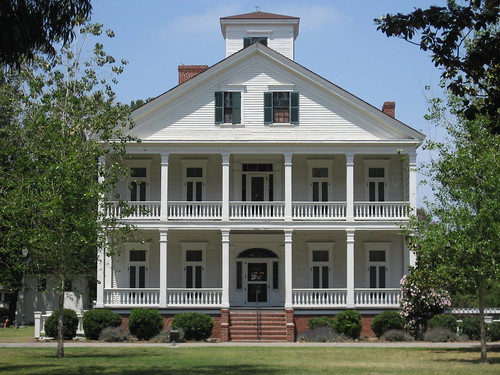
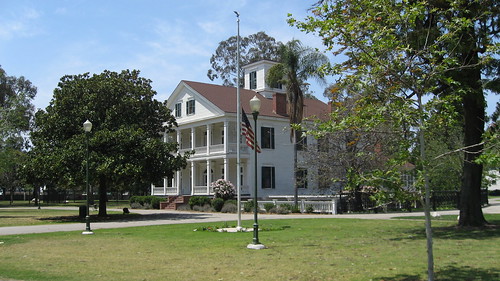
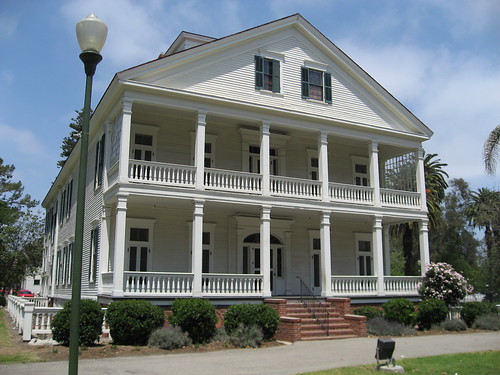
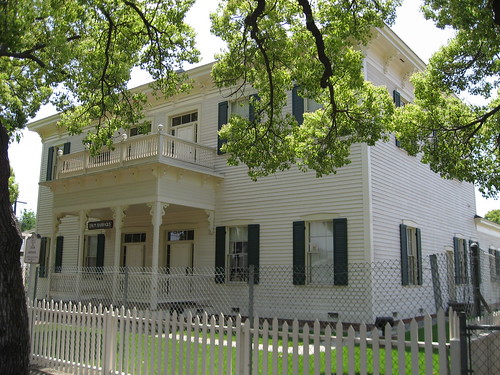
Folks say they can’t imagine a better example of Greek Revival architecture in Southern California, and I can’t imagine a Los Angeles building built in 1864 in this good of shape.

Phineas Banning was a Delaware boy, born in 1830. After a few years at his brother’s law office and some dockworking in Philadelphia, he went west at the age of 21. (Well, not straight west. He first sailed to Panama, then cut across the Isthmus, and finally took a boat up to San Pedro).

General Phineas Banning Residence

The enterprising Banning made his first fortune in the staging and freighting business. In 1857, he bought some land above San Pedro, creating a landing and monopolizing the business in the harbor. The next year he and his partners founded New San Pedro on 640 acres. In the early 1860s, Banning was the sub-contractor in setting up the first telegraph line between the town and L.A. He renamed New San Pedro in 1863 after his hometown in Delaware – Wilmington.

General Phineas Banning Residence

During the Civil War, Banning, a rabid abolitionist, and a business partner sold a chunk of land to the Union Army getting $1 a piece. (The pair later were returned the land, buying a bunch of Camp Drum’s buildings in the process.) Banning was then commissioned with the honorary title of General in the California State Brigade of the National Guard.

At the end of the war, he was appointed president of the Pioneer Oil Company. He then served as California State Senator from 1865 – 1868, during which tenure he took part in California’s ratification of the 13th Amendment.

General Phineas Banning Residence
There used to a fountain here in front of this below-ground-level door. Coaches would pull up (down?) here dropping off and picking up guests.

Banning played the good guy in giving up the Los Angeles and San Pedro Railroad – not only the first railroad in Southern California (given the go-ahead in 1868) but also a vital (and lucrative) 21-mile link between L.A. and Banning's Landing – to the Southern-Pacific Railroad. Without that link, the SP would’ve bypassed L.A. in favor of San Bernardino.

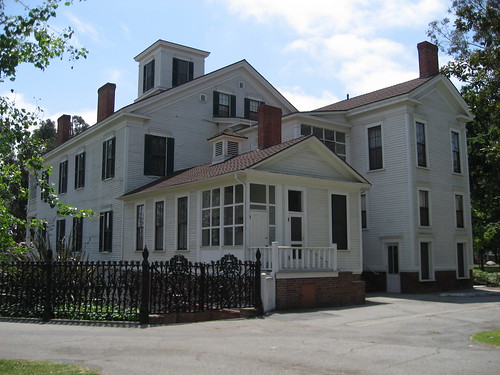
General Phineas Banning Residence
You can see where the original home ends and where the later additions start.

Phineas Banning
spearheaded the charge to get the government to fund the 1871 dredging of San Pedro Bay, then building a breakwater (closing the gap between what were then known as Rattlesnake and Dead Man’s Islands) in making the Port of Los Angeles.

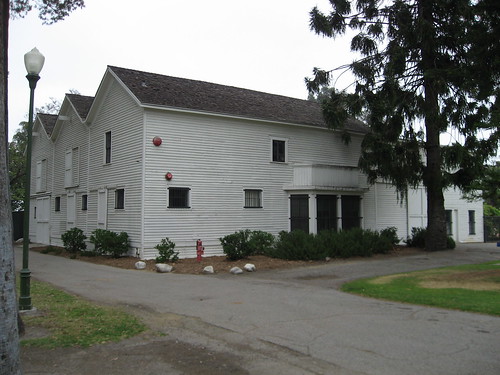
General Phineas Banning Residence - The Barn
The stagecoach barn, part of the tour except when I'm there.

In 1885, the indefatigable Banning, “The Father of Los Angeles Harbor”, ultimately proved very fatigable, dying in March from results of being hit by a San Francisco streetcar the previous summer.

His sons, William, Joseph, and Hancock, bought Catalina Island in the early 1890s, owning it until World War I.

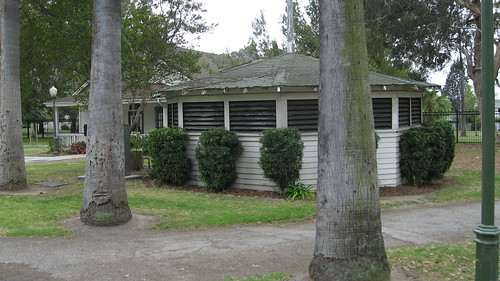
General Phineas Banning Residence - The Pump House
The site's first structure, the pumphouse. The land was extra soggy, so besides this, there were tons of eucalyptus trees planted to soak up the groundwater.

Oh. The Landmark. Built during the Civil War, the residence stayed in the Banning family until 1927, when the city bought it along with the surrounding twenty acres. Tours are now offered of the site, which is now a museum. The drag is that when I was there, our group got a walk-through of the house only. I found out later that the park’s one-room schoolhouse and stagecoach barn should’ve been included on the tour. But they weren’t. If you go, make sure you get a look at them.

General Phineas Banning Residence
The Banning Residence is also a California landmark and is on the National Register of Historic Places.

IMG_0645

Up next: The First Cemetery of the City of Los Angeles

continue reading...
Saturday, May 5, 2007

No. 21 - Drum Barracks and Officers' Quarters

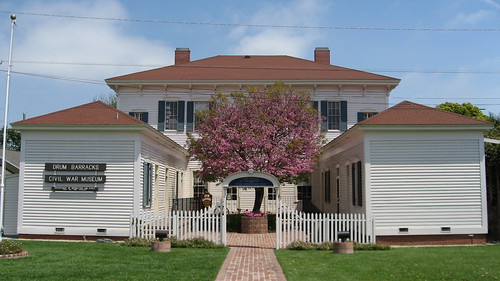
Drum Barracks and Officers Quarters

Drum Barracks and Officers' Quarters
1863
1051 – 1055 Cary Avenue, Wilmington – map
Declared: 6/7/63

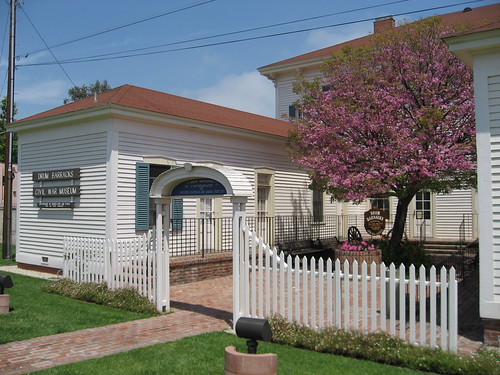
Did you know, at one time during the Civil War, there were 1,800 Union soldiers stationed in Los Angeles to control the local port and to prevent a secessionist uprising? Me, neither!

Drum Barracks and Officers Quarters

Named after Richard Coulter Drum, the Assistant Adjutant-General of the Department of the Pacific, Camp Drum was made up of twenty-two buildings spread over sixty acres in Wilmington, then called New San Pedro, about six miles in from the coast. The land was sold to the Army by Phineas Banning and B.D. Wilson, L.A.’s first mayor, who each got a dollar for the sale.

Drum Barracks and Officers Quarters

Basically, there were three main reasons for a Los Angeles camp: to react against recent Confederate movement in New Mexico and Arizona; to keep in check local secessionist sympathizers; and to secure the local port for receiving supplies and guarding it from Confederate attack. While not the first Army camp in L.A., Camp Drum served as the Army’s headquarters in the Southwest from 1861-1871.

Drum Barracks and Officers Quarters
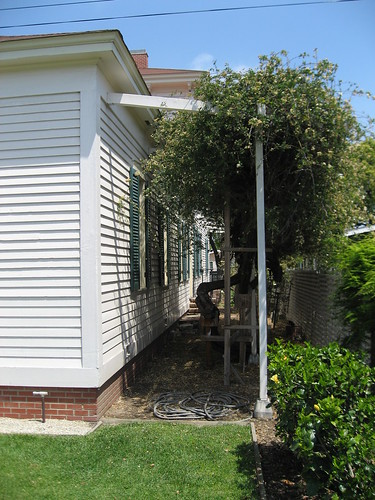
The west side / back of the building

The buildings themselves were pre-fabricated in New England and sent by boat all the way down below the tip of South America and up the west coast to San Pedro. Being built back east is probably the main reason the Drum Barracks landmark is designed in a Federal/Greek Revival style.

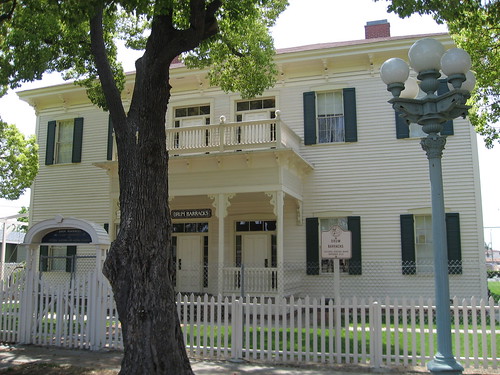
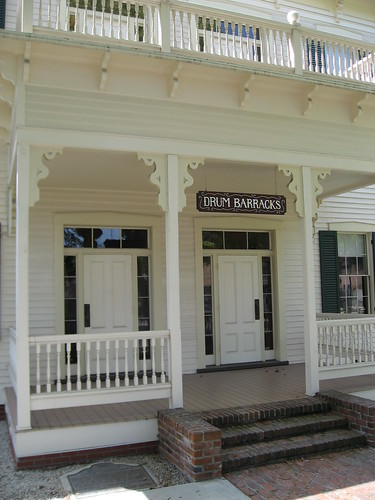
The extant building on Cary Avenue was used as the quarters for junior officers, with a sort of officers' club on the first floor. On the second floor, the single officers were segregated from the few married officers and their wives.

Drum Barracks and Officers Quarters

In 1871, the soldiers left, and two years later, the Army ordered the land back to Messrs Banning and Wilson but only after the structures were sold and removed or destroyed. It makes sense, then, that Banning and Wilson bought many of the buildings themselves, including the junior officers' quarters which Banning used as a guest house. (Wilson purchased an officers’ quarters building for a home and bought and donated the barracks’ hospital and post commander’s quarters to the Methodist Church, which converted them into Wilson College, the first co-ed college west of the Mississippi. It was the pre-cursor to USC.)

Drum Barracks and Officers Quarters
South side

By the late 1920s all of the buildings except two – the existing structure and the camp’s powder magazine – had been torn down. Bought as a home/boarding house in 1913, the last of the Camp Drum barracks ultimately fell on hard times in the 1960s. The saga to save the structure lasted three times as long as the Civil War itself. The city bought the landmark in 1966, the state took it over in 1968, but it wasn’t until 1977 when there was enough money to begin restoration. It reopened in 1987 as a Civil War library and shop, as well as a top-notch museum, covering the war both locally and nationally. Here's the official site. No indoor photography is allowed.

Drum Barracks and Officers Quarters
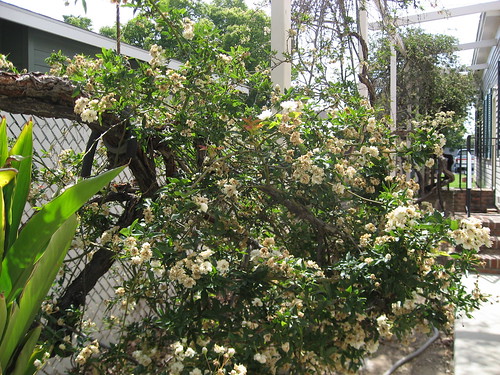
These rose bushes are nearly as old as the building itself.

The Drum Barracks and Officers Quarters is also State Landmark No. 169.

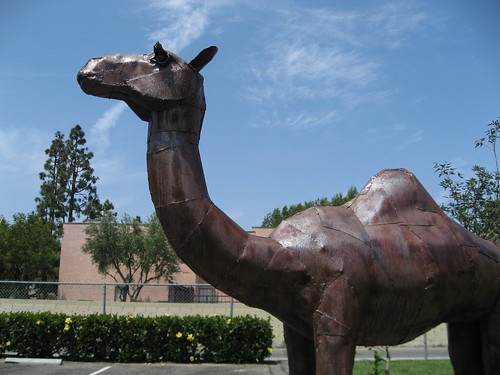
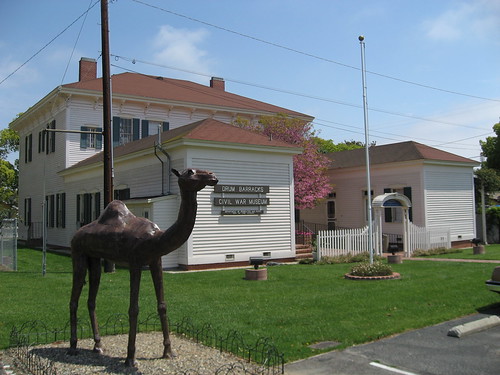
And what’s up with the camel? In the 1850s, U.S. Secretary of War Jefferson Davis ill-advidsedly ordered the import of camels to carry supplies, scout, and carry mail and such for the Army. Camp Drum eventually became the final destination for the camels traveling west. Of course, the camels didn’t work out and were shuttled up north for auction in 1863.

Drum Barracks and Officers Quarters
This metal statue is named Ayesha, after one of the camp’s original camels.

The definitive book on the Camp Drum has got to be Don McDowell’s The Beat of the Drum, published in 1993 by Graphic: Publishers.

Drum Barracks and Officers Quarters

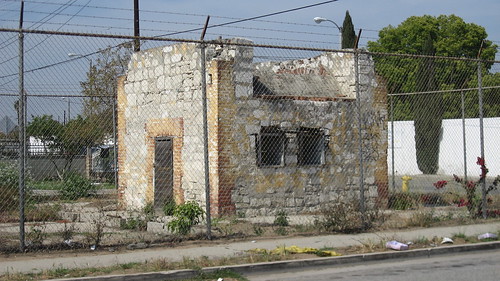
One more thing. The powder magazine still stands about four blocks away from the Drum Barracks. It is Los Angeles Historic-Cultural Monument No. 249. If you’re at all interested in seeing it, I recommend you do it soon. It’s located on private property, and the owner is itchy to have it removed in order to build on the site. It’s in pretty sad shape.

Powder Magazine, Camp Drum
HCM No. 249 - Powder Magazine, Camp Drum

Up next: The Palms-Southern Pacific Railroad Depot

continue reading...