Showing posts with label Outside City of Los Angeles. Show all posts

Saturday, February 7, 2009

No. 213 - S.S. Catalina

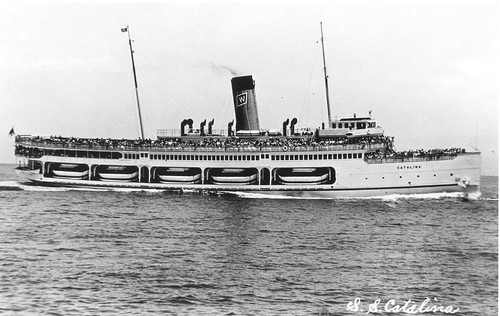
S.S. Catalina

S.S. Catalina
1924, cut for scrap in 2009
Declared: 5/16/79

Talk about great timing. I missed visiting Monument No. 213, the S.S. Catalina, by this much. The bags were packed, the tank was full, the passport – eh, let’s face it. There’s not a chance in hell I would’ve made the 180-mile trip down to Ensenada to see and be saddened over what was left of the eighty-five-year-old “Great White Steamship”. Unfortunately, I (and you) will never get the chance now.
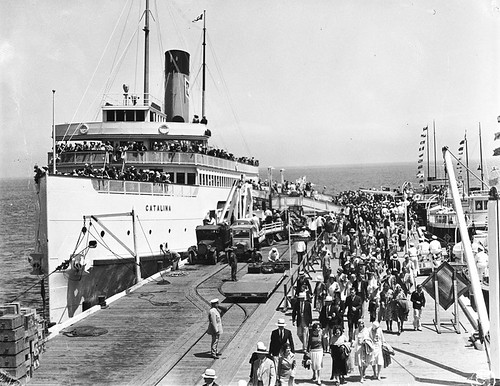
S.S. Catalina

In 1919, five years after Doublemint’s debut, Cub-and-gum man William Wrigley Jr purchased Santa Catalina Island and the Wilmington Transportation Company from William, J.B., and Hancock Banning, sons of Phineas. To turn Catalina into the resort he envisioned, Wrigley needed a bunch of boats to ferry passengers between the mainland and the island’s city of Avalon. He had already gotten a pair of ships as part of the Wilmington Transportation Company – the Hermosa (1902) and the Cabrillo (1904). And, after World War I, Wrigley purchased from the U.S. Navy the U.S.S. Blueridge, built by the Globe Ironworks of Cleveland in 1891 and originally christened the Virginia. After a major refurbishment, this last ship was renamed the S.S. Avalon in 1920. But Wrigley wanted a fourth.

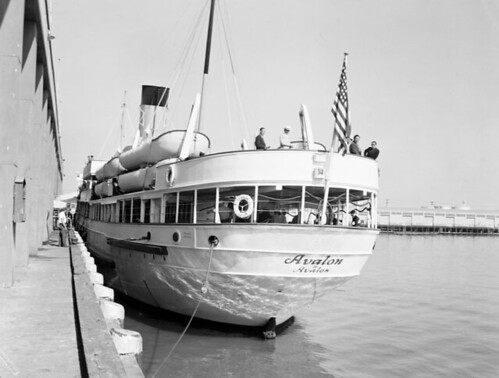
Here are pictures of the Cabrillo (courtesy of USC’s Digital Archive) and the Avalon (from the L.A. Public Library). Like the Catalina, both ships served in World War II, the Avalon staying in SoCal, the Cabrillo eventually making its way to Sacramento. The latter was left to rot and be cut for scrap near Napa. The Avalon was retired in February 1951. Nine years later, this ship, too, was cut for scrap, then suffered a fire, ultimately sinking off Palos Verdes in 1964.
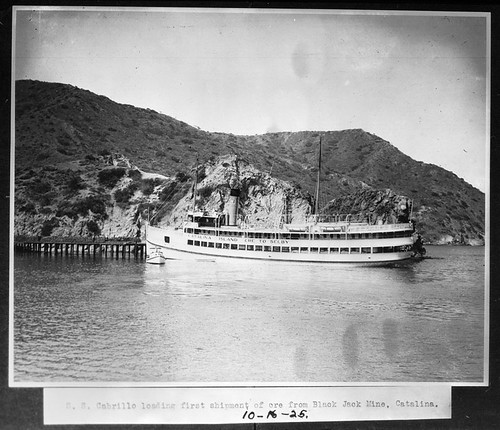
S.S. Cabrillo
S.S. Avalon

William Wrigley Jr laid the keel of the million dollar S.S. Catalina at the L.A. Shipbuilding and Drydock Harbor on the day after Christmas, 1923. Just four and a half months later, on May 3, 1924, Mayor Cryer and 3,000 onlookers watched Miss Marcia Patrick, the sister of the Wilmington Steamship Company’s president, christen the ship. With A.A. Morris its captain, the Catalina left her Berth 185 homeport in Wilmington on June 30.

The S.S. Catalina stretched 301 feet long and fifty-two-feet wide. It weighed 1,766 tons. There were five decks, three of which were for passengers: the Promenade; the Saloon; and the Main. The top deck held the bridge with the pilot house and captain’s cabin.

During the Catalina’s two-hour trip to Avalon’s Steamer pier, its passengers (the ship had a capacity of 2,200) could dance to a big-band orchestra while clowns and magicians would entertain their kids. In 1929, the Cabrillo, Avalon, and Catalina, making a total of ten daily roundtrips, carried a combined half a million passengers between L.A. Harbor and Santa Catalina Island. (Wrigley sold the Hermosa in 1928.)

William Wrigley, Jr, died in 1932 and his son, Philip, inherited the company.

During World War II, the government drafted the S.S. Catalina into service, designating the ship as FS-99 for use as an Army Troop Transport. Employed in San Francisco Bay, the steamship wound up ferrying soldiers to larger warships. In her forty-four months of military service, the Catalina transported some 820,000 men, more than any other U.S. Army Transport. The ship was back to its old L.A. to Santa Catalina run on July 3, 1946.
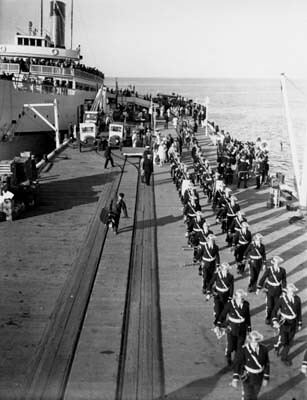
Troops on the S.S. Catalina
S.S. Catalina, troops (L.A. Public Library)

At the beginning of 1948, the Wilmington Transportation Company changed its name to the Catalina Island Steamship Line. During the 1950s, there were now just single daily roundtrips made from Wilmington to Santa Catalina. In 1956 it would cost you around $6.00 for a roundtrip ticket. The Wrigleys sold the steamship line to Charles Stillwell and his M.G.R.S. Company, Inc., in 1960. Stillwell sold the Catalina – now with its terminal under the Vincent Thomas Bridge – in 1970 to Carolyn Stanalan and her family.

The S.S. Catalina completed her 9,807th and final crossing on September 14, 1975. Real estate developer Hymie Singer bought the ship for $70,000 at auction on February 16, 1977, as a belated Valentine’s Day gift for his wife, Ruth. The new owners struggled with docking fees, mooring the former ferry in San Pedro, Newport Beach, San Diego, and Santa Monica Bay, then settling the vessel off Long Beach for five years. An attempt at rehabilitation failed in 1983. Two years later, after the ship broke free of its moorings in a second instance – this time nearly causing a major accident, the Coast Guard had had enough and announced it was going to seize the Catalina. The owners opted to remove the ship from U.S. waters, and by the spring of 1985, the boat was three miles off the coast of Ensenada, Mexico. The Catalina Bar and Grill Restaurant opened on board the L.A. landmark in the summer of 1988, but didn’t stay in business long.

Over the next two decades, the S.S. Catalina, “the Great White Steamship”, slowly deteriorated, rotting, sinking, and listing, thanks to looters and thieves, the Mexican government (which had ordered the boat’s solid bronze propellers removed, allowing seawater to seep into the ship), neglect, and plain old ravages of time. Spare half a minute and watch this video of the Catalina in Ensenada, by this time a home for sea lions.


The Singers gave up ownership of the Catalina and, in 2000, the Mexican government donated the boat to the S.S. Catalina Preservation Association for non-commercial preservation purposes. Despite salvation efforts from a variety of concerned groups including the Raising the Catalina Association and the S.S. Catalina Steamship Fund, the Mexican government began cutting apart the ship for scrap just a few weeks ago.

It’s figured the S.S. Catalina alone carried 25 million people in its service of fifty-one years, maybe more than any other ocean-going ship in history. Besides being designated a city landmark in 1979, the ship was also listed on the National Register of Historic Places and declared a California State Landmark.

A very big thanks to Shawn J. Drake for his online essay, “The S.S. Catalina: the First 75 Years of a “Great White Steamer””. The shot at the top of the post is from the L.A. Department of City Planning, while the one below is from UCLA Library’s Digital Collection.
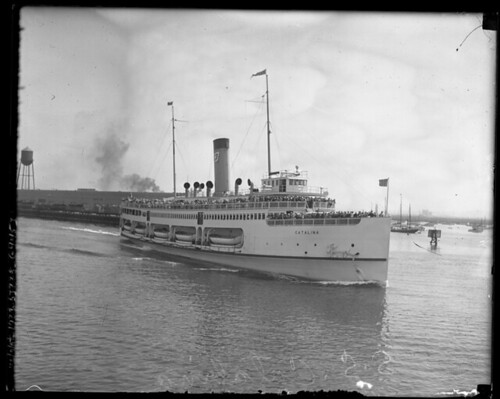
S.S. Catalina

Sources:

Pool, Bob “SS Catalina is Seaworthy No More” The Los Angeles Times, Jan 6, 2009


Up next: (Site of) Mt Carmel High School Building

continue reading...

Wednesday, July 9, 2008

No. 160 - Manzanar

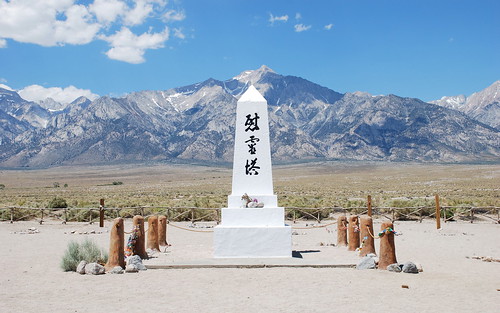
Manzanar Cemetery Monument, 1943

Manzanar
1942 - 1945
Highway 395, Inyo County – map
Declared: 9/15/76

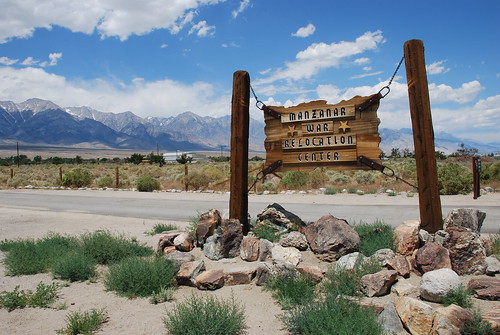
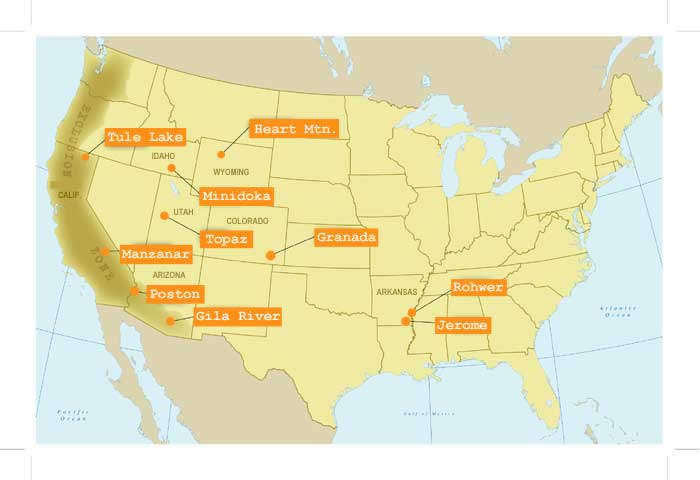
The United States operated ten concentration camps to hold Japanese-Americans during World War II. The Manzanar War Relocation Center, located in the Owens Valley about 220 miles north of Los Angeles, was not the biggest but it was the first, admitting the initial eighty-two of its more than 11,000 prisoners on March 21, 1942. Ninety-two percent of Manzanar detainees came from the county of Los Angeles; seventy-six percent from the city proper.

Manzanar
Manzanar
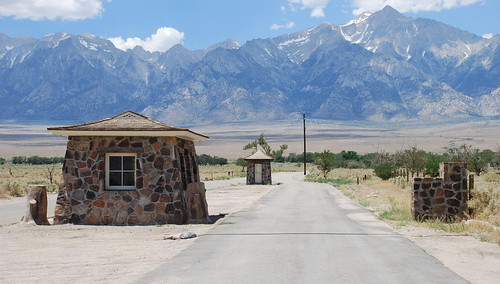
Above: the original military sentry post and internal police post, built by internee Ryozo Kado in 1942.

On February 19, 1942, just two months after the attack on Pearl Harbor, FDR signed Executive Order 9066, effectively setting up military camps and allowing for the forcible removal of more than 110,000 Japanese-Americans from their homes. Truth is, the government had been preparing a tent city for potential prisoners at Manzanar, calling it Camp Owens, as early as June 1941, half a year prior to the Japanese attack. Also, a list of United States Nisei (second-generation Japanese-Americans) was delivered to President Roosevelt, per his request, about a week before 12/7/1941. Clearly, the mass internment was not just a reaction to the Pearl Harbor bombing.

Manzanar
Manzanar
Manzanar - Shepherd Ranch Ruins
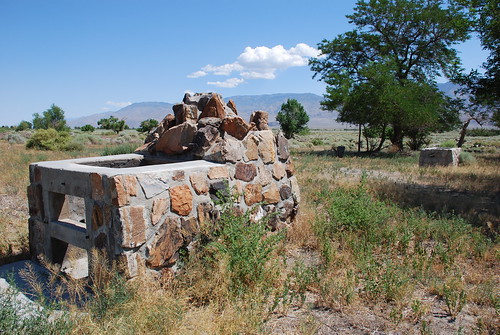
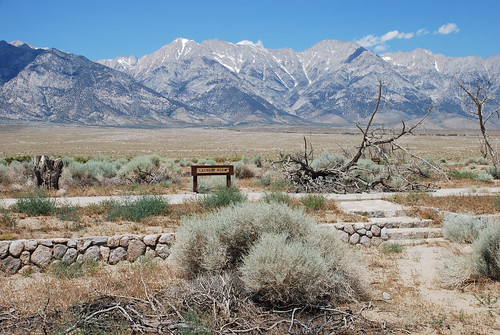
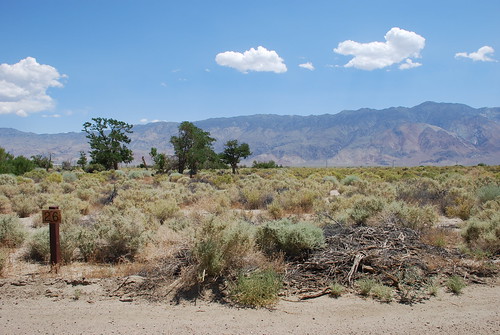
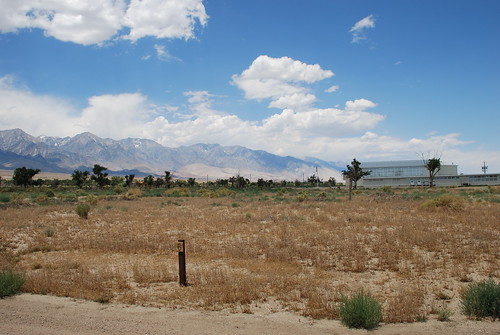
Above: the middle shot is the location of the camp's baseball fields, the lowest are ruins of the John Shepherd Ranch. Shephered had his orchards here from 1864 - 1905.

The man who oversaw the relocation was the Army’s West Coast Commander, Lieutenant General John L. DeWitt, a poster child for the abuse of civil liberties if there ever was one.

About two-thirds of all those eventually incarcerated at Manzanar were American citizens by birth. Many of them received as little as four days notice to get rid of what they owned and be prepared to be relocated either initially to temporary assembly centers, like the one at the Santa Anita racetrack, or, later, directly to Manzanar.

Manzanar - Construction
Manzanar, Old Orchards to the Left
Manzanar
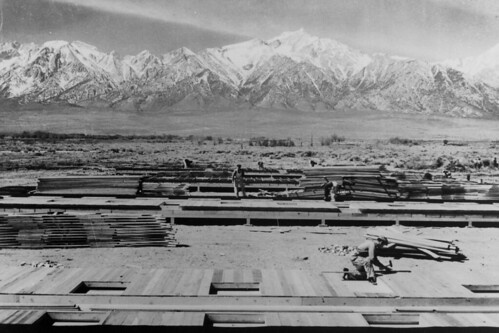
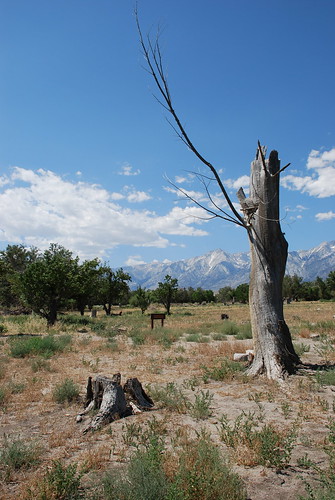
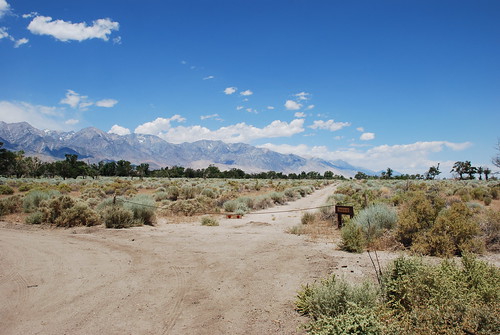
From top to bottom: the camp under construction, photo by Clem Albers, 4/2/42; some of the remaining fruit trees planted by the Owens Valley Improvement Company around 1910; Block 34's mess hall garden.

By the time the U.S. Army leased 6,000 acres for the relocation center, the agricultural town of Manzanar (Spanish for apple orchard) had been deserted for about seven years, since a few years before that, in 1929, the city of Los Angeles wrapped up acquiring the town’s land and water rights. (What L.A. did to the Owens Valley, of course, is almost as hilarious as the story of the war camp itself. And, unless I’m wrong, the city profited from the feds leasing the land during WWII, too. Right?)

Manzanar - Morgue, Garbage Can, Heating Plant
Manzanar - Laundry Room
Manzanar - Children's Village
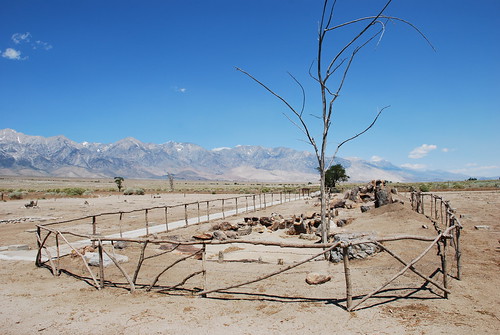
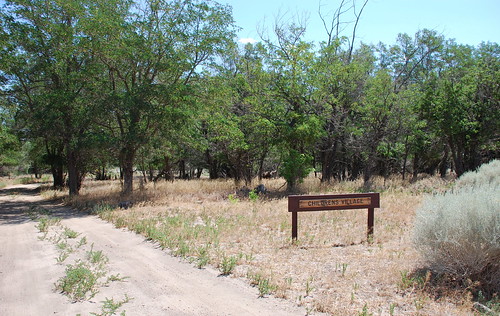
From top to bottom: that's the camp's morgue over to the left; the site of the laundry room; and Children's Village. Sisters Mary Suzanne and Mary Bernadette ran Children’s Village, taking care of the center's fifty or so orphans. The two had previously run a Los Angeles orphanage for children of Japanese ancestry.

New camp residents were met with barbed wire fences and eight guard towers manned by military police with submachine guns and searchlights. Armor and Wright, in their book, Manzanar, describe the housing conditions:
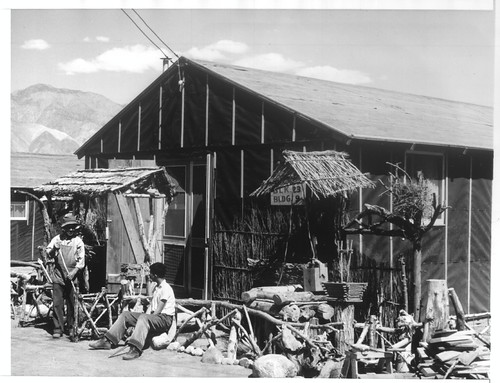
“The main camp at Manzanar consisted of 560 acres, on which were constructed nine wards of four blocks each. Each block contained sixteen barracks, or one-story buildings, twenty by one hundred feet. Of the sixteen buildings, fourteen were residential, one of double size was the mess hall, and the last was a meeting/recreation hall.”
While the spaces of twenty by twenty-five feet were designed for families of four, the average held eight people, sometimes reaching eleven.

The remaining 5,500 acres held military police housing, a reservoir, a sewage treatment plant, and agricultural fields.

Manzanar - BLK. 23 BLDG. 29
Manzanar - Block 3
Manzanar - Kendo Dojo
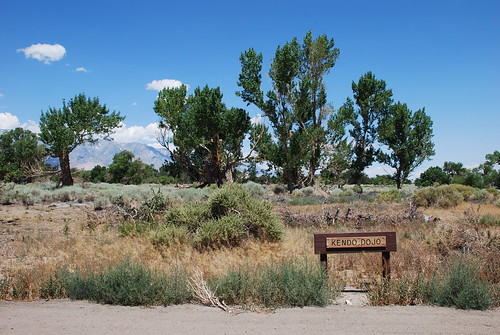
From top to bottom: Block 23, Building 29; site of Block 3, home to 227 Japanese-Americans from Bainbridge Island, near Seattle; the Kendo Dojo.

The War Relocation Authority
took over operation of Manzanar from the U.S. Army on June 1, 1942. Later that year, in December, military police shot to death two detainees and wounded ten others during a protest.

Manzanar - Pet Cemetery
Manzanar Cemetery Monument, 1943
Manzanar - Cemetery
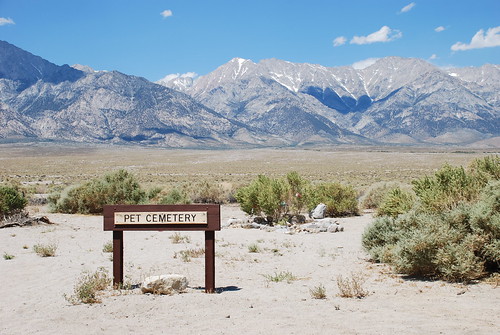
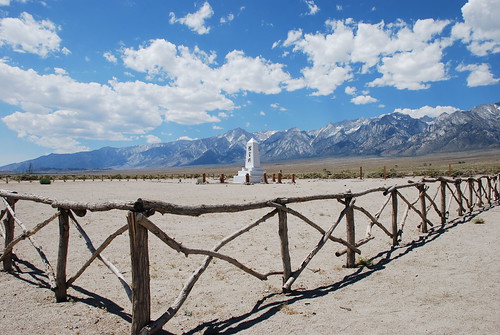
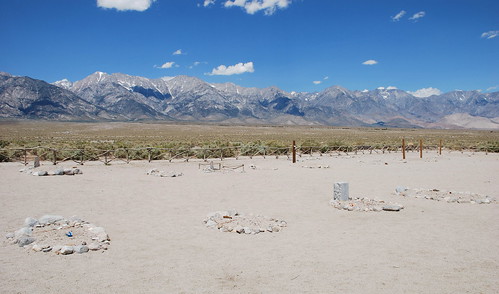
From top to bottom: the pet cemetery; the cemetery monument; remaining graves. About 150 Japanese-Americans died at Manzanar. Only fifteen were buried here; most of the others were cremated. Today, only half a dozen are still buried in the cemetery. Because individual gravestones were not affordable, the Manzanar Cemetery Monument was dedicated in August 1943. Its inscription reads, “Memorial to the Dead.”

The camp’s population began to decrease as prisoners received work passes and young men volunteered for service in the armed forces (go figure). Also, in December 1944, the Supreme Court ruled loyal citizens could not be detained in detention centers against their will. The Manzanar War Relocation Center finally closed on November 21, 1945. Freed prisoners were given train fare and $25. Following the war, nearly all of the camp’s 800 buildings were dismantled or relocated.

Manzanar - Warehouse Area
Manzanar
Manzanar
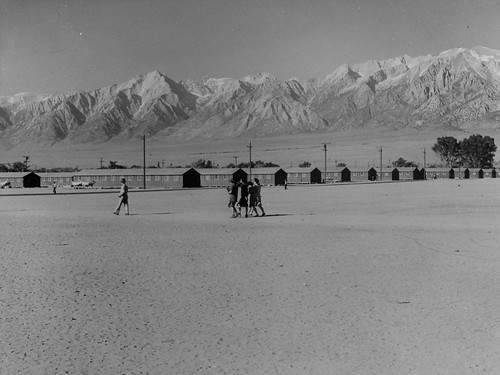
Top to bottom: warehouse area; Dorothea Lange photo, 6/9/42; the net factory, where internees made camouflage netting for the U.S. military.

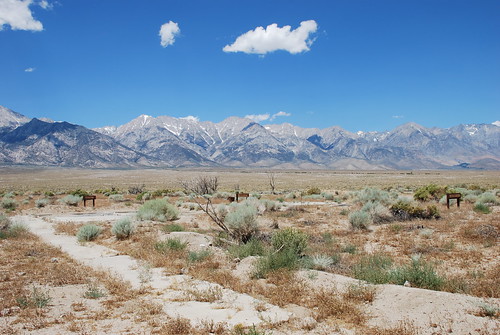
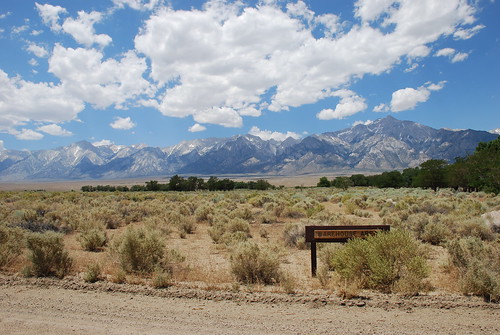
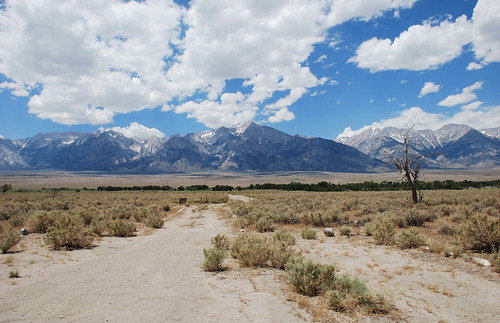
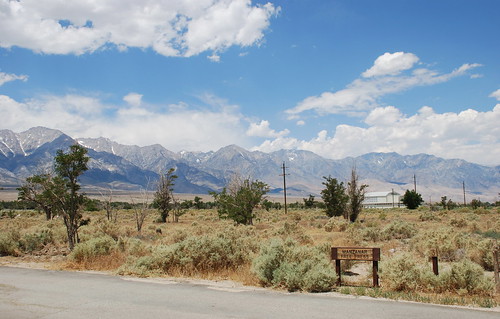
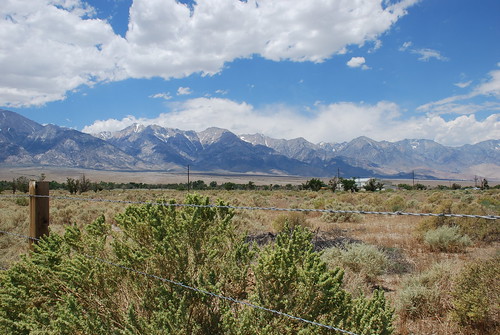
Geographically, Manzanar is located in the Owens Valley between the Sierra Nevadas on the west and the Inyo Mountains on the east. The big mountain you see in these shots is not Mt Whitney. Whitney’s nearby, but this peak is Mt Williamson, just more than 100 feet shorter than Whitney.

ManzanarManzanar
Manzanar
Manzanar - Blocks 10 and 9
Top to bottom: Mt Williamson; site of the Manzanar Free Press; the location of Manzanar High School; and Blocks 9 and 10. The Manzanar Free Press was launched on April 11, 1942, edited by Roy Takeno, and ran until New Year’s Day, 1944. Manzanar High opened in October 1942 and graduated classes the following three years. Some of the camp's first prisoners, from Terminal Island near San Pedro, were housed in Blocks 9 and 10.

In addition to its Los Angeles HCM status (one of only two outside the city), Manzanar today is recognized as a California Historical Landmark, a National Historic Landmark, and is listed in the National Register of Historic Places. In 1997, the National Park Service bought more than 814 acres of Manzanar land from Los Angeles.

Manzanar National Historic Site Interpretive Center

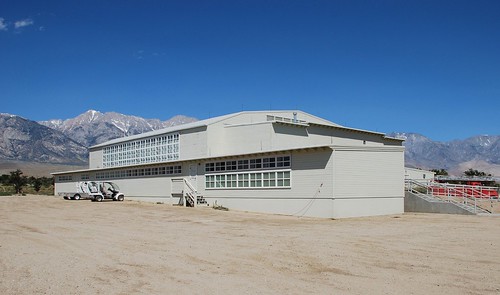
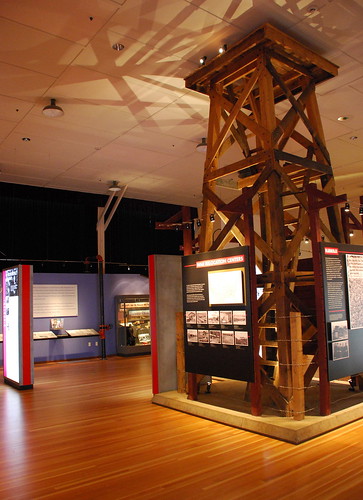
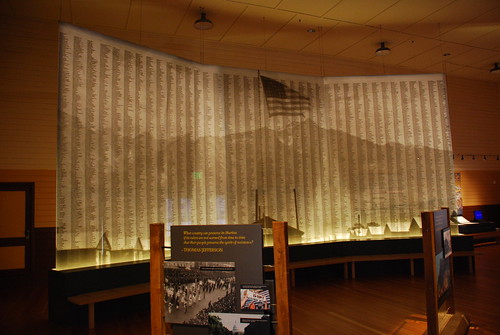
Today, the Manzanar Interpretive Center (above) is in the camp’s old high school auditorium-gymnasium. Built by detainees in 1944, it later served as a V.F.W. social hall and then a garage and shop for the Inyo County Road Department. It opened as the current wonderful and moving museum in April 2004. The museum, the military police sentry post, the internal police post, and the cemetery memorial are the only remaining structures of the Manzanar camp. (An old mess hall was moved to the site in late 2002 and is not original to the camp.)

Manzanar National Historic Site Interpretive Center

You owe it to yourself to explore the Park Service’s official Manzanar site. Or, better still, visit Manzanar in person. You might want to choose a better time of year than summer. I spent around three hours walking the site on that brutally hot Saturday back in June, and I’m still drinking fluids like hotcakes.

Manzanar

Sources:

Houston, Jeanne Watkatsuki and James D. Houston Farewell to Manzanar Laurel-Leaf 1973 New York

Armor, John and Peter Wright Manzanar Times Books 1988 New York


Up next: Wolfer Printing Company

continue reading...